



Published: July 22, 2025
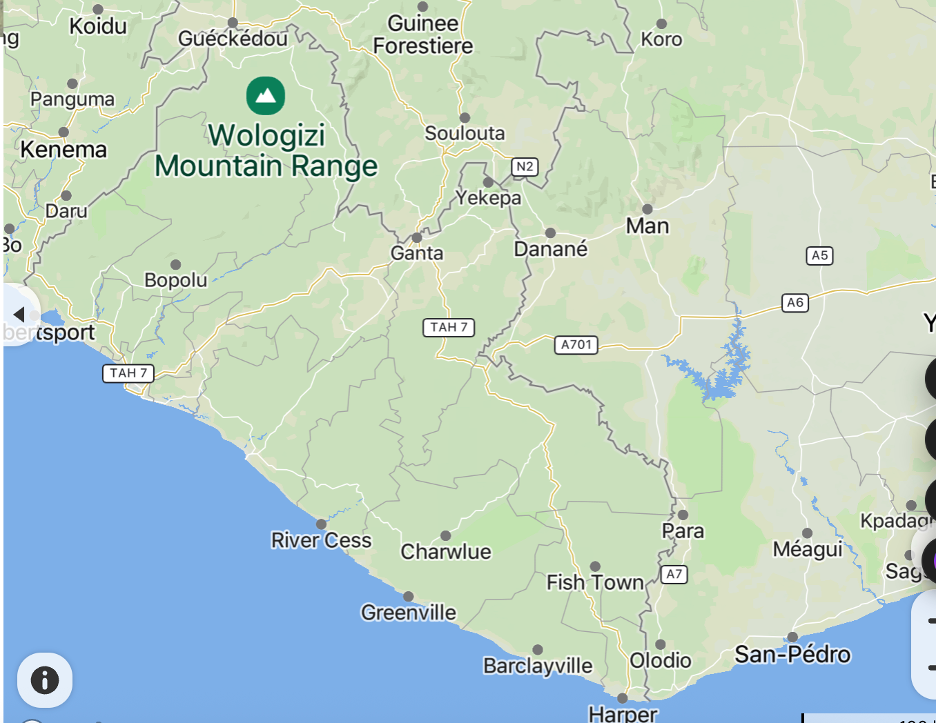
LOFA COUNTY, Liberia — Liberia’s highest peak, Mount Wologisi, has become ground zero in a heated national debate over whether trading natural heritage for roads, hospitals, and schools is a justifiable path to development.
The controversy erupted on Monday, July 21, when Deputy Speaker Thomas P. Fallah called on President Joseph Boakai to open the revered mountain—likely for iron ore mining—if doing so would deliver long-promised infrastructure to the people of Lofa County.
“If giving out Wologisi will cause us to get this road from Salayea to Mendicorma, give out Wologisi, Mr. President,” Fallah declared to a cheering crowd during a ceremony in Salayea District, where he unveiled a police station, mini-market, and rest stop constructed with funding from his office.
Framing the mountain as Lofa’s “only treasure,” Fallah claimed the Lofa Legislative Caucus had consulted with local chiefs and elders, who he said support leveraging Wologisi for transformative development.
Kollie: Wologisi Is Bigger Than One Road
Veteran journalist and broadcaster Aaron Kollie, a native of Lofa and owner of Power TV/FM, pushed back on Fallah’s proposal, warning that such decisions must align with a national development vision, not short-term gains.
“Wologisi is bigger than the Salayea to Mendicorma road,” Kollie wrote in a widely shared commentary. “Its exploration or exploitation must holistically align with Lofa and Liberia’s overall development aspirations.”
Kollie’s remarks echo sentiments from citizens and conservationists who warn that Liberia has too often rushed into resource deals that yielded little benefit for affected communities.
Mamey: Don’t Let Resources Sit Idle
Political commentator Ambulah Mamey disagrees. In his view, natural resources should be used to solve the pressing infrastructure and service delivery problems that define life in many rural areas.
“What is the use of a natural resource if it does not translate into financial resources to address socio-economic problems?” Mamey asked.
He cautioned against what he called a “bad proposition”—allowing resources to remain untapped due to fear of mismanagement—arguing instead for smart, transparent, and locally beneficial negotiations.
“Put your best foot forward and negotiate strong and sustainable socio-economic terms,” Mamey said.
Sacred Ground Meets Political Crossroads
Mount Wologisi, also known as Mount Wuteve, rises 1,440 meters (4,724 feet) above sea level in Zorzor District, Lofa County. It is spiritually significant to the Lorma, Kpelle, and Mandingo ethnic groups and is believed to contain untapped iron ore deposits, though large-scale mining has never taken place there.
Despite Lofa’s fertile land and rich landscapes, many residents say the county has seen limited returns from its natural wealth. Persistent demands for paved roads, a regional hospital, and institutions of higher learning have gone unanswered for decades.



Discussion about this post