


Published: July 24, 2026
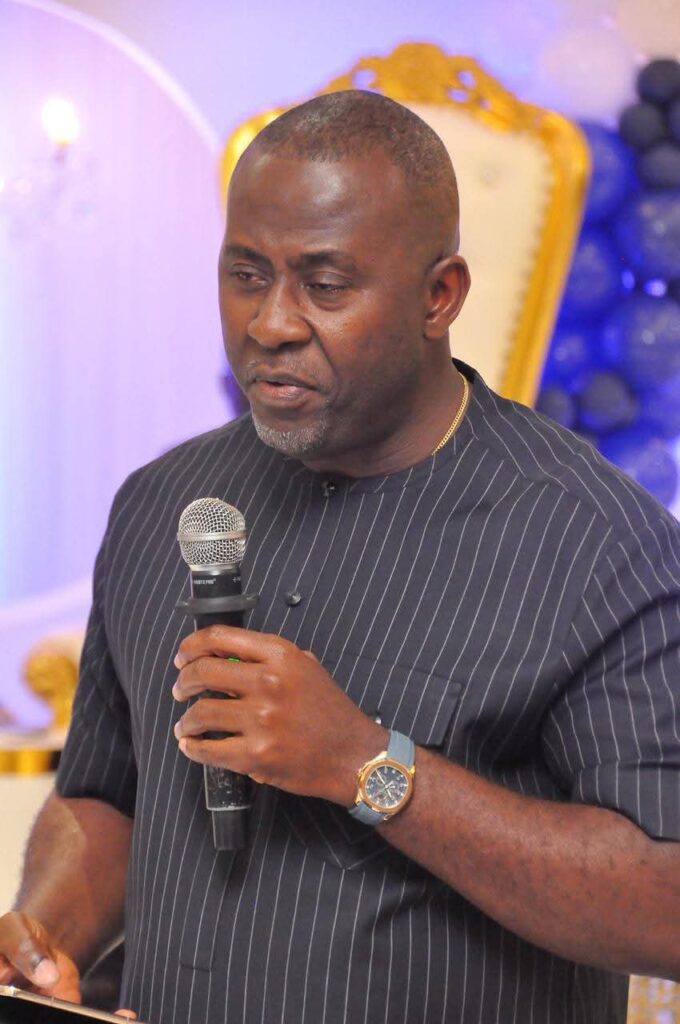
MONROVIA – Former Deputy Foreign Minister B. Elias Shoniyin says Liberia’s 179th Independence Day should force a choice on the country, telling Liberians that the government’s reform push will mean little unless it produces measurable change in households still squeezed by unemployment, rising prices and weak healthcare.
“We must decide whether we will remain prisoners of our past or architects of our future,” Shoniyin said in a message issued Thursday, three days before the July 26 anniversary. “We must choose unity over division. Integrity over corruption. Service over selfishness. Nation-building over narrow interests.”
Shoniyin served as deputy foreign minister across two administrations and acted as foreign minister at points during that period. He is now dean of the School of Global Affairs and Policy at Cuttington University and managing director of Africa Development Management Associates.
His message credits the current administration, without naming it, with visible movement on governance. He cited renewed emphasis on integrity in public service, infrastructure rehabilitation, economic revitalization, youth empowerment, institutional reform and stronger engagement with Liberia’s international partners, and said there is growing determination to confront systemic problems with discipline.
Then came the condition.
“These efforts must not only continue; they must deepen and translate into measurable improvements in the lives of ordinary Liberians,” he said.
That gap between reform on paper and life as it is lived runs through the statement.
“Too many families still struggle daily against poverty, unemployment, rising living costs, inadequate healthcare and limited opportunities,” Shoniyin said. “Too many young people continue searching for hope in an uncertain future. Too many citizens remain disconnected from the full promise of the Liberian dream.”
Shoniyin, a career diplomat, framed the anniversary against the founding it commemorates, noting that Liberia’s founders built a sovereign state in a world organized around colonial domination and racial exclusion. He singled out Joseph Jenkins Roberts, the first president, who spent months abroad pressing world powers to recognize the young republic.
“The freedom we celebrate today was not inherited lightly,” he said. “It was earned through courage, sacrifice, diplomacy and unwavering faith.”
He was equally direct about what came after. Liberia once stood as a point of African leadership and continental inspiration, he said, but the same country has lived through political exclusion, economic hardship, corruption, civil conflict, institutional decay and what he called deep national trauma.
“The Liberian story has been one of both remarkable promise and painful contradiction,” he said.
On reconciliation, Shoniyin pointed to last year’s reburials as evidence that the country can face its own history. The state funeral for President William R. Tolbert Jr. and 13 of his officials, executed after the April 1980 coup, was held in Monrovia on July 1, 2025, days after President Samuel Kanyon Doe was reburied in Grand Gedeh County. No remains were ever recovered in either case.
Those ceremonies were more than remembrance, Shoniyin said. They showed that reconciliation requires the courage to confront painful truths and acknowledge historical wrongs.
“A nation that refuses to remember cannot truly heal,” he said. “But a nation that remembers with wisdom can rebuild stronger.”
He argued that the work cannot be left to the state.
“Our nation cannot be transformed by government alone,” he said. “Liberia’s progress demands commitment from all of us: public officials, private sector leaders, civil society, religious institutions, youth, women, the diaspora and every citizen who believes in the promise of this nation.”
Shoniyin closed by rejecting the idea that Liberia’s best years are behind it, calling on citizens to move past cynicism and rhetoric toward what he described as decisive action.
“The future is not guaranteed, but it is ours to shape,” he said. “Our best days need not be behind us. They can still lie ahead.”






Discussion about this post