


Published: August 3, 2026
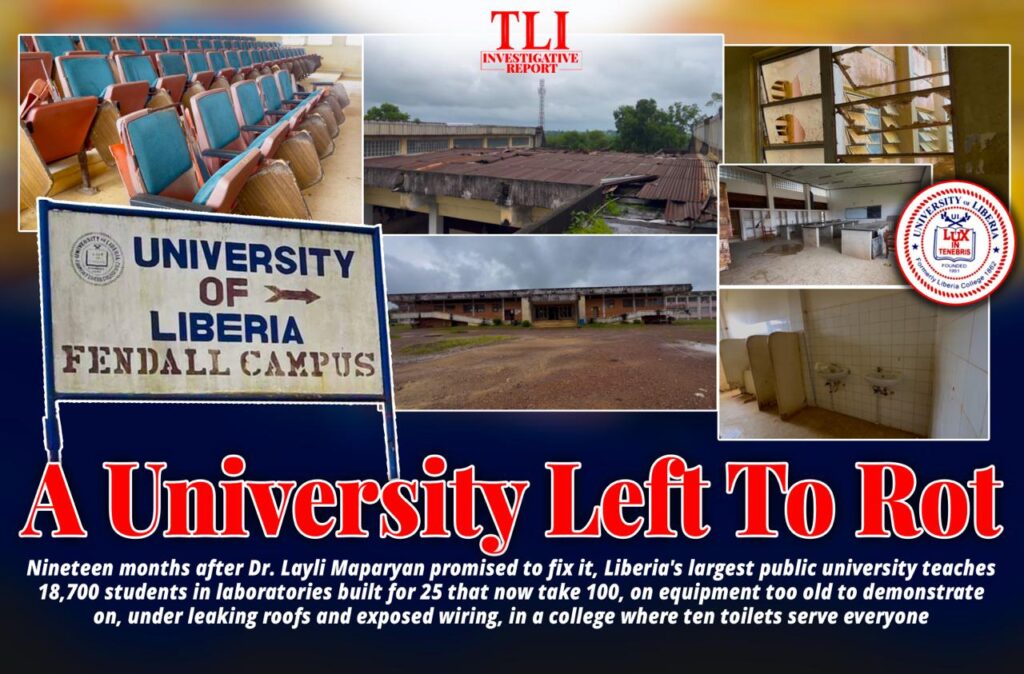
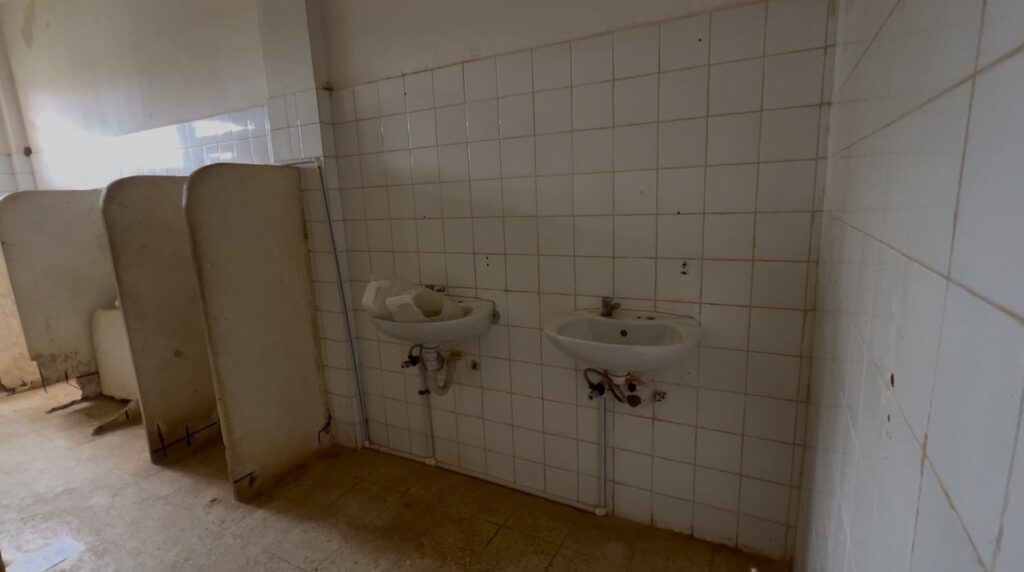
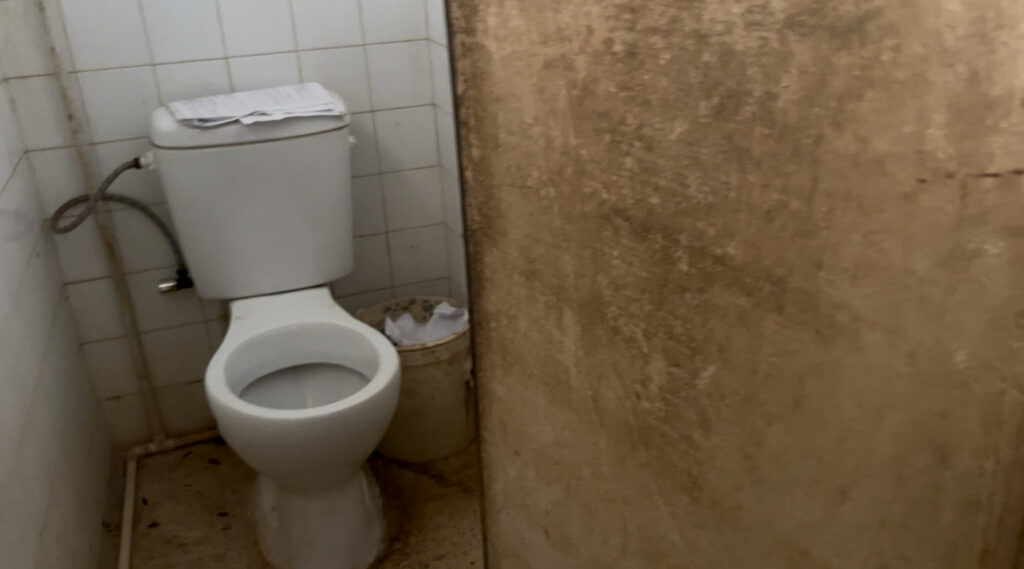
MONROVIA – On the Capitol Hill campus of the University of Liberia, the failure is clearest in the restrooms. The taps are dry. Students carry small plastic containers to drums of standing water, scoop, and pour into toilets that no longer flush on their own. Plywood doors hang off frames and will not close. Waste bins overflow onto floors already covered in used paper towels. Outside, mold coats the water tanks, and water pools around the walls.
By Blamo N. Toe & Daniel Theophilus Cole
Bob A. Saysay, an environmental studies and climate change student, counted what is left.
“There are ten bathrooms we have in the college for students. Five for males and five for females but currently, one is functional. There’s a day you see the last bathroom closed, completely closed because no water to dip and flush. If you see that, what next do you do? You have to go to the ‘Adam and Eve’ bathroom, which is in the bush to ease yourself,” Saysay said.
The University of Liberia is the country’s largest public university and the destination for most Liberians who finish secondary school and go no further afield. The Office of Student Affairs puts enrollment at more than 80,700.
Nineteen months ago, its president told the campus that this would be among the first things she fixed.
A promise, and the applause
Dr. Layli Maparyan was inaugurated as president of the University of Liberia on Jan. 10, 2025. Presenting her first 100-day priorities, she named the sanitation facilities directly.
“I feel strongly about ensuring safe and well-functioning bathrooms around campus, with adequate sanitation supplies to support public health and the comfort and dignity of the university community. It is impossible to work or study when plagued by the call of nature. New bathrooms may not happen overnight, but I will begin working on it ASAP and keep it at a high priority,” she said.
Faculty, staff and students in the hall applauded.
A months-long joint investigation by The Liberian Investigator and Kool FM found little evidence that the work has begun. Reporters visited the Capitol Hill campus, the Fendell campus in Louisiana Township and the A.M. Dogliotti College of Medicine in Congo Town, and found that many of the conditions Maparyan pledged to address remain unresolved, and that several have grown worse.
Inside the science complex
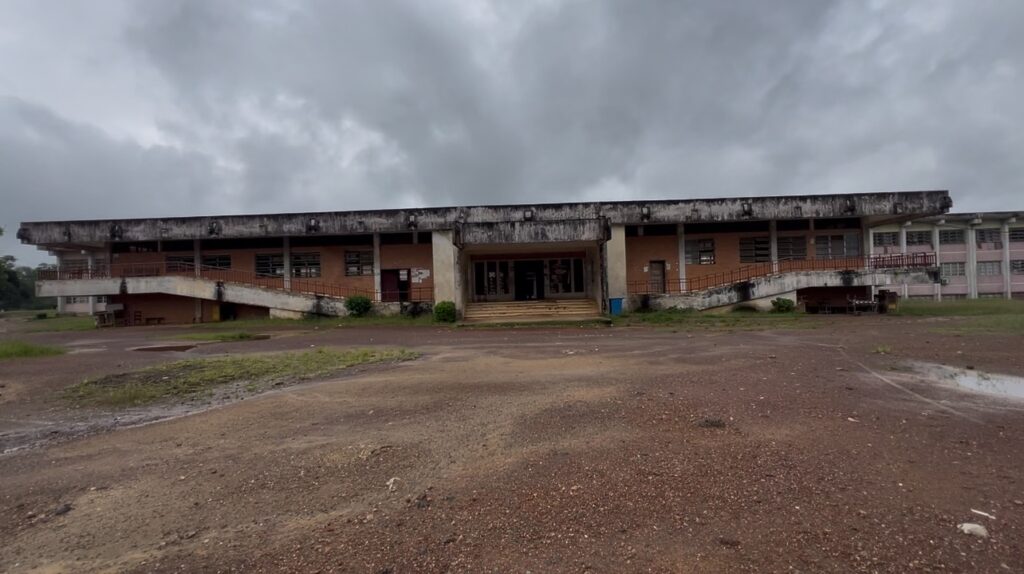
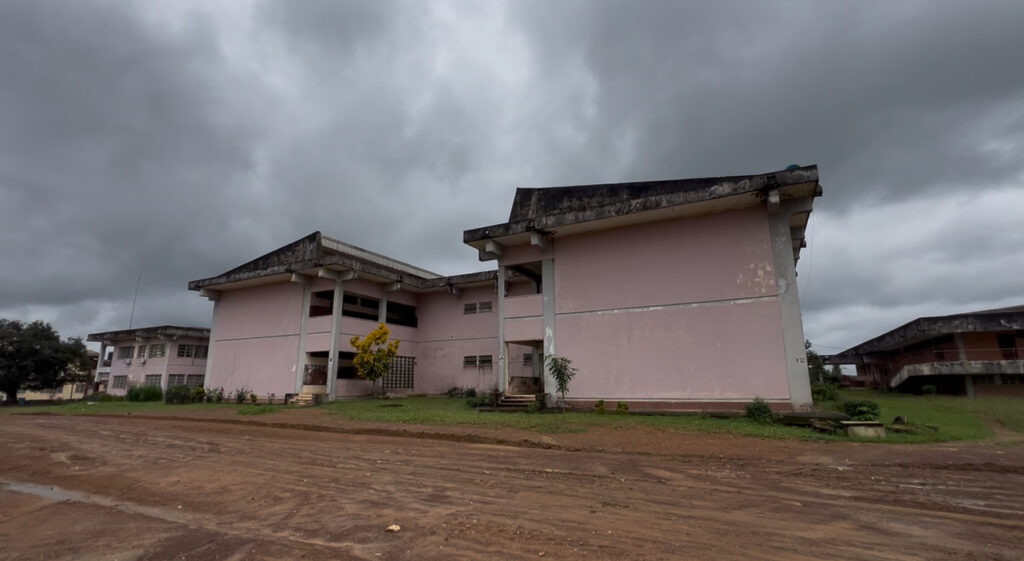
From the road, the Science Complex still looks like a modern academic building. Inside, it is coming apart.
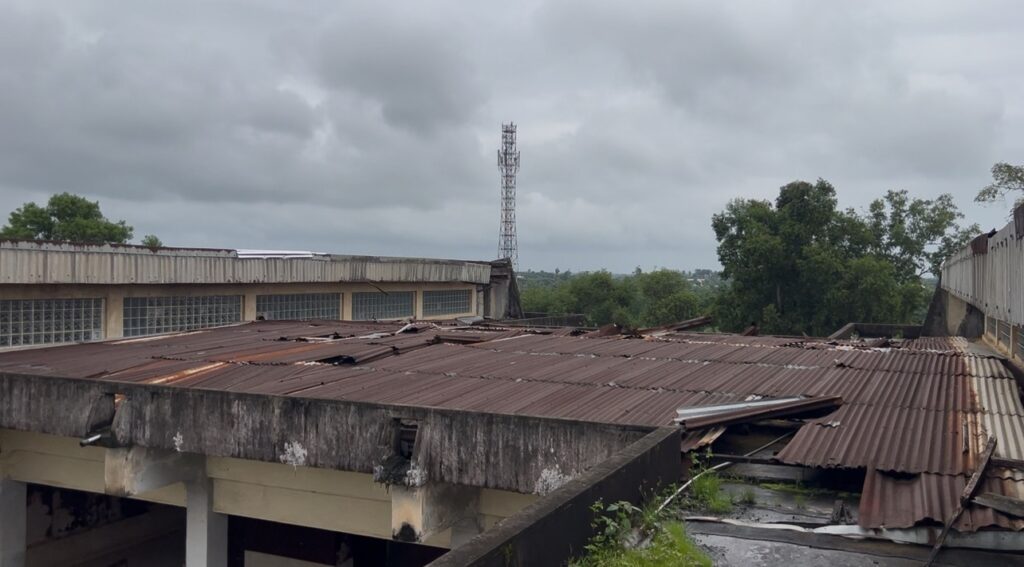
Reporters documented leaking zinc roofs, burst ceilings, broken classroom furniture, rusty podiums, faded walls covered in graffiti, exposed electrical wiring, abandoned equipment and debris through the building. Grass grows out of the rooftop. Damaged furniture, wooden planks and construction materials sit stacked above classrooms. Paint peels from the outside walls.
The building houses the College of Science, Technology, Environment and Climate Change.
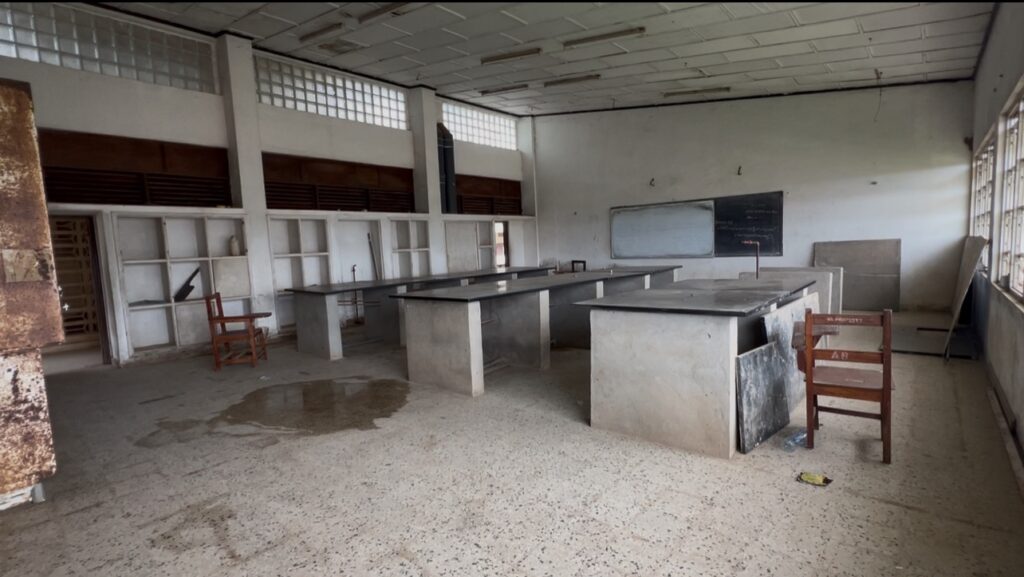
Inside the laboratories, dust covers the tables. Storage boxes sit empty. Ceilings are damaged and leak onto the practical learning spaces below. One room meant for storage has become a dumping ground, holding broken commodes, discarded bottles and assorted waste alongside laboratory materials. Air-conditioning units have been pulled down and left on floors or locked inside makeshift cages.
S. Bonu Wreh, a physics lab demonstrator, said the rooms he teaches in were built for a fraction of the students who now fill them.
“On a normal basis, we should be catering to 25 students per lab, but at times we reach up to 60, 70, even 100 students. So, to demonstrate labs under that condition is strenuous, and it requires a lot of work,” Wreh said. The numbers come from serving several colleges at once, including science and engineering.
Wreh said the lighting is poor enough that instructors run demonstrations by phone light, and that ventilation cannot cope with the crowding. Laboratory materials do not stretch to the student volume, he said, and what is procured is often low quality and does not last two semesters. Staff and students improvise or buy basic materials themselves.
“Sometimes students, they are self-improving to provide some of those laboratory materials that we need. So, it’s a challenge. It’s a challenge. It’s a challenge for the department, and it’s a challenge for the college as a whole,” Wreh said.
Saysay described the same crowding from the other side of the bench, with as many as 15 students sharing a single piece of equipment, much of it too old to teach on.
“Everybody cannot have real practical knowledge when it comes to the lab because there isn’t enough equipment. You have equipment in the lab that has been there since ‘1847’. We can’t change it. Students come and go, that’s the same equipment. It doesn’t change,” Saysay said.
He said the buildings are dilapidated, the chairs broken to the point of tearing clothing, and that when student leaders press the administration, what comes back is paint rather than repair. Running water is the constant problem. He said bathroom closures push students and lecturers to distant facilities or into the bush, and that only senior department heads have private, working toilets.
The hazards nobody has fixed
The neglect is not only unpleasant. Parts of the campus are dangerous.
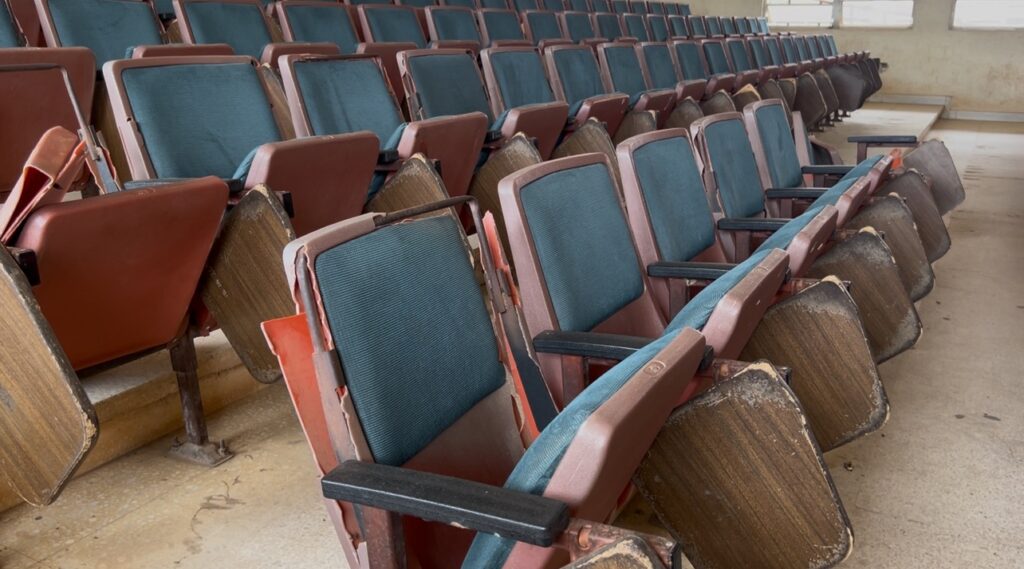
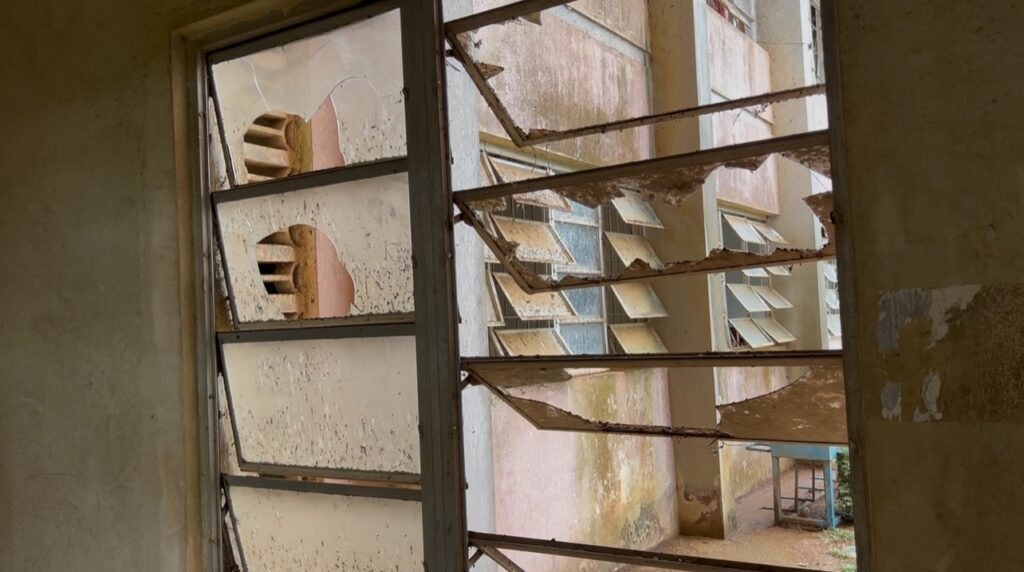
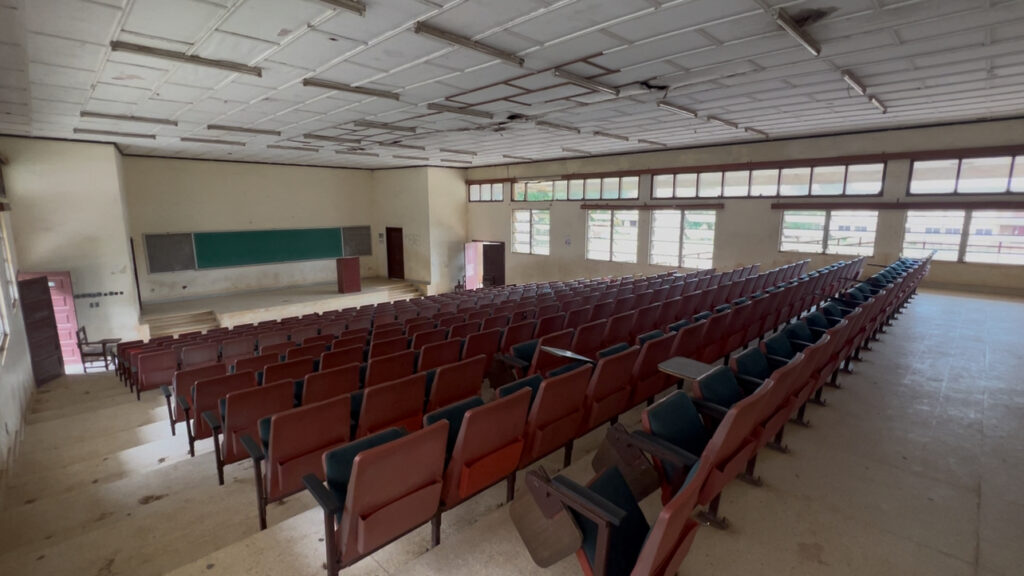
Standing water sits beneath damaged ceilings inside academic buildings. Circuit breakers with exposed wiring remain uncovered along the walkways that students use daily. Windows are broken or coated in dust thick enough to suggest months without maintenance. Lecture halls hold broken armchairs, with damaged ceilings directly above the students sitting in them.
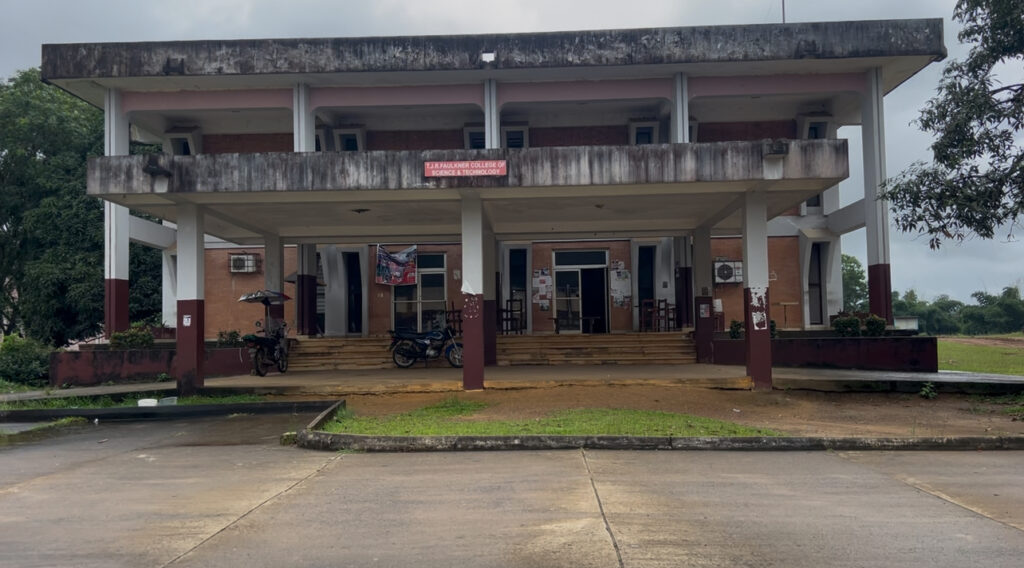
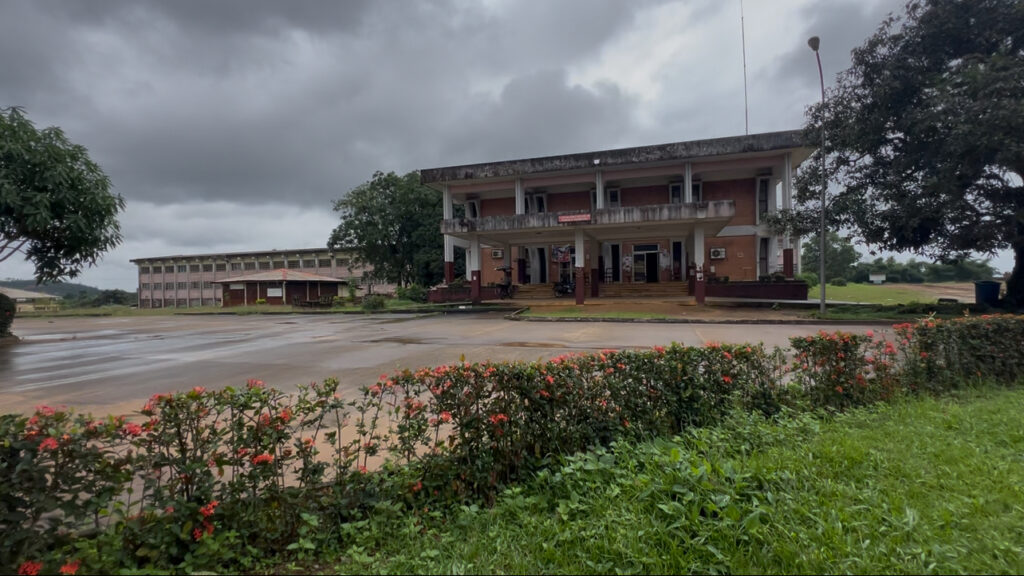
At the T.J.R. Faulkner College of Science and Technology, reporters observed water collecting near the entrances, deteriorating ceilings and scattered papers covering part of the building’s front entrance.
The money exists on paper. Information Minister Jerolinmek M. Piah announced on Feb. 19 that the government had added US$6 million to the university’s US$40 million budget, earmarked for refurbishing and rehabilitating university facilities.
A campus in revolt
The conditions have arrived alongside the sharpest resistance of Maparyan’s tenure.
On July 17, the University of Liberia Faculty Association and the University of Liberia Staff Association suspended all academic and administrative activities, ordered their members off campus and passed a vote of no confidence in her. The vote also named Lester Tenny, acting vice president for finance and fiscal affairs, and Reginald Gaye, associate vice president for human resources.
Days later, the associations said they would boycott all engagements with the Board of Trustees until the Legislature recalls Sen. Numene T.H. Bartekwa and Rep. Romeo T. Quioh from the board, accusing both lawmakers of siding with the administration against faculty and staff.
Pay sits at the center of that fight, and it was another of the pledges Maparyan made on inauguration day.
“I want to move rapidly towards regularizing faculty pay, in terms of both timing and amount, starting with research about why pay lapses have occurred in the past and what we can do to prevent similar instances in the future,” she said.
She had said she came to the job with her eyes open. “I see these as items to get UL back up and running after a long and difficult hiatus, so that we position ourselves for some of the important longer-term things that will inevitably be required to get this flagship university on track towards greatness,” she said.
Students have been less patient than the faculty. The Students Unification Party, the most confrontational of the campus political blocs, has nicknamed her “Dr. My Problem” and accuses her administration of letting conditions rot while students keep studying in them.
What the buildings say
The university has said it wants to be restored to greatness. What it has, nineteen months into the effort, is a science complex with grass on the roof, a laboratory built for 25 taking 100, and ten student bathrooms of which one works.





Discussion about this post