


Published: August 3, 2026
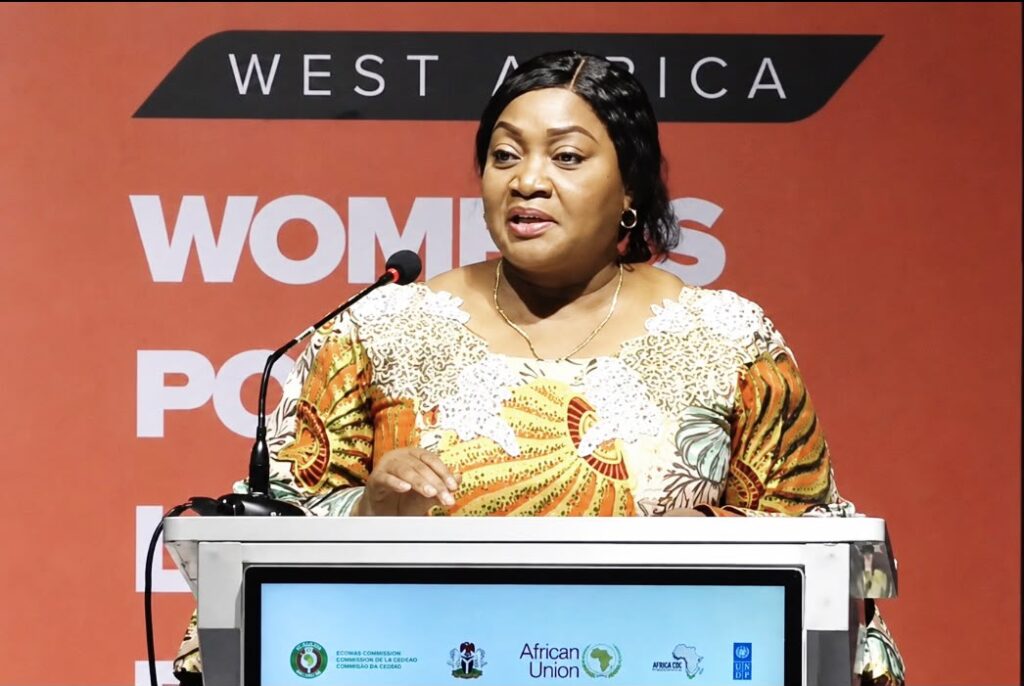
ABUJA, Nigeria – Former Liberian Vice President Chief Dr. Jewel Howard-Taylor has called for greater political representation of women across West Africa, declaring that the continent’s democratic future depends on empowering women to occupy the highest decision-making offices.
Delivering a goodwill message at the West Africa Women’s Political Leadership Forum, Howard-Taylor urged governments, political parties and women leaders to move beyond declarations and work collectively to elect more women into public office, particularly parliaments and the presidency, where national policies are shaped.
The forum, held under the theme, “Accelerating Gender Parity in Political Leadership in West Africa: From Commitment to Action – Catalyzing Action on the ECOWAS Presidential Declaration,” brought together current and former leaders, parliamentarians, representatives of ECOWAS, the African Union, the United Nations Development Programme (UNDP), development partners and gender advocates to discuss strategies for advancing women’s political participation across the region.
Howard-Taylor congratulated the organizers for convening what she described as a timely gathering, saying the discussions must inspire political reforms that produce measurable progress rather than remain statements of intent.
“I believe our conversations move beyond commitment towards political reform, to making strong decisions and changing the narrative,” she told participants.
Reflecting on the status of women in politics, Howard-Taylor said women have consistently demonstrated leadership in communities, business, civil society and public service, yet remain significantly underrepresented in elected offices.
“This is not because women lack competence or commitment,” she said.
The former vice president challenged the double standards women face when seeking elected office, noting that female candidates are routinely questioned about their preparedness while similar scrutiny is rarely directed at men.
“I have never heard them ask a man who’s running for any elected office if he’s prepared or if he’s ready,” Howard-Taylor said. “As long as he’s male, it doesn’t matter.”
She rejected the notion that women are unprepared for leadership, arguing that girls are raised with responsibilities that naturally prepare them to lead.
“Women are prepared from the time we are little girls. We are prepared to lead. We are prepared to create. We are prepared to drive the legacy of our families and our children,” she said.
Drawing on her own experience as Liberia’s former First Lady, senator for Bong County, standard bearer of a political party and the country’s first elected female vice president, Howard-Taylor said women must not allow obstacles to discourage future generations from entering politics.
Instead of focusing on the hardships of political life, she urged established leaders to share stories of success that inspire young women to pursue public service.
“We must tell the good stories. We must tell the successful stories. We must tell them that it is possible,” she said, adding that despite the challenges, “the view from the top is the most amazing one that you can ever imagine.”
Howard-Taylor said increasing the number of women in leadership is not enough unless they are also positioned to influence national policies, strengthen democratic institutions and promote peace.
“Our responsibility… is to extend beyond just increasing the numbers of women,” she said. “We must ensure that we are empowered to influence policy, promote peace and democracy, and inspire the next generation of leaders.”
She questioned why women, who make up roughly half of Africa’s population, continue to struggle to win elections to offices with the greatest political influence.
“What boggles my mind is how can we make up 50% of the population and we are not able to elect women into offices that count,” Howard-Taylor said.
While acknowledging the importance of appointments as ministers and judges, she argued that greater emphasis should be placed on electing women as presidents and members of parliament because those positions determine the direction of national governance.
“If we will rally together, put our resources, put our strategies together and decide that across Africa we elect 50% minimum women, it will be as easy as casting your ballot,” she said.
Howard-Taylor concluded by urging women across the continent to unite around a common political vision, recalling how Liberian women helped bring an end to the country’s civil conflict through collective action.
“If women in politics and governance and businesses get together and say, ‘No, we want more women,’ it will be as easy as a day,” she said.
Calling for sustained political solidarity among women across Africa, Howard-Taylor argued that greater female representation is essential to stronger democracies and national development.
“When women rule, when women are involved in the processes of governance and development of our nations, nations grow, they develop and they get better,” she said.





Discussion about this post