


Published: May 4, 2026
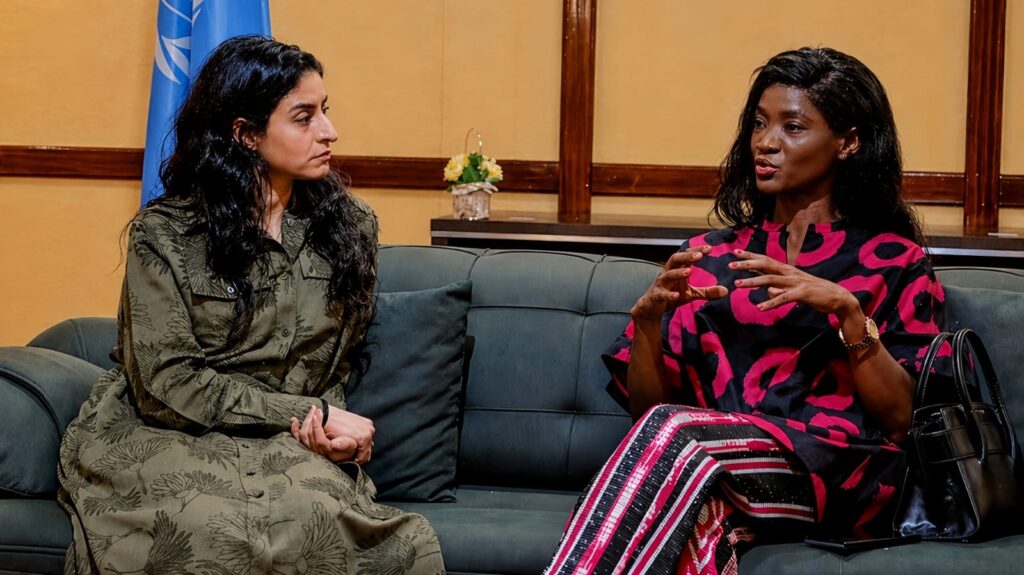
MONROVIA — Liberia’s tourism authority has secured a pledge of institutional support from UN Tourism following a high-level meeting between LNTA Director General Princess Eva Cooper and UN Tourism Secretary-General Shaikha Al Nuwais, as the country pushes to remake itself into a competitive regional destination after years of stagnation.
The bilateral engagement, which brought together senior technical leaders from UN Tourism, produced a concrete outcome: a joint technical working group comprising experts from both institutions, tasked with setting timelines, areas of engagement and specific deliverables to drive Liberia’s tourism development in the years ahead.
Cooper used the meeting to lay out an ambitious reform agenda, requesting capacity-building programs for tourism professionals, technical assistance, regulatory and policy reforms, improved destination marketing, and better access to global investment networks. She framed the requests as essential to unlocking the country’s natural and cultural assets, among them beaches, eco-tourism sites, and cultural heritage corridors that remain largely unknown to international travelers.
Al Nuwais signaled readiness to move beyond rhetoric, offering to connect Liberia to international best-practice models and facilitate peer learning with countries that have undergone successful tourism transformations. Rwanda, recognized for its governance reforms and community-centered tourism development, was cited as a potential collaboration partner.
A notable point of praise from the Secretary-General was Liberia’s recent adoption of the Tourism Satellite Account, a standardized system for measuring tourism’s contribution to national economies. Al Nuwais described the TSA as a foundation of modern tourism management, stressing that credible data is essential to planning, attracting investment and making the case for tourism as a driver of economic growth.
She also commended the LNTA for visible structural improvements, including stronger institutional coordination and governance reforms that she said signal a country determined to rewrite its tourism narrative.
The discussions ranged across several priorities: updating Liberia’s Tourism Development Strategy, expanding digital transformation efforts, improving hospitality standards, developing surfing sites and eco-lodges, and raising global market visibility for the country’s emerging attractions. Youth and women’s empowerment featured prominently, with both sides acknowledging their central role in community tourism, creative industries and small enterprise development.
Infrastructure remained an acknowledged weak point. Road access, accommodation standards and underdeveloped eco-tourism sites were flagged as areas requiring coordinated support if Liberia is to translate diplomatic momentum into visitor arrivals.
The partnership places Liberia within the UN Tourism network at a moment when the authority is attempting to professionalize a sector that has long punched below its weight. Whether the working group produces results, and on what timeline, will be the measure of how far Wednesday’s meeting goes beyond a promising conversation.





Discussion about this post