


Published: May 4, 2026
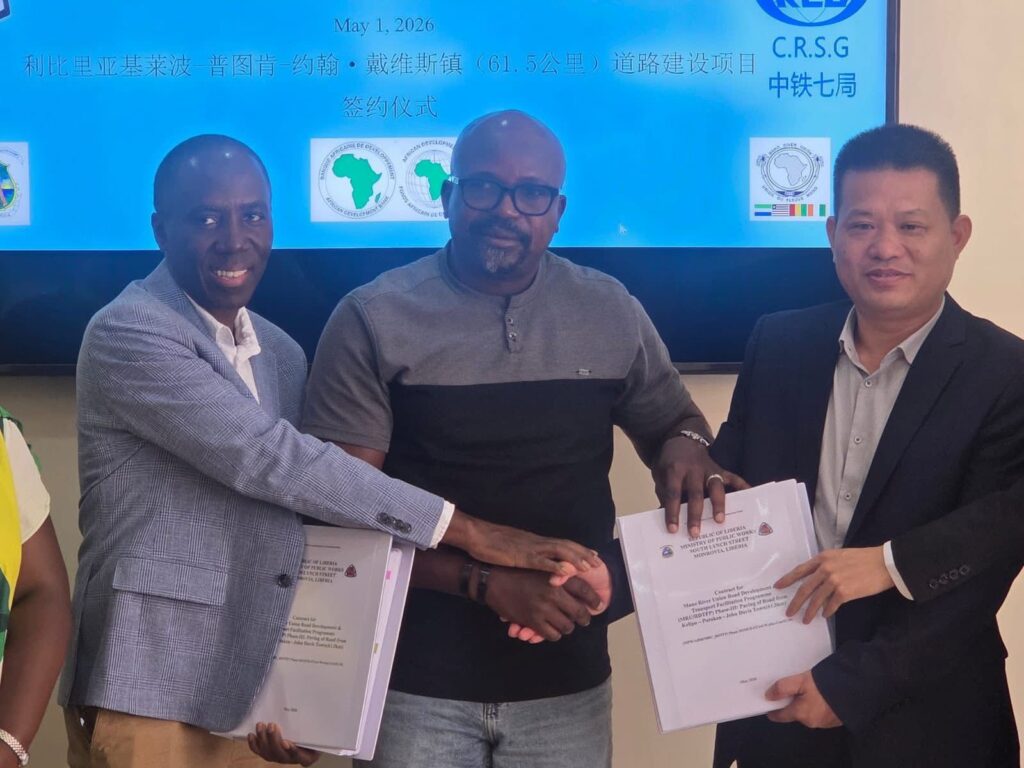
MONROVIA — Liberia has signed a $48.9 million contract with China Railway Seventh Group to pave 61.5 kilometers of road through one of the country’s most isolated and long-neglected corners.
The agreement covers the stretch from Kelipo through Putuken to John Davis Town in southeastern Liberia, forming part of Phase III of the Mano River Union Road Development and Transport Facilitation Programme, a regional initiative backed by the African Development Bank. The project carries a 2029 completion target.
For communities in River Gee and Grand Gedeh counties, the announcement lands against a backdrop of repeated promises and repeated disappointments. Poor roads have for years limited access to markets, driven up the cost of basic movement, suppressed agricultural productivity and reinforced a sense of abandonment that residents in the Southeast have voiced for decades.
Public Works Minister Roland Layette Giddings framed the project as central to the government’s infrastructure agenda. “The implementation of the Putuken to John Davis Town road marks a significant boost for connectivity,” he said, calling for sustained collaboration with development partners.
AfDB Country Director Rees Mwasambili reaffirmed the bank’s support but struck a measured tone, urging accelerated implementation and acknowledging the complexity of executing large-scale construction in difficult terrain and weather conditions, factors that have derailed or delayed similar projects in Liberia’s interior before.
Project Implementation Unit Coordinator Rawling Kesselly pointed to the corridor’s potential to cut travel time and improve farm-to-market access, two chronic obstacles that have long undercut agricultural output across the region. He said the broader Mano River Union programme is designed to lower transport costs and ease cross-border movement of goods, strengthening trade ties across member states.
Contractor representative Liu, speaking for China Railway Seventh Group, pledged on-schedule delivery to required standards and appealed to local communities for cooperation to avoid disruptions during construction.
Infrastructure analysts say the pledge is the easy part. The durability of a road in southeastern Liberia, with its heavy rains, remote terrain, and historically thin government presence,depends as much on what happens after construction as on what happens during it. Oversight, transparency and a credible maintenance plan, they caution, are what determine whether a road lasts or deteriorates within years of completion.






Discussion about this post