


Published: June 10, 2026
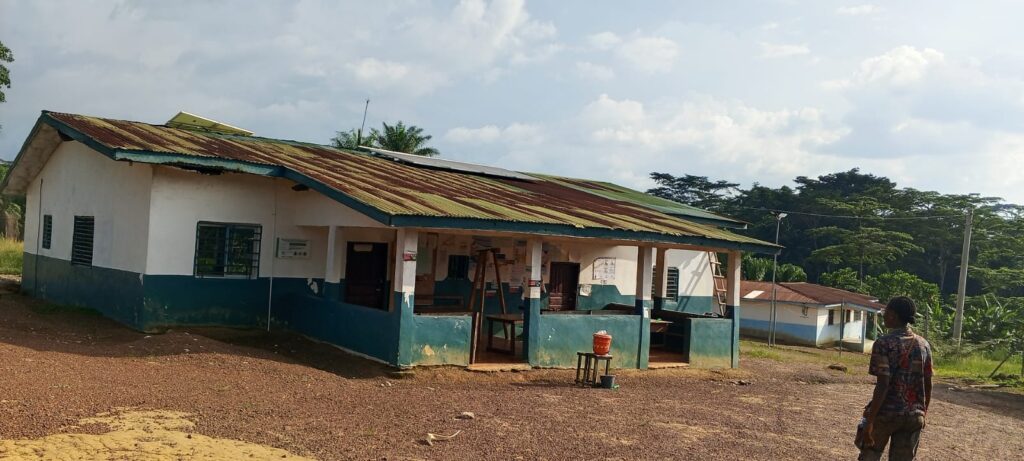
BONG COUNTY — Nurses at several rural clinics in Bong County are delivering babies by flashlight because the facilities have no electricity, and treating patients on little more than symptoms and patient history because they have no laboratories, conditions that health workers warn are putting mothers and newborns at risk.
The crisis spans facilities in Boinsen in Electoral District No. 4 and Jorquelleh District No. 2, where residents and healthcare workers fear the lack of basic services has turned routine care into a gamble. At the Gbarta Clinic in Boinsen, Registered Nurse Nyamah Dennis said the absence of power is among the facility’s most pressing problems, forcing nurses and midwives to rely on flashlights during nighttime deliveries and emergencies. “We use flashlights during deliveries and emergencies, and that situation places both mothers and newborns at risk,” she said.
Dennis said the clinic’s Maternal Waiting Home is deteriorating, with leaking roofs, damaged walls and inadequate bedding for expectant mothers, yet staff continue to work under the conditions.
Rebecca Wesseh, town chief of Gbenequelleh in Electoral District Two, echoed the warning, saying nurses there also depend on touch lights to perform deliveries and that the clinic has no laboratory, leaving providers to diagnose illness from medical histories and visible symptoms. “When pregnant women develop serious complications, delays in getting transportation to Gbarnga can become a matter of life and death,” she said, adding that the roof leaks whenever heavy rains fall.
The danger of diagnosing without testing is not hypothetical. John Sumo, a resident of Tamayta in Jorquelleh District No. 2, said he was treated at the local clinic for typhoid and took the medication for nearly a week with no improvement. Only after traveling to Phebe Hospital in Gbarnga was he correctly diagnosed with high blood pressure and an ulcer. “I kept taking the medicine, but my condition wasn’t improving,” Sumo told The Liberian Investigator. “When I got to Phebe Hospital, I was told I had pressure and ulcer.” The Tamayta Clinic, like the others, operates without electricity or laboratory services. Medical experts have long warned that prescribing treatment without diagnostic testing raises the risk of misdiagnosis, delay and harm.
The failures at the three clinics point to a wider strain on healthcare across Bong County. While county maternal death figures for 2026 have not been released, health authorities continue to flag maternal mortality as a concern, citing poor infrastructure, thin staffing, long distances to facilities and weak referral systems.
Bong County Health Officer Dr. Daanue Paye Zwuogbae acknowledged the deteriorating state of many facilities when contacted by The Liberian Investigator, confirming widespread problems with leaking roofs, inadequate staff quarters, missing maternal waiting homes and limited electricity. He said the Ministry of Health plans to renovate 11 of the 49 facilities identified as being in deplorable condition. “We are aware of the challenges and interventions are being planned,” he said.
For the nurses and patients, the wait is the story. Until power, laboratories and repairs reach these clinics, health workers in rural Bong County will keep delivering babies by flashlight and making life-or-death decisions without the most basic diagnostic tools.






Discussion about this post