


Published: November 20, 2026
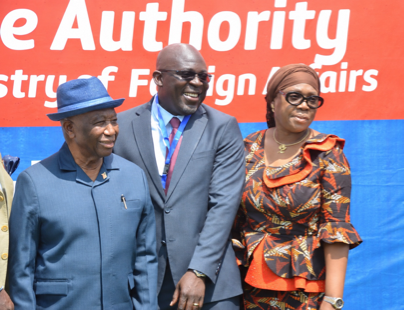
MARSHALL, Margibi County — Liberia will carry the plight of seafarers trapped in the world’s conflict zones to the U.N. Security Council next month, drawing on ideas from its own maritime academy. On Thursday, President Joseph Nyuma Boakai opened a high-level dialogue in Marshall that also launched Liberia Maritime Week, a new annual celebration of the country’s maritime heritage.
The Marshall High-Level Dialogue on Global Maritime Safety, Security and the Welfare of Seafarers, organized by the Liberia Maritime Authority in collaboration with the Ministry of Foreign Affairs at the Liberia Maritime Training Institute, brought together government ministers, diplomats, U.N. officials, security chiefs and the institute’s cadets. Its recommendations will inform Liberia’s work as it assumes the rotating presidency of the Security Council on Dec. 1.
President Boakai, who delivered the keynote address, said Liberia would use its presidency to highlight the protection of civilian seafarers affected by armed conflict, and that he would chair a high-level open debate on the issue at the United Nations.
“He’s a son. She’s a daughter. She may be a mother, he may be a father, but they sign on to deliver cargo, not to go to war,” Boakai said of the cooks, engineers, deckhands and captains who crew merchant ships.
He said Liberia’s flag, flown by the world’s largest shipping registry, is more than a business, and that crews on ships flying it are under Liberia’s care. He said the government is committed to a quality flag that insists on safety and the welfare of seafarers, works closely with port states and has zero tolerance for substandard ships.
A New National Tradition
Maritime Commissioner and CEO Cllr. Neto Zarzar Lighe Sr. said the dialogue was the first event of Liberia Maritime Week, which he said will be held every year to celebrate the country’s maritime heritage, promote innovation, attract investment and build partnerships that benefit Liberians. Boakai endorsed the week as a new national tradition.
Lighe described the toll on seafarers since hostilities in the Gulf region escalated on Feb. 28. Citing reports from the International Maritime Organization, he said commercial ships have come under about 100 attacks or attempted attacks in that time and at least 25 seafarers have been killed, and that the United Nations estimates some 6,000 seafarers remain trapped in conflict regions.
“Behind every number is a human being,” Lighe said. “These seafarers did not start these conflicts and have no say how they are going to end.”
He announced that the institute’s next class of cadets will graduate in January 2027, and that the authority will also dedicate new buildings and a dormitory to expand enrollment. He said the authority has increased scholarships for young Liberians to study abroad in nautical science, marine engineering, maritime law, and ocean governance. He said a team of 20 Liberians from the Liberia Immigration Service, the Liberia Revenue Authority, the National Port Authority, and the Liberia National Coast Guard is heading to Shanghai Maritime University in China for training in port-state control and inspection.
‘Our Voice Will Be Loud’
Foreign Minister Sara Beysolow Nyanti said Boakai will chair the Security Council’s high-level debate on maritime security on Dec. 3.
Nyanti recalled crossing from Aden to Djibouti by ship while running a cash transfer program in Yemen. She said she only grasped the danger seafarers face every day when the crew briefed passengers on where to shelter if Somali pirates boarded.
She said the Foreign Ministry’s missions abroad will stand behind the maritime authority when seafarers are abandoned in foreign ports or caught in danger. She said Liberia would promote Atlantic routes as a credible alternative when traditional shipping lanes are closed, bringing jobs to the country’s ports.
Turning to the cadets, she said Liberia now trains its own certified marine engineering officers in Marshall and that ships flying Liberia’s flag should one day be crewed and commanded by Liberians.
“Your training matters to Liberia’s future,” Nyanti said. “Let us leave Marshall with the practical ideas we can carry to New York.”
Partners Back Liberia’s Lead
India’s ambassador to Liberia, Manoj Bihari Verma, said India, a major source of the world’s seafarers, and Liberia, the largest ship registry, launched a Group of Friends on seafarer safety and security on the sidelines of the U.N. General Assembly. The two countries co-chair the group. He said that just last week two Liberia-flagged vessels carrying Indian crew members were attacked.
“Attacks on civilian vessels and their crews are legally and morally indefensible,” Verma said.
U.N. Resident Coordinator Christine N. Umutoni said the dialogue showed how Liberia’s work in New York connects to life at home, and that the U.N. system stands ready to support Liberia in building a secure maritime domain.
“We are all maritime nations, whether we have a coastline or not, because we all depend on the sea,” she said.
Acting Justice Minister and Attorney General Cllr. Betty M. Lamin-Blamo said maritime security depends on investigating and prosecuting maritime crimes successfully while protecting the rights of innocent seafarers.
“The rule of law is not an obstacle to security. It is one of its strongest foundations,” she said.
Remarks delivered on behalf of acting Defense Minister Cllr. N. Oswald Tweh described maritime security as an indispensable part of national security and drug trafficking and illegal fishing as particular concerns for Liberia.
After the opening, panels of security, fisheries and maritime officials were scheduled to discuss securing the seas amid armed conflict and strengthening global maritime governance.
Boakai closed his address with a message to the cadets.
“When that time comes, know that your country stood up for you and will continue to stand for you,” he said.



Discussion about this post