


Published: October 7, 2026
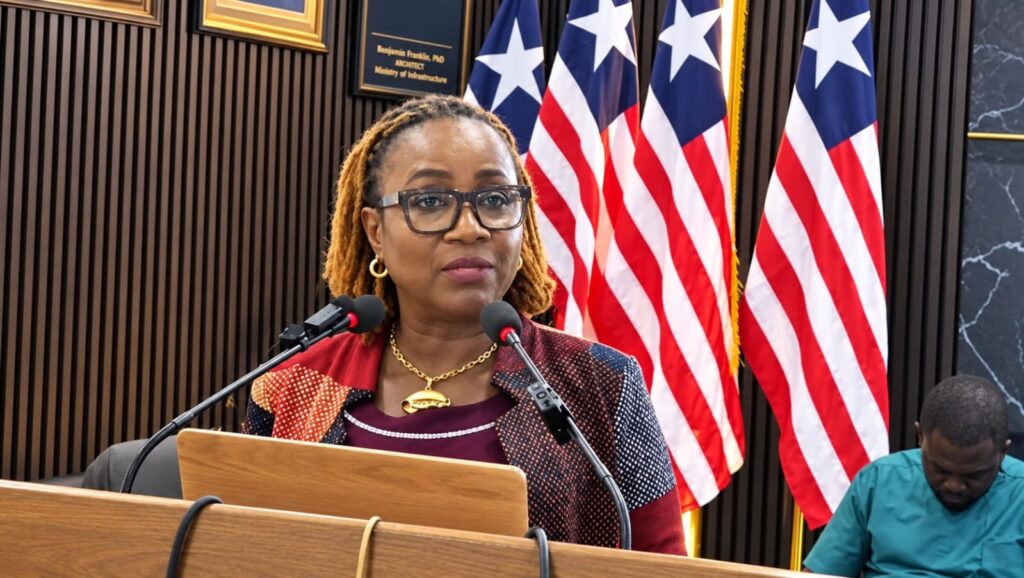
MONROVIA — The National Housing Authority is rolling out a package of investment products to attract diaspora Liberians into the country’s housing market, offering pre-verified land, investment guidance, and direct institutional support as the government seeks to tackle Liberia’s widening housing deficit.
The initiative, unveiled during the Liberia Diaspora Investment Conference 2026, aims to address longstanding concerns that have discouraged Liberians abroad from investing in housing, particularly disputes over land ownership, difficulty verifying property, and limited knowledge of the country’s estate development and permitting processes.
By Roseline Gbessagee
Speaking Tuesday, Oct. 6, during the Ministry of Information’s regular press briefing, NHA Managing Director Florence K. Geegbae said the authority has developed several products to simplify housing investment and reduce risks for diaspora investors.
The package includes a Housing Investment Portal, Pre-Verified Land Bank, NHA Partnership Program, Estate Development Roadmap, Off-Takers Program and Planned Community Development initiative.
Geegbae described the Housing Investment Portal as a single online access point that will provide investors with land verification services, permit checklists, cost calculators and a directory of licensed professionals.
She said the platform is intended to guide investors from their initial inquiries through the completion of housing projects, reducing the difficulties associated with navigating multiple institutions and procedures.
The Estate Development Roadmap, meanwhile, will provide a plain-language, step-by-step guide covering the process from land acquisition to obtaining an occupancy permit, with particular emphasis on residential estate construction and home development.
Under the NHA Partnership Program, Geegbae said the authority will provide dedicated advisory services to help diaspora investors navigate land ownership, zoning, planning and permitting requirements.
NHA experts will also work directly with developers and coordinate with the Liberia Land Authority to help accelerate the development process.
A major component of the initiative is the Pre-Verified Land Bank, which the NHA says will provide investors access to parcels whose ownership and status have already been verified by the LLA for NHA-affiliated housing projects.
“A portfolio of parcels already confirmed by the LLA and cleared for NHA-affiliated housing projects, removing the burden of land verification from individual investors,” Geegbae said.
The initiative could address one of the major concerns confronting property investment in Liberia, where uncertainty surrounding land ownership and competing claims can complicate development.
Geegbae said the NHA has negotiated and begun acquiring 578 acres of land in several parts of the country, including Bologan in Bomi County, Whowein in Margibi County, Croiserville in Bomi County, as well as locations in Lofa, Bong, Nimba and Grand Bassa counties.
She also announced an Off-Takers Program designed to connect housing developers with prospective homebuyers, banks and other financiers, institutional investors and government agencies offering home assistance programs.
According to Geegbae, 3,340 civil servants have already enrolled in the program, potentially providing developers with an identified pool of prospective homeowners.
The NHA managing director also highlighted the authority’s Planned Community Development program, which she said will make free or discounted land available to developers of varying sizes.
“Builders can construct on land already developed by NHA, complete with utility connections — water, sewage, and electricity — and proper zoning in place,” she said.
The approach is intended to reduce some of the upfront costs and infrastructure challenges developers face when establishing residential communities.
Geegbae said the authority also plans to publish a Housing Development Report quarterly or biannually, providing information on housing development, investment activities and emerging opportunities in Liberia’s residential property market.
She said the report will give diaspora investors access to more reliable information to help them assess opportunities and make informed investment decisions.
The new investment push comes as Liberia continues to confront a significant housing deficit, with demand for decent and affordable homes outpacing available housing, particularly in rapidly growing urban communities.






Discussion about this post