


Published: July 1, 2026
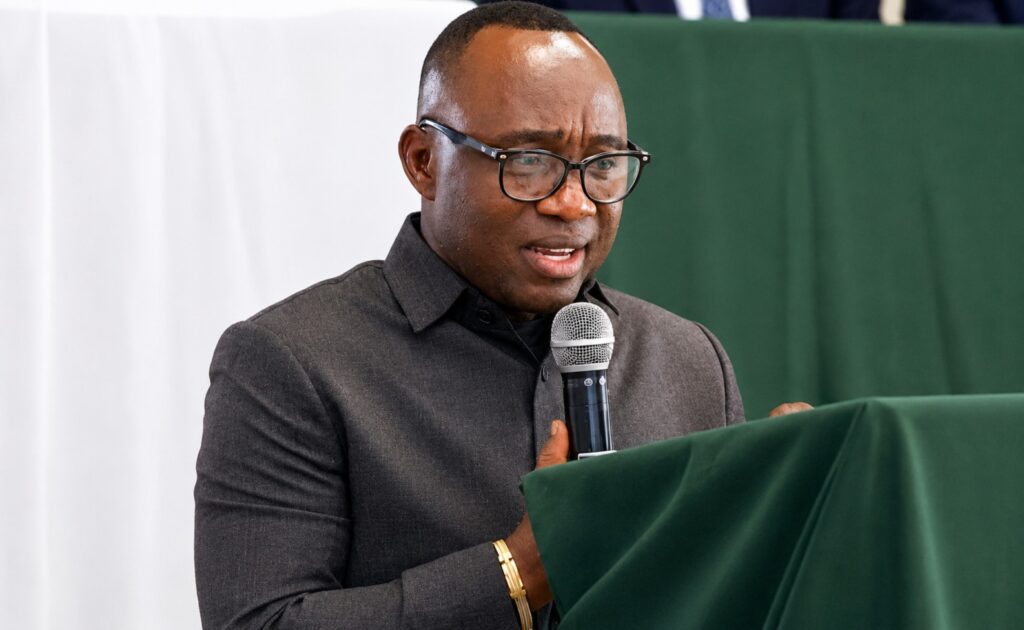
GBARNGA, Bong County — A comprehensive cybersecurity bill passed by both Houses of the Legislature now awaits only President Joseph Nyuma Boakai’s signature to become law, Bong County Senator Prince K. Moye disclosed Tuesday, calling it a major step in Liberia’s fight against cybercrime.
Moye made the disclosure while delivering the keynote address at the Liberia Telecommunications Authority (LTA) Cybersecurity Marathon for junior high school students in Gbarnga. The event was held under the theme “Securing Our Digital Future.”
He said the government, through the LTA and partner institutions, is aggressively strengthening the country’s cybersecurity framework to address growing online threats.
“The Government of Liberia and partnering ministries is aggressively strengthening our national defensive framework,” Moye said. “We have spearheaded the formulation of robust cybersecurity regulations and are working tirelessly to support the advent of comprehensive cyber legislation that criminalizes online fraud, data theft and digital harassment.”
According to the senator, Liberia is also collaborating with other West African countries to improve regional cybersecurity and protect against cross-border cyber threats.
Moye stressed that while the government continues to strengthen laws and invest in digital infrastructure, the country’s cybersecurity ultimately depends on the online behavior of its citizens.
“We can write the most advanced laws in the world and we can install the most expensive firewalls at our data hubs, but the ultimate line of defense will always be you. Our national security infrastructure is only as strong as the digital habits of our citizens,” he said.
He warned students that increased internet access has exposed young people to cybercriminals who often target children and teenagers because they are less familiar with online safety. He cited phishing scams as one of the most common cyber threats.
“Have you ever received a strange link on your WhatsApp or Facebook Messenger promising you free data, a free smartphone, or cash prizes if you just click the link and share it? That is a classic cyber threat called phishing, a digital trap designed to steal your personal data or infect your device with malicious software,” he explained.
The senator encouraged students to adopt safe online habits by creating strong passwords, avoiding suspicious links, protecting their digital footprints and speaking out against cyberbullying.
“A strong password shouldn’t be your birthday, your pet’s name, or number. It should be a complex mix of letters, numbers and symbols that no one can easily guess. Never, under any circumstances, share your passwords with a friend or classmate.”
Moye also urged students to consider careers in cybersecurity, describing the sector as one of the fastest-growing professions globally with increasing opportunities in banks, hospitals, government institutions and private companies.
He called on teachers and school administrators to strengthen digital literacy education in schools and assured them of the LTA’s continued support in developing a safer digital generation.
The senator later declared the LTA Cybersecurity Marathon officially open, encouraging participants to use the platform to acquire the knowledge and skills needed to help secure Liberia’s digital future.






Discussion about this post