


Published: April 24, 2026
MONROVIA — Liberia’s National Elections Commission is signaling a decisive shift toward digital transformation, but the path to a fully sustainable data system remains fraught with structural, financial and technological challenges that could shape the credibility of future elections.
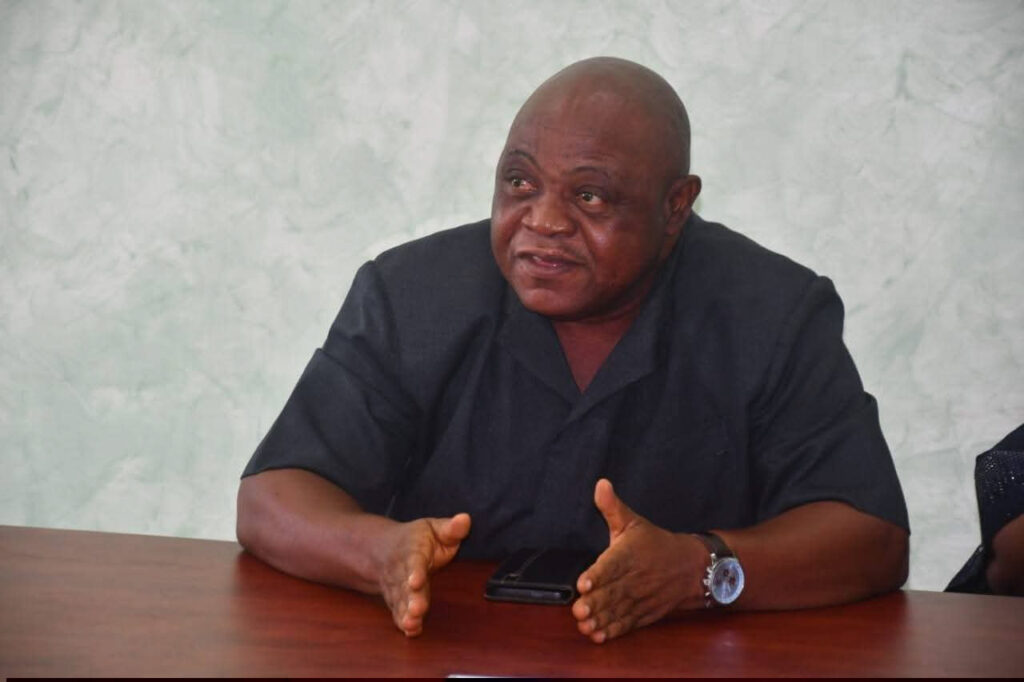
Acting NEC Chairperson Jonathan K. Weedor says the Commission is exploring a gradual phase-out of Optical Mark Recognition, or OMR, a system long used to scan and process voter-marked ballots — in favor of a more digitized electoral framework. The move, he argues, is essential to modernizing election management and improving efficiency in vote processing and results transmission. “We see digitization not as an option but as a strategic direction,” Weedor said Thursday at the close of a 10-day training on the Commission’s redesigned website, held at Stella Maris Polytechnic University.
The training marked a key milestone in the NEC’s broader modernization agenda, supported by the United Nations Development Programme (UNDP) through its Liberia Electoral Support Project. The initiative includes upgrading the Commission’s online presence, improving data management systems and strengthening institutional capacity.
Yet beneath the optimism lies a deeper concern: Liberia’s persistent struggle to build and maintain a reliable, secure and sustainable electoral data system.
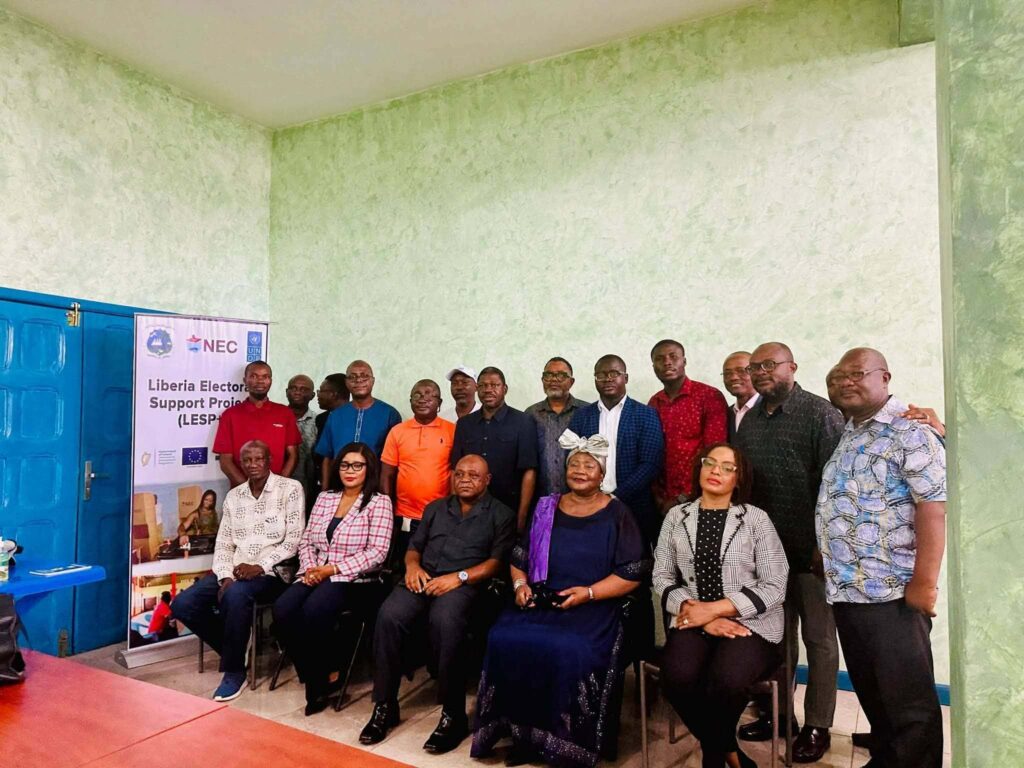
Weedor (seated in the middle at the front), concludes along with fellow NEC commissioners, technical staff, the new website development sessions in Monrovia
Aging infrastructure, limited capacity
For years, the NEC has relied on hybrid systems that combine manual processes with limited digital tools. OMR technology, while useful in reducing human error during ballot counting, has faced criticism for logistical inefficiencies, high operational costs and vulnerability to technical breakdowns in low-resource environments. Elections experts speaking to The Liberian Investigator said moving beyond OMR requires more than new software or a redesigned website, noting that it demands a robust digital ecosystem, including stable electricity, secure data storage, trained personnel and cybersecurity safeguards — areas where Liberia continues to face constraints. “Digital transformation in elections is not just about replacing machines; it’s about building an entire data infrastructure that can be trusted,” said a Monrovia-based digital analyst familiar with electoral reforms. Liberia’s power supply remains inconsistent outside major urban centers, and internet connectivity — critical for real-time data transmission is uneven across the country. These gaps raise concerns about whether a fully digitized system can function reliably nationwide, particularly in rural counties during high-stakes elections.
Funding and sustainability concerns
Another major hurdle is financing. Election technology upgrades are expensive, often requiring long-term investments in hardware, software licensing, maintenance and staff training. Much of Liberia’s recent electoral support has been donor-funded, particularly through international partners like the UNDP. While such support has enabled progress, overreliance on external funding may undermine sustainability if donor priorities shift.
At Thursday’s event, Aagon Tingban, a political campaign finance specialist with the UNDP-backed project, praised the NEC’s efforts, noting that the redesigned website would enhance transparency and public engagement. Still, he emphasized the need for continued investment in institutional systems. “The gains we see today must be maintained locally,” Tingban said, underscoring the importance of domestic ownership of electoral technologies.
Data integrity and public trust
At the heart of the NEC’s modernization push is the question of trust. Liberia’s postwar elections have generally been peaceful, but disputes over results, delays in tallying and concerns about transparency have periodically tested public confidence. A more advanced data system, if properly implemented, could improve the speed and accuracy of results reporting, reduce opportunities for manipulation and provide greater transparency for political parties and observers.
However, digitization also introduces new risks. Cybersecurity threats, data breaches and system failures could undermine credibility if safeguards are not rigorously enforced. “Trust in elections is not just about outcomes; it’s about the systems people believe in,” said the governance analyst. “If digital systems fail or appear vulnerable, public skepticism could increase.”
Incremental reforms underway
The NEC’s immediate focus appears to be incremental reform rather than a sudden overhaul. The redesigned website — developed by consultant Evrard Kouadio in collaboration with the Commission’s communications, IT and data teams, is expected to improve public access to information and streamline stakeholder engagement.
For the NEC, the platform will feature enhanced user experience and simplified navigation, allowing voters, political parties and civil society groups to more easily access election-related data. The website upgrade also reflects a broader effort to strengthen the NEC’s institutional image, projecting a more modern and transparent electoral body.
Members of the Board of Commissioners have already reviewed the upgraded wesite, with final refinements underway ahead of its public launch.
Balancing ambition with reality
Weedor’s vision of phasing out OMR and embracing a fully digital electoral system represents a significant policy shift — one that aligns Liberia with a growing number of countries adopting technology-driven election management. As an experienced elections management expert who worked with the National Elections Commission for over a decade before transitioning to private life and later returning as its current acting chairman pending his Senate confirmation to assume full office role as chairman proper of the Commission, it is about time for Liberians’ to truly experience a flawless biometric system.
According to him, the OMR, while useful, was not a simple mechanism that helped secure the Commission’s data from some challenges, noting that the biometric system introduced in 2023 needs improvement, ensuring that the FRR requires no manual checking or approval but immediate and swift digital result oriented processing system.
It can be recalled that while former NEC Chairman, Davidetta Browne Lansanah’s push for a biometric voter registration was welcoming, it fell short of producing a full biometric approach which requires not manual but finger prints to deliver and identify all information about voters.
But experts caution that while Weedor’s move is welcoming, it should be noted that ambition must be matched with realism.
Transitioning to digital systems requires careful planning, pilot testing and risk assessment. It also demands strong legal frameworks to regulate data use, protect voter information and ensure accountability.






Discussion about this post