

Published: November 18, 2026
MONROVIA — Liberia will use a high-level maritime dialogue in Marshall on Thursday to draft policy recommendations for a signature initiative during its presidency of the United Nations Security Council in December, the head of the Liberia Maritime Authority said Tuesday, as the country moves to put the safety of global shipping and the people who crew it on the world’s top security agenda.
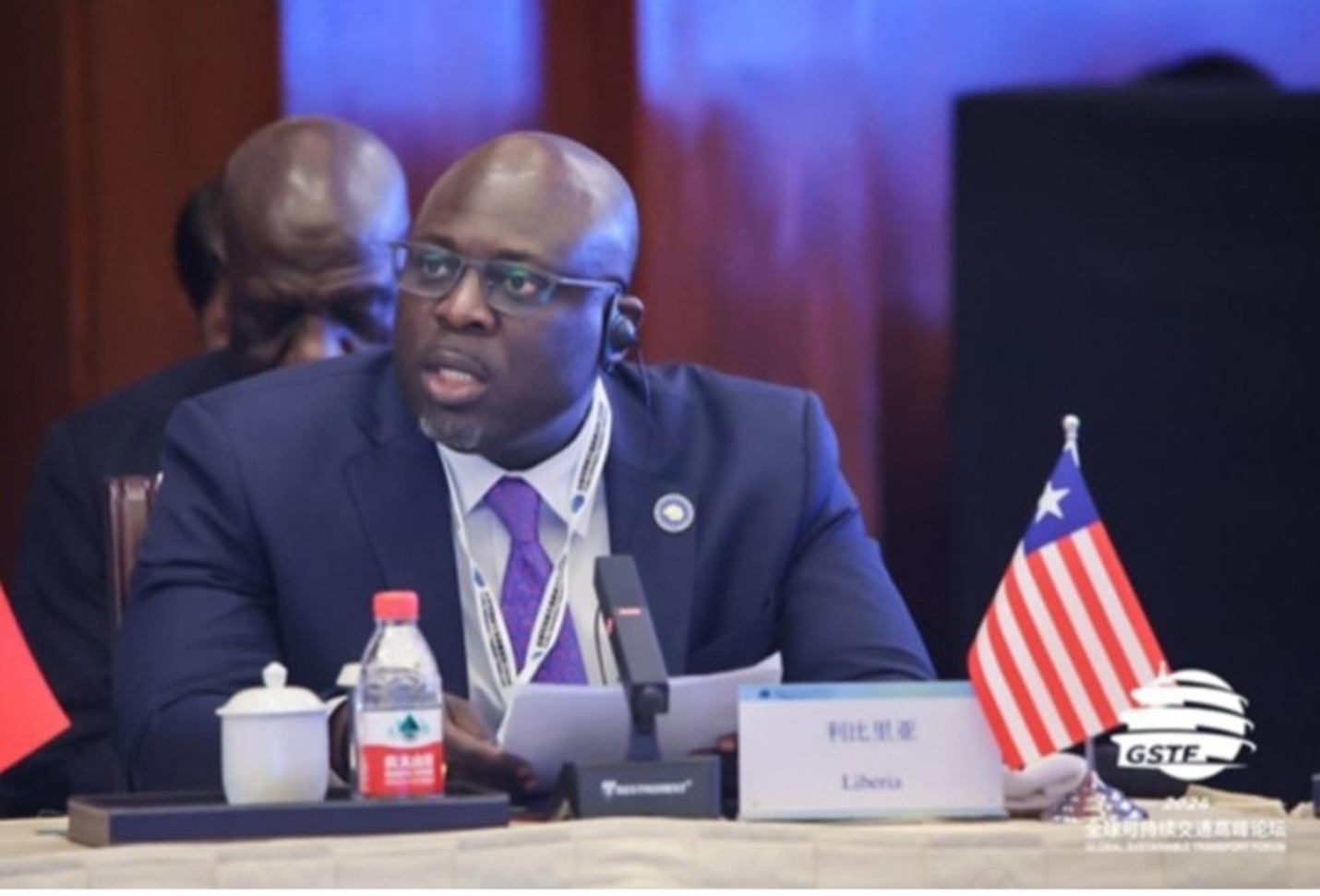
Maritime Commissioner and CEO Cllr. Neto Zarzar Lighe Sr. told the Ministry of Information’s weekly press briefing that the Marshall High-Level Dialogue on Global Maritime Safety, Security and Welfare of Seafarers will open at 10 a.m. Thursday at the Liberia Maritime Training Institute in Marshall, Margibi County. President Joseph Nyuma Boakai is scheduled to deliver the keynote address.
“The security of global shipping is inseparable from international peace and security, and the welfare of seafarers must be central to every meaningful discussion about maritime security,” Lighe said.
He said the dialogue is expected to produce a communique with policy recommendations to inform “Liberia’s proposed signature initiative” during its December presidency, better coordination among U.N. agencies and international maritime institutions, and stronger international recognition that protecting commercial shipping and seafarers is essential to international peace and security.
Maritime security was not among the five priorities Foreign Minister Sara Beysolow Nyanti outlined for the presidency in an Oct. 30 briefing to diplomats, which covered women, peace and security; youth, peace and security; climate change, conflict and natural resources; regional security; and Security Council reform and peacekeeping, according to media reports. Lighe’s announcement signals that the flag the country carries for the world’s merchant fleet will also feature in its month at the head of the council.
Liberia began a two-year term on the Security Council in January, its first seat in 62 years.
Lighe said the dialogue, held under the theme “enhancing global maritime safety, security and the welfare of seafarers for international peace and shared prosperity in a period of heightened insecurity,” will bring together senior government officials, diplomats, U.N. representatives, maritime security experts and shipping industry leaders. It will focus on two areas: securing the maritime domain amid armed conflict and emerging threats, and strengthening global maritime governance and coordination among international institutions.
He listed geopolitical tension, armed conflict, piracy, cyberattacks driven by growing automation in shipping, illegal, unreported and unregulated fishing, narcotics and human trafficking among the threats facing commercial vessels and their crews, particularly in the Gulf of Guinea and the Gulf of Aden.
“Seafarers are human beings whose lives, safety, dignity and welfare must be protected at all times,” he said, describing crews who work in increasingly dangerous conditions, far from their families, to keep global trade moving.
As the world’s largest flag state, he said, Liberia has a responsibility to the shipping industry and to the broader international community, but no single country can address the threats alone. He said the dialogue is meant to move beyond discussing problems to “practical recommendations, concrete proposals, and a framework for sustaining international cooperation.”
“When we protect our seas, we protect global commerce. When we protect our shipping routes, we protect economic stability. And when we protect our seafarers, we protect the human lives that sustain international trade and global prosperity,” Lighe said.
Responding to reporters’ questions about what Liberians gain from the maritime program, Lighe said the authority is the largest contributor among state-owned enterprises to the government’s consolidated account. He said the authority will dedicate additional dormitories and classrooms at the Liberia Maritime Training Institute in the coming months, has increased the number of students on maritime scholarships, and has a partnership with a university in Shanghai, China, where it recently sent a group of students and will send about 24 more officers for training within a week.
Asked about transparency and accountability, Lighe said an audit completed after his team took over returned an unqualified opinion, and that the authority’s 2025 audit is underway.
Speaking at the International Maritime Organization, Lighe said Liberia had recently issued “a very strong statement” about the share of IMO jobs held by Africans. At the IMO Council’s 138th session in London this month, he said Africa accounts for about 5% of the organization’s workforce, compared with about 45% for Europe, and urged targeted recruitment to correct the imbalance, according to media reports. He told reporters Tuesday that recruitment is an international process, but that there must be “some level of flexibility” and “reasonable conditions to be able to accommodate Africans for inclusion.”
Liberia is the IMO’s largest funder. Lighe presented the country’s 2026 assessed contribution of £5.95 million, about 15% of the organization’s annual operating budget, to IMO Secretary-General Arsenio Dominguez in London this month, media reports said.
Asked about the authority’s cybersecurity capacity, Lighe said Liberia’s international registry has “one of the best programs” to counter cybercrime in shipping.
Regarding the state of Liberia’s beaches, he said the authority withdrew from a beach-cleaning program run by an interagency committee around 2015 or 2016 and is now in talks with the Ministry of Youth and Sports and other agencies to revive it, though the authority would support rather than lead the effort.





Discussion about this post