


Published: November 18, 2026
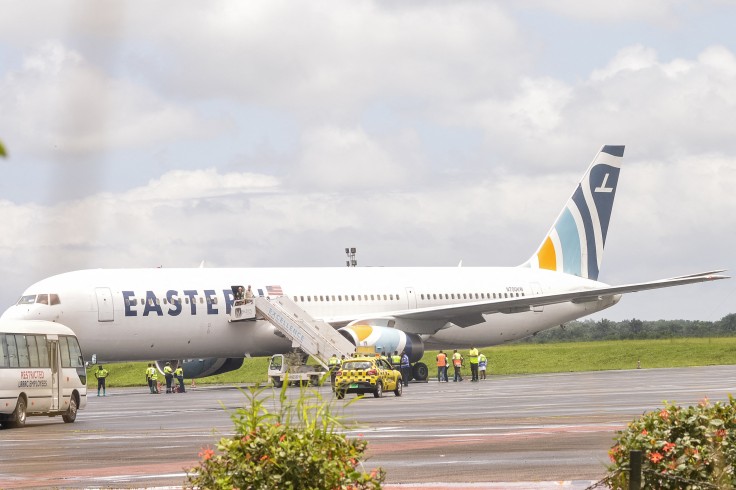
MONROVIA — Liberia’s arrangement to receive non-Liberians removed from the United States rests on a short agreement concluded through an exchange of diplomatic notes in September 2025. It sets out how people who fear returning to their home countries can be transferred to Liberia and have their protection claims examined here.
The agreement has been in the news since the first arrivals in August and, more recently, a U.S. Senate resolution seeking information about it. Here is how it works.
What is the agreement?
Its formal title is the Agreement Between the Government of the United States of America and the Government of the Republic of Liberia to Cooperate in the Examination of Protection Claims. The U.S. Embassy proposed it in a note dated Sept. 4, 2025, and the Liberian Ministry of Foreign Affairs accepted it in a reply dated Sept. 10, 2025, the day it entered into force. The U.S. State Department has published it in its Treaties and Other International Acts Series as agreement 25-910.
Who does it cover?
It covers “third-country nationals present in the United States who may seek protection against return to their home country or country of former habitual residence.” These are citizens of other countries in the U.S. who say they would face danger if sent home. It does not cover Liberian citizens.
The stated aim is “the dignified, safe, and timely transfer” of these people from the United States to Liberia, where they can seek asylum, refugee status or equivalent temporary protection.
The agreement bars the U.S. from transferring unaccompanied minors.
How are transfers decided?
The United States may propose transfers “in its complete discretion,” and Liberia may accept or decline each proposal “in whole or in part,” also in its complete discretion. Liberia is not required to accept anyone.
The two governments agreed to develop operating procedures covering how transfers are requested and accepted, and to sign them before any transfers begin. Those procedures have not been made public.
How many people will come?
The agreement itself sets no number. Information Minister Jerolinmek Piah announced on Aug. 18, 2026, that Liberia would receive up to 1,200 people within a year, according to The Associated Press. He said they would include Africans and people from North America, South America and the Caribbean.
What protections does it provide?
Both governments commit to act in line with the 1951 Refugee Convention and its 1967 Protocol, the U.N. Convention against Torture, and their own constitutions and laws.
Liberia agrees not to return anyone transferred under the agreement to their home country until a final decision has been made on any protection claim they have filed. It also agrees to set a procedure, consistent with its obligations, for people who drop their claims or do not apply for protection.
Who pays?
The agreement does not commit either government to spend money, and says implementation depends on each party’s available funds and technical capacity.
The government has said Liberia received no payment, and that the United States and an international partner would cover accommodation, food and onward travel for those transferred.
Can it be changed or ended?
Either government can suspend or end the agreement at any time with written notice. Amendments must be agreed in writing by both sides. Disagreements over interpretation are to be resolved through dialogue or diplomatic channels.
What has the government said about it?
The Boakai administration has described the arrangement as humanitarian. Piah said the arrivals would be received as “guests of the Republic,” were free to leave and could seek asylum, according to Al Jazeera.
The first group, about 20 people, arrived at Roberts International Airport on Aug. 20, 2026, according to U.S. officials quoted by CBS News.
Did the Legislature approve it?
No. The agreement took effect when the Foreign Ministry sent its reply note, as agreements by exchange of notes normally enter into force.
Some lawmakers have argued that it should have gone to the Legislature. Nimba County Sen. Samuel Kogar has pointed to Article 57 of the Constitution, which requires a majority in each house to concur in treaties and similar international agreements. The executive has treated it as a cooperation arrangement within its authority. The question has not come before the courts.
What is the U.S. Senate resolution?
On Sept. 23, U.S. Sen. Tim Kaine, a Virginia Democrat, filed S. Res. 886, asking the State Department to report to Congress on Liberia’s human rights practices regarding people transferred under the agreement. The resolution is a request for information and makes no finding of wrongdoing. Kaine also filed similar resolutions covering more than two dozen countries with third-country arrangements with the United States, including Ghana, Sierra Leone, Uganda and Eswatini.
The resolution was referred to the Senate Foreign Relations Committee the day it was filed. No further action has been recorded.
Is Liberia alone?
No. The United States has concluded similar arrangements with countries across Africa and elsewhere as part of its policy of removing people to countries other than their own.






Discussion about this post