


Published: May 15, 2026
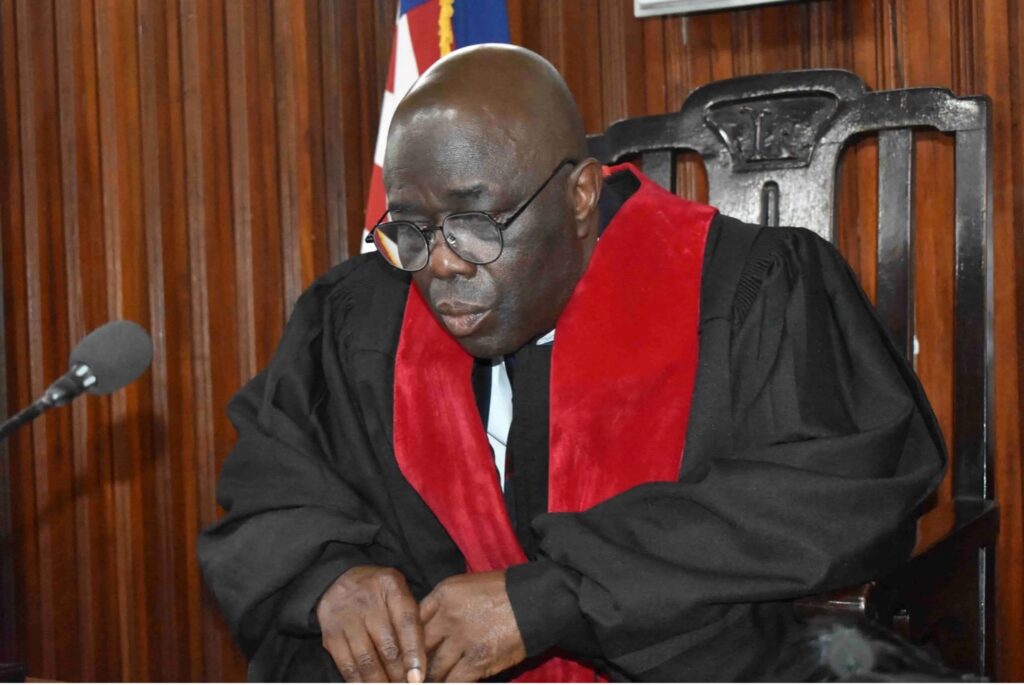
MONROVIA — The Liberia Judiciary on Friday flatly denied a circulating report claiming Chief Justice Yamie Quiqui Gbeisay ordered an investigation into alleged jury tampering in a US$6.2 million corruption case, calling the publication false, misleading and a deliberate smear campaign against the nation’s highest judicial officer.
In a statement, the Judiciary said Gbeisay issued no mandate, order, directive or instruction authorizing any investigation into jury tampering in connection with the referenced matter, describing the story as “entirely fabricated” with no resemblance to any official action or position of the institution.
“The attempt to attribute such conduct to the Chief Justice is not only legally absurd, but also a deliberate smear campaign calculated to undermine public confidence in the independence, neutrality, and integrity of the Judiciary,” the statement read.
The Judiciary invoked Liberia’s constitutional framework in its rebuttal, noting that the Chief Justice does not arbitrarily intervene in criminal proceedings or unilaterally investigate jury deliberations in pending cases. The institution said Liberia’s judicial system operates under established legal procedures, due process guarantees and institutional safeguards specifically designed to prevent the kind of interference suggested by the publication.
The denial comes amid what the Judiciary described as a pattern of misinformation targeting high-profile cases. Officials said certain actors continue to weaponize propaganda and speculative reporting to inflame public sentiment, conduct the institution warned does “grave harm to the administration of justice” and threatens the sanctity of Liberia’s democratic institutions.
The Judiciary also pushed back against what it characterized as conspiracy theories surrounding jury verdicts, asserting that outcomes rendered by juries are products of established legal process and not the result of political manipulation or media pressure.
The institution urged the public to disregard the publication and rely only on verified communications issued through authorized Judiciary channels. It further reserved the right to pursue legal remedies against those responsible for disseminating what it called knowingly false and defamatory information.





Discussion about this post