


Published: June 8, 2026
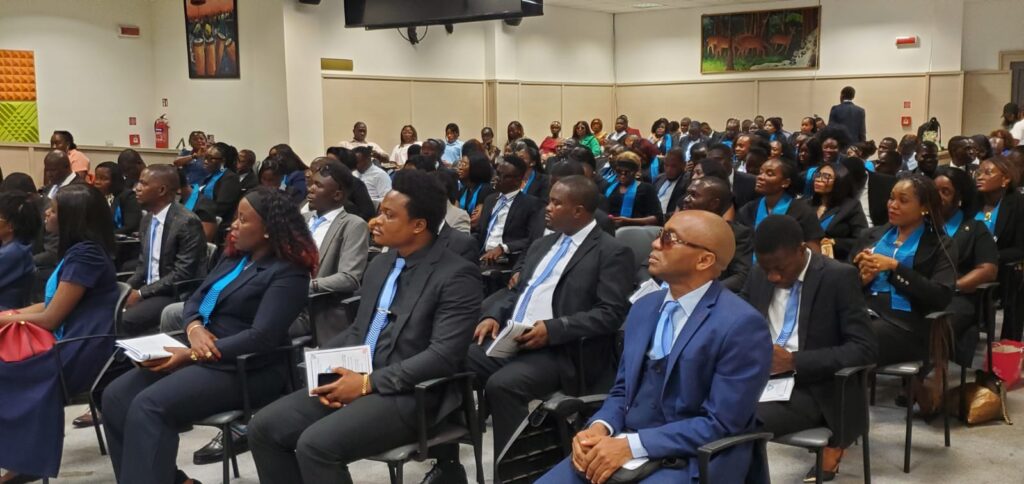
MONROVIA — The Banking Institute of Liberia graduated 116 banking professionals on Friday, widening the country’s pool of certified financial workers as industry leaders pressed for higher professional standards across the sector.
The certification ceremony, held June 5 in Monrovia, recognized 88 participants in the 2026 Certificate of Achievement Training Program and 28 graduates of the first cycle of the Professional Banking Diploma Program. The graduates came from eight commercial banks and the Central Bank of Liberia.
Delivering the keynote address, United Bank for Africa Liberia CEO Ayokunle Olejubu described bankers as “key ingredients for development” and said their role extends well beyond processing transactions and managing accounts.
“Beyond managing transactions, they must act as trusted advisors and catalysts who support entrepreneurs and facilitate community investment,” he said.
Olejubu said qualifications offered through the Liberian Institute of Bankers and the Banking Institute of Liberia could eventually become mandatory for banking professionals nationwide. He pointed to the rise of digital banking and mobile money services as evidence of a sector in rapid transformation.
“Graduation marks a commitment to professional integrity and competence in a rapidly changing financial landscape,” he said. “The banking sector is undergoing a transformation where technology will make financial services more accessible than ever before.”
He linked the sector’s progress to Liberia’s improving economic outlook, citing steady growth, declining inflation and increased financial stability, and reminded graduates that a diploma is only the beginning of a career requiring continuous learning. Banking professionals, he argued, are among the country’s future leaders, with expertise in finance critical for posts such as Central Bank governor and minister of finance.
Olejubu referenced a similar banking initiative launched years ago in The Gambia, saying Liberia has since surpassed those early efforts in building its professional banking infrastructure. He praised the institute for developing the skilled workforce needed for a sustainable and inclusive financial sector.
In a special statement, BIL Director General Richard S. Panton, an assistant professor, said the institute had overhauled its curriculum to align with emerging trends and international best practices, revising five core courses. Fintech and Digital Banking replaced Bank Tolerance, Bank Management and Strategic Leadership replaced Branch Management, and Customer Relationship Management replaced Customer Service. Banking Operations and Practices was expanded, while Lending and Credit Administration broadened the former Credit Analysis course.
Panton said Banking Law and Regulation has been introduced as a mandatory course covering Liberia’s Commercial Code, insolvency laws and international supervisory standards. He added that the institute introduced a four-module program in economics, financial accounting, liquidity management and ethics as a prerequisite for the Charter Banker Program, offered through a partnership with the Chartered Institute of Bankers of Nigeria. Diploma candidates were required to conduct individual fieldwork and structured research on Liberia’s banking sector.
“High standards lead to more responsible credit flows and a stronger national financial engine,” Panton said. He said the institute plans to expand its program portfolio, establish international qualification partnerships and increase investment in research and publications to keep graduates competitive across the West African sub-region.
“The Class of 2026 is designated as ambassadors of the institute, tasked with using their qualifications with purpose and pride,” he said.
Presenting the graduates, BIL Training Coordinator S. Ephraim T. Nyumah said the institute ran two academic tracks during the year. Eight commercial banks nominated 112 candidates for the certificate program, of whom 90 enrolled and 88 completed the level. Two participants failed to meet attendance and academic requirements. Access Bank and AfriLand Bank contributed the most participants at the certificate level, with 21 each.
For the diploma program, 35 candidates enrolled and 28 qualified for graduation, Nyumah said. The Liberia Bank for Development and Investment produced the largest number of diploma graduates, with seven.
“These graduates represent a diverse cross-section of the banking sector, including entry-level and senior-level officers who demonstrated high levels of discipline and professionalism,” he said.
The Banking Institute of Liberia is a corporate training institution specializing in banking and financial management. It was established in March 2014 through a partnership between the Liberia Bankers Association and the Central Bank of Liberia and became fully operational in April 2018 with the appointment of Panton as its first director general.






Discussion about this post