
Published: June 8, 2026
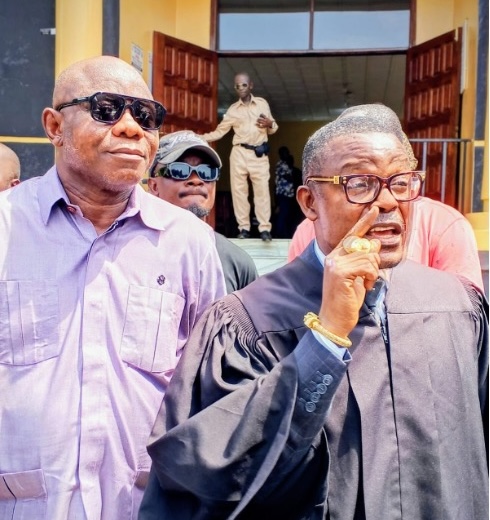
MONROVIA — Criminal Court ‘C’ gained jurisdiction Monday to investigate alleged jury tampering in the economic sabotage case against former Finance Minister Samuel D. Tweah and four other former officials, after reading the mandate of the Supreme Court of Liberia.
The court assumed authority over the investigation after reading the mandate before Assigned Circuit Judge Ousman F. Feika at the Temple of Justice. The reading returns the matter to the lower court, allowing it to proceed under the instructions issued by the nation’s highest court.
According to the court’s daily agenda for its May Term, A.D. 2026, the case pits the Republic of Liberia, through the Ministry of Justice, against Tweah, former Acting Justice Minister Cllr. Nyanti Tuan, former Financial Intelligence Agency Director General Stanley S. Ford, former Financial Intelligence Comptroller D. Moses P. Cooper and former National Security Adviser Jefferson Karmo. The matter was specifically listed for the Supreme Court mandate to be read at 10 a.m.
The investigation centers on allegations that jurors may have been improperly influenced during the trial, a claim that has drawn intense debate in legal circles and among the public. The controversy emerged after a verdict that split among the defendants. Tweah and Cooper were acquitted on all counts, while the others drew guilty verdicts on some charges and hung verdicts on others.
Reports later surfaced suggesting that certain jurors engaged in conduct that raised questions about the integrity of the deliberations. Those allegations prompted legal challenges that eventually reached the Supreme Court. With the mandate now read, Criminal Court ‘C’ is positioned to examine the tampering claims and carry out any further proceedings the high court directed.
The underlying case centers on allegations that the defendants participated in the unauthorized transfer and expenditure of public funds. Prosecutors charged them with economic sabotage, theft of property, money laundering, criminal facilitation and criminal conspiracy. Throughout the trial, defense lawyers maintained that the defendants acted within the scope of government authority and that prosecutors failed to establish criminal intent.
The lower court is now expected to determine the next steps in the tampering investigation and to act on any related motions from prosecutors or defense lawyers. Whether the inquiry leads to sanctions or additional judicial proceedings remains to be seen. For now, the mandate reading signals that the legal fight surrounding the Tweah case is far from over.






Discussion about this post