


Published: April 23, 2026
MONROVIA — Liberia has made measurable progress getting more citizens into the financial system over the past five years. The problem, experts told a national workshop Wednesday, is that having an account and actually using it are two very different things — and the gap between them is where the country’s financial inclusion agenda has stalled.
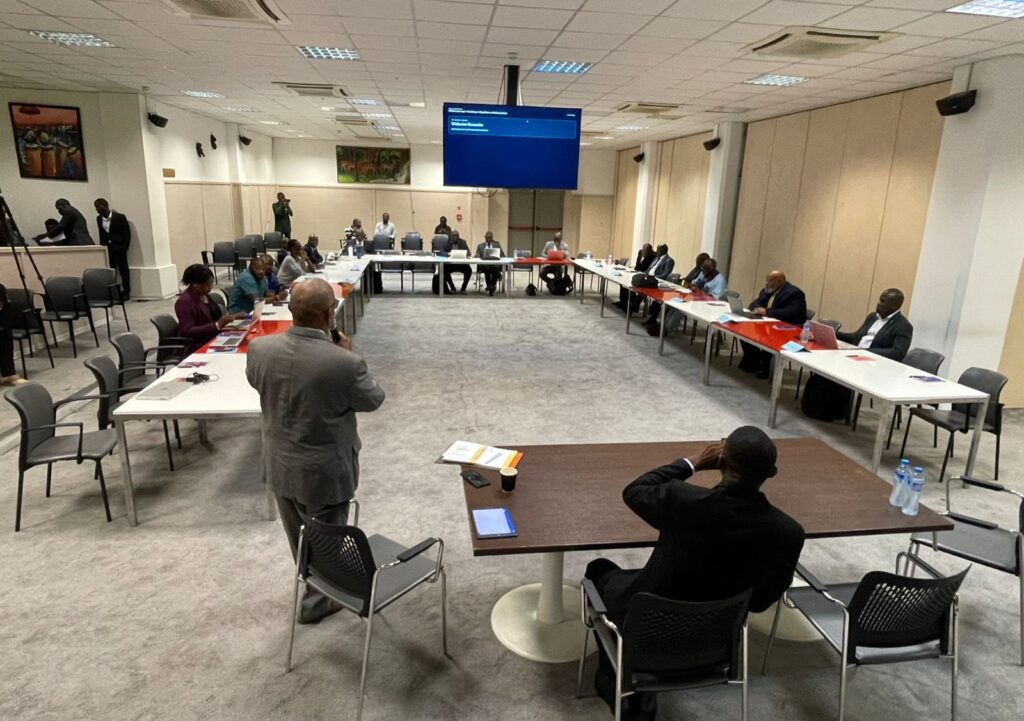
The Central Bank of Liberia convened the one-day workshop at its auditorium to begin drafting the National Financial Inclusion and Education Strategy for 2026 to 2030, bringing together policymakers, regulators, development partners, financial institutions, fintech actors and civil society groups under the theme “Resolving Structural Bottlenecks in Regulation, Infrastructure, and Macro-Strategy.”
The session opened with a frank assessment of what the outgoing strategy, which ran from 2020 to 2024, actually achieved — and where it fell short.
Milton Weeks, chief consultant and former executive governor of the Central Bank, said Liberia increased financial account ownership from roughly 36 percent to more than 50 percent of the adult population during that period, driven largely by reforms in mobile money and agent banking. He described the gain as significant. He was careful, however, not to overstate it.
“Access alone is not the same as inclusion,” Weeks said. “While more people now have accounts, far fewer are actively using them to save, borrow, transact or build financial resilience.”
He identified three core failures in the previous strategy. It measured the wrong things, tracking the number of agents and infrastructure points rather than whether people were actually using financial services. It left out critical sectors, including agriculture, gender inclusion, climate resilience and rural access, which were never adequately integrated into the design. And it was perceived, above all else, as a Central Bank program rather than a national one — a framing that produced uneven implementation across institutions.
“Where ownership is not shared, delivery becomes uneven at best,” Weeks said.
Progress under the outgoing strategy was strongest in expanding digital financial infrastructure and weakest in consumer protection and financial literacy — two areas, Weeks warned, that have direct implications for whether citizens trust the system enough to engage with it.
Opening the session on behalf of the bank’s executive management, senior technical operations officer Jedidiah Sazi Lawubah echoed that assessment, pointing to regulatory fragmentation, rural infrastructure deficits and weak coordination at the macro level as persistent barriers that improved account numbers alone cannot solve.
“Access alone is not enough,” Lawubah said. “Despite improved coverage, deep and persistent structural bottlenecks continue to limit the quality, sustainability and effective use of financial services.”
He said the new strategy must move beyond policy ambition and focus on implementation, coordination and impact that is measurable and aligned with Liberia’s development priorities under the ARREST Agenda for Inclusive Development.
The 2026 to 2030 strategy is being structured around three pillars: strengthening regulatory frameworks, expanding financial infrastructure, and aligning financial inclusion with macroeconomic priorities including agriculture, micro, small and medium-sized enterprises, and trade.
Weeks set the standard he wants the new document to meet. “The next strategy must not be owned by one institution or measured only by numbers,” he said. “It must be focused on real outcomes — when a market woman can save safely, when a small business can access credit, and when citizens trust the system they are part of.”
Officials say the final strategy will serve as a roadmap for deepening financial inclusion and strengthening economic resilience across Liberia.






Discussion about this post