


Published: February 4, 2026

Under the hot sun and amid rows of vegetables, fish ponds, compost pits, and buzzing beehives, young Liberians are redefining agriculture, not as punishment or a last resort, but as innovation, entrepreneurship, and a national responsibility.
At the agricultural training farm of the Youth International Training Institute (YITI), dozens of young people drawn from different institutions and surrounding communities are acquiring hands-on skills aimed at strengthening Liberia’s food security and reducing the country’s heavy dependence on imported food.
Agriculture remains central to Liberia’s economy and livelihoods, providing the main source of income for an estimated 60–70 percent of the population and contributing about 30–35 percent to the national Gross Domestic Product (GDP). Yet food insecurity and low productivity persist, with much of the country’s staple food still imported due to weak production systems and limited investment.
Why the Institute Was Formed
The Youth International Training Institute was established about five years ago by a group of young Liberian professionals from diverse backgrounds, including agriculture, economics, and entrepreneurship. According to the institute’s trainer and national consultant, Jacob B. Dennis, the idea was born out of a shared concern about youth unemployment and Liberia’s underutilized agricultural potential.
“If you want to succeed in agriculture, you need four things: land, labor, management, and capital,” Dennis explained. “Liberia already has land and labor. That alone opens a big door for agricultural productivity. Agriculture is a low-hanging fruit for young people, even for those who studied nursing or other disciplines.”
The vision of YITI is to create a practical training space where young people gain real agricultural skills, develop entrepreneurial thinking, and build pathways to self-employment instead of languishing in joblessness.
Youth Voices from the Field
One of the beneficiaries, Emma M. Johnson, said her motivation to join the training stems from concern about Liberia’s growing food insecurity and the disengagement of many young people from productive work.
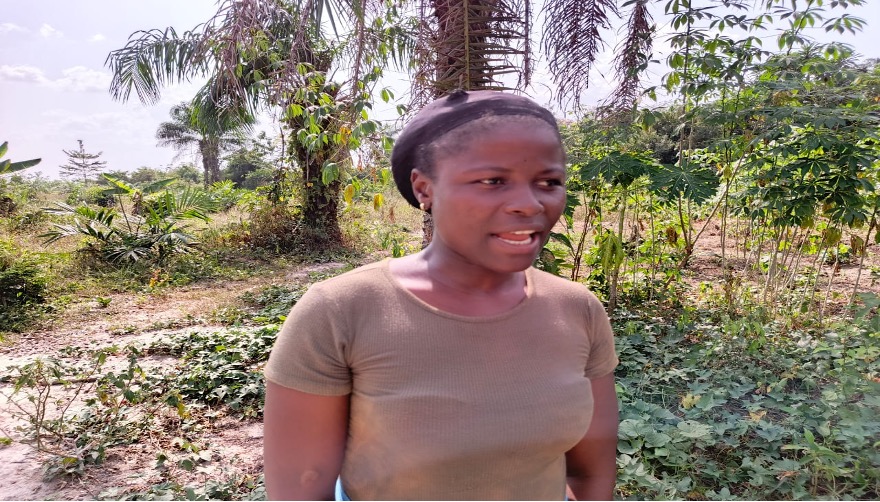
Student Emma M. Johnson speaks with an agricultural reporter
“Food insecurity is not good for our country,” Emma said. “Many young people today are not interested in productive work. We decided to get involved in agriculture so we can improve our country and stop depending on other nations for food.”
She encouraged young people, especially young women not to remain inactive.
“Agriculture is hands-on. We need to plant, manage crops, and learn how to produce food ourselves. When we are many, we can fight food insecurity,” she added.
Emma also appealed to the Government of Liberia and development partners to support the initiative through grants and agricultural inputs.
“Support can be in cash or kind, tools, fertilizers, or organic manure. Here, we are trying to move away from inorganic fertilizers by producing compost and organic nutrients ourselves.”
Other beneficiaries, including graduates from Bong County Technical College and University of Liberia shared similar motivations, describing agriculture as a pathway to self-employment, innovation, and long-term economic independence in a country blessed with fertile soil but struggling with low production and rising food imports.
From Theory to Practice
Participants consistently emphasized that agricultural education in Liberia must move beyond classroom theory.
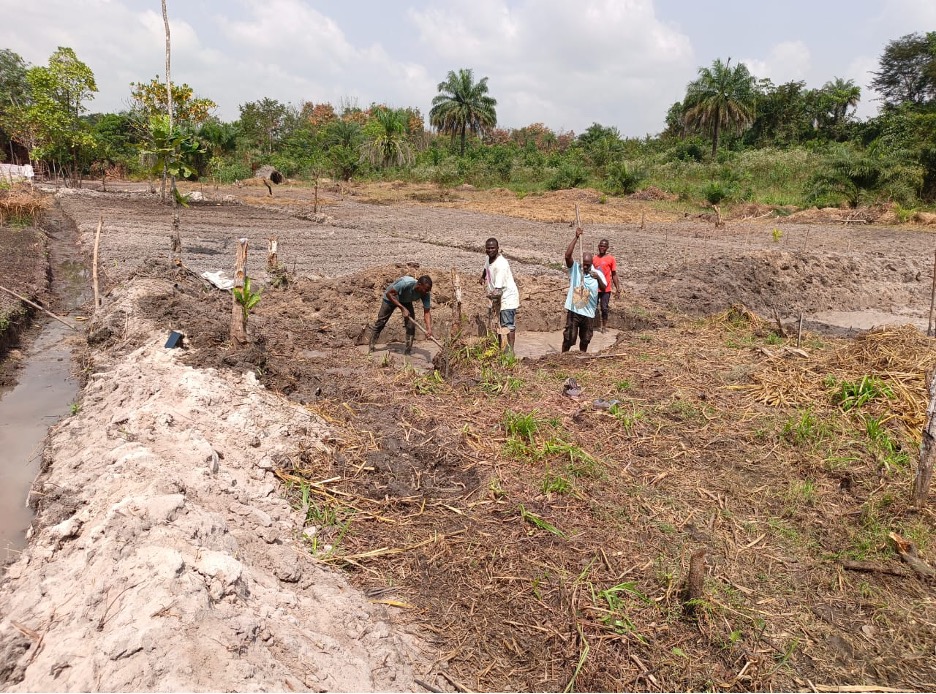
Students engage in hands-on learning as they gain first-hand practical experience on the YITI farm
“You cannot study agriculture and remain in the city waiting for office work,” Emma noted. “Agriculture is practical. If you learn it, you must go to the field.”
Josepeh Zankpah Jr., a trainee explained that agriculture and business remain the two strongest wealth-creating sectors globally.
“Liberia has fertile land,” he said. “So why should we be importing food?”
Climate-Smart and Integrated Farming Systems
With climate change disrupting traditional farming seasons and nearly half of Liberian households facing food insecurity, trainees at YITI are learning climate-smart and integrated farming approaches. These include soil testing, compost production, worm farming, organic fertilizer development, water recycling, vegetable cultivation, beekeeping, oil palm production, and fish farming, designed to complement one another and reduce waste.
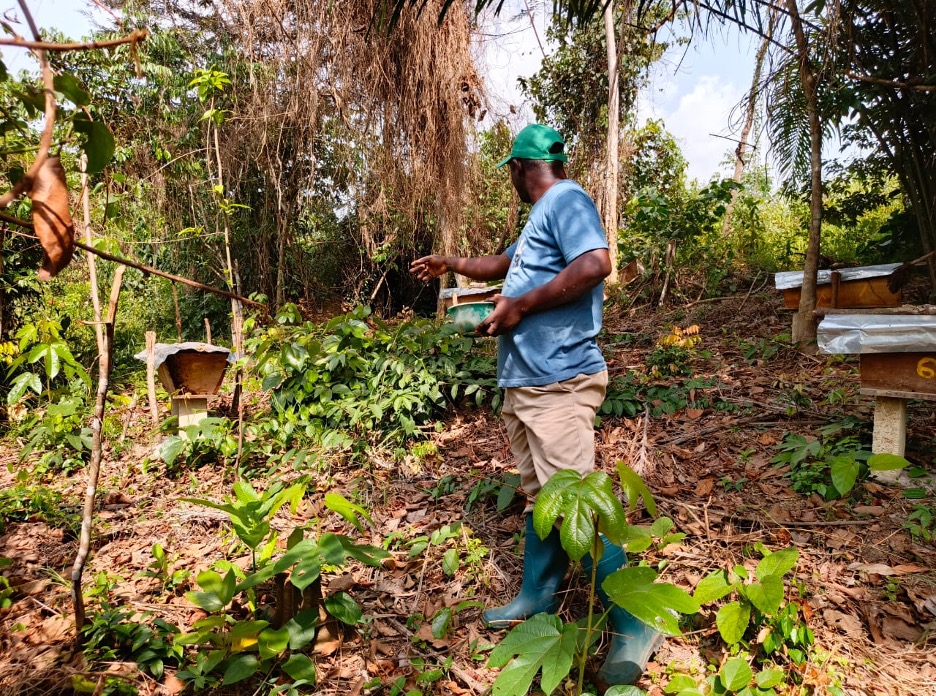
Trainer Jacob B. Dennis shows a reporter the designated beekeeping site on the farm
Aloysius Sumo, another trainee explained that soil pH, texture, and nutrient levels are routinely tested to determine crop suitability.
“We use compost, worm extract, and even properly treated human urine, which is rich in urea, to improve soil fertility,” Sumo said.
The farm is also piloting fish-farming systems suitable for limited land use, demonstrating how households can raise fish within their own compounds rather than relying solely on swamp-based production.
International Training and Global Exposure
Beyond local training, Mr. Dennis has facilitated international agricultural training opportunities for hundreds of Liberian youths, exposing them to advanced farming technologies and agribusiness models abroad. Through partnerships with leading agricultural training institutions in Israel, selected trainees have participated in intensive programs focused on irrigation technology, greenhouse farming, precision agriculture, and agribusiness management.
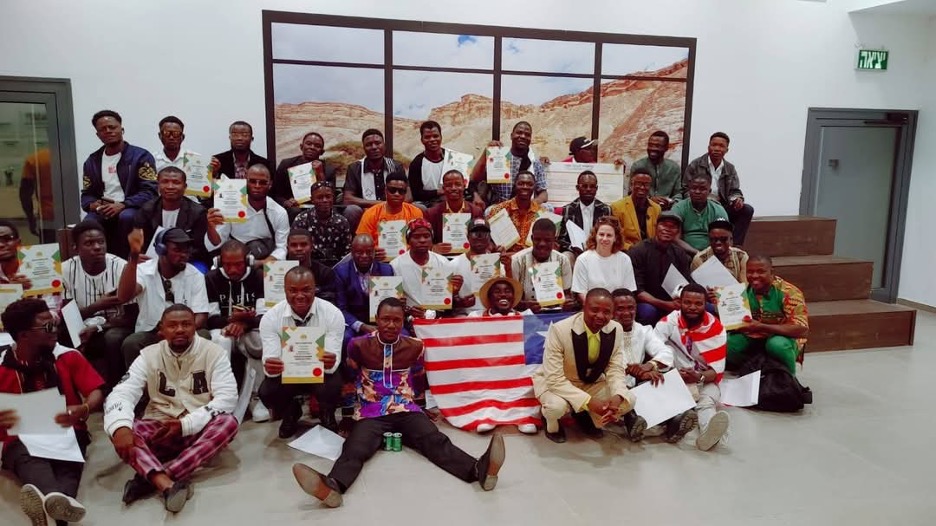
After eleven months of intensive training in Israel, the second batch of Liberian beneficiaries arrives home in Liberia
These international trainees return to Liberia equipped with modern skills and knowledge, which they apply at YITI and within their communities to improve productivity and mentor other youths.
“This exposure helps our youths see agriculture as a business and a science,” Mr. Dennis said. “They come back ready to train others and help Liberia reduce food imports.”
What Happens on the Farm
Every Friday and Saturday, Mr. Dennis joins trainees on the farm, where multiple agricultural enterprises are actively managed as part of an integrated system. Training programs typically run for three to four months and cover soil chemistry, pH testing, irrigation methods, fish breeding, and organic fertilizer production. The number of trainees has more than doubled, stretching limited accommodation and resources.
Mr. Dennis feeds fish at one of the farm’s fish ponds, demonstrating practical aquaculture techniques to trainees
“We need support to build a water reservoir for irrigation and expand our fish systems so trainees can buy fingerlings and start on their own,” Mr. Dennis noted.
Training Technicians, Not Just Degree Holders
According to Mr. Dennis, one of YITI’s core goals is to address Liberia’s shortage of skilled agricultural technicians.
“Liberia has many degree holders, but very few technicians,” he said. “Technicians understand measurements, land, and systems. They don’t need long explanations, they do the work.”
YITI aims to train 5,000 young people within five years, offering short practical trainings, one-month intensive programs, and three-month certified courses. Several batches of trainees have already completed both local and international programs.
Call for Support from Youth and Community Leaders
Youth trainees, along with prominent citizens of Bong County, are calling on development partners, donors, and the Government of Liberia particularly the Ministry of Agriculture to strengthen support for YITI. They stress that expanding irrigation systems, accommodation, training equipment, and scholarships for international exposure will significantly increase the program’s impact.
As Liberia continues to spend millions on imported food and under-invest in agriculture, they say initiatives like YITI offer a proven, homegrown solution.
“This farm is open to everyone,” Mr. Dennis concluded. “With the right support, we can train more youths, improve food production, and make agriculture attractive and profitable.”
At the Youth International Training Institute farm, the message is clear: Liberia’s food future depends on empowering its youth, not just with theory, but with soil on their hands, global exposure, and skills in their minds.






Discussion about this post