


Published: September 14, 2026
MONROVIA — The Liberian government has formed a task force to resolve bad bank loans and restore lending to businesses after a national conference called for a resolution plan within three months.
By Gibson Gee
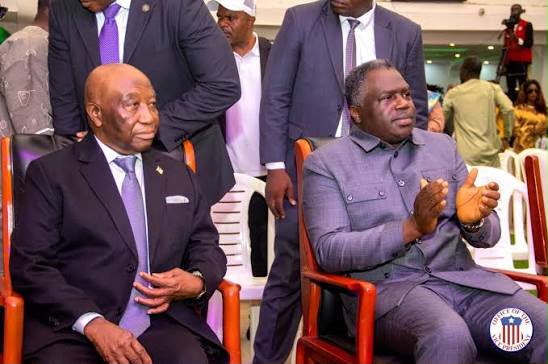
Vice President Jeremiah Kpan Koung announced the decision Friday, Sept. 11, while delivering President Joseph Boakai’s closing remarks at the three-day National Non-Performing Loans Resolution Conference in Monrovia.
Koung said unpaid loans were restricting business expansion, increasing borrowing costs and limiting investment and job creation. He said Boakai had directed the institutions involved to promptly finalize the task force’s membership, mandate and action plan, with clear responsibilities, deadlines and progress reports.
The task force will bring together the Central Bank of Liberia, the ministries of Finance and Development Planning and Justice, financial institutions, technical experts and other stakeholders.
Its work will focus on resolving existing non-performing loans and strengthening lending, supervision and enforcement systems to prevent more loans from falling into distress.
“Resolving non-performing loans is not simply about improving commercial bank balance sheets. It is about unlocking economic opportunity, expanding access to finance, encouraging investment, supporting entrepreneurship, and creating jobs for the Liberian people,” Koung said.
The conference communiqué calls for a national loan-resolution roadmap within three months, stronger banking supervision, legal and judicial reforms, and improved systems for assessing borrowers.
It also calls for measures to address government arrears and an assessment of whether Liberia should establish an asset management company to help resolve distressed loans. The announcement did not establish such a company.
Koung identified weaknesses in credit infrastructure, delays in the legal and judicial systems, governance problems and gaps in enforcement as factors contributing to the buildup of bad loans.
He said the government supported stronger credit-risk management, more effective debt recovery and insolvency procedures, and improvements in the handling of commercial disputes.
“The policy options have been identified. The reform priorities have been articulated. The responsibility of stakeholders has been clarified. What remains is implementation,” he said.
Koung said responsibility for the reforms extended beyond the government and Central Bank. He called on lawmakers to support necessary legislation and the judiciary to strengthen commercial justice and enforcement.
Banks must improve their governance and risk-management practices, while borrowers must meet their repayment obligations, he said. Development partners would also be needed to provide technical expertise and financial support.
The government wants the reforms to expand financing for small businesses, women-owned enterprises, young entrepreneurs, agriculture and underserved communities, Koung said.
He said the conference’s success would ultimately be measured by whether its decisions produced more lending to productive sectors, stronger businesses, jobs and greater confidence in Liberia’s financial system.






Discussion about this post