


Published: September 14, 2026
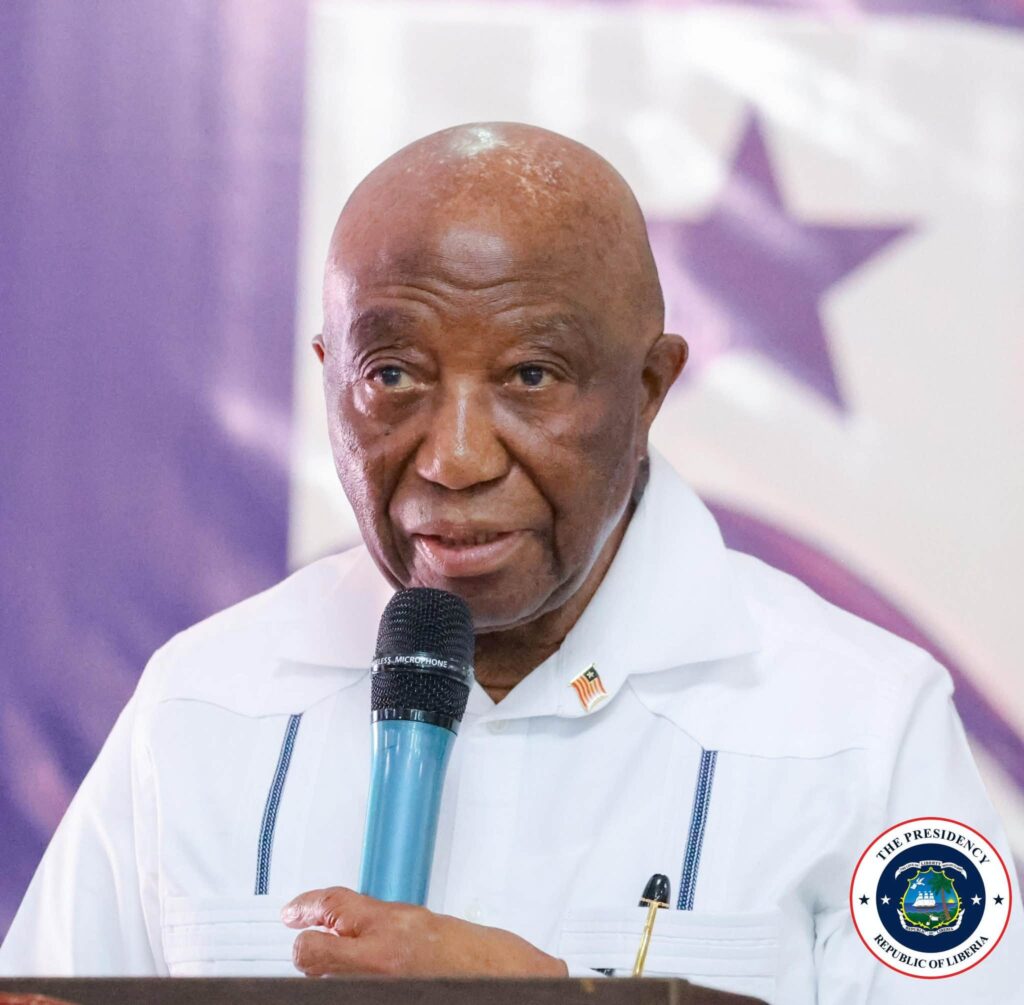
MONROVIA — President Joseph Boakai urged journalists Saturday to report Liberia’s progress alongside its problems, while media leaders pressed his administration for an independent journalism fund, public broadcasting reforms and greater access for women reporters.
By Lennart Dodoo
Speaking at the second annual Presidential Media Dinner at the Ellen Johnson Sirleaf Ministerial Complex in Congo Town, Boakai said reporting on the country’s achievements should not come at the expense of scrutiny of his government.
“Being positive does not mean ignoring our challenges,” he said, adding that journalists must remain free to question, investigate, criticize and hold public officials accountable.
“Even as we expose our challenges, we must also tell the story of our resilience, our progress, our people, and our possibilities,” he said.
Boakai told the gathering that coverage of Liberia helps shape how the country is viewed abroad and influences interest in investing here. He called for reporting grounded in truth, balance and fairness, while reaffirming his administration’s commitment to freedom of expression, access to information and an independent press.
The president said the government should remain open and accessible and should not seek to muzzle or control the media. He described officials and journalists as having different responsibilities but a shared obligation to serve Liberians.
“We should not always agree. That is normal,” he said.
His remarks followed appeals from media representatives who said financial hardship, inadequate equipment and limited advertising were undermining journalism across the country.
Press Union of Liberia President Julius Kanubah said concerns raised at the first presidential media dinner in April 2025 remained largely unresolved. These included reforming ELBC into an impartial public service broadcaster, strengthening community radio stations and improving journalists’ working conditions.
Kanubah said the sector still faces high operating costs and insufficient professional training. He proposed a Liberian Media Governance and Sustainability Act to establish a national framework supporting independent, ethical and professional journalism.
He also asked Boakai to support completion of the union’s headquarters, describing the proposed facility as a home for press freedom, professional development and the protection of journalists.
The PUL president urged the administration to consider the lasting contribution it would make to the media, pointing to reforms undertaken by previous governments.
Female Journalists Association of Liberia President Lisa Tenneh Diasay called for an independent public interest journalism fund, with safeguards against political interference.
“The media must be on the budget table,” she said.
Diasay said the government depended on media institutions to communicate with the public, yet those institutions lacked the resources needed to sustain their work. She urged investment to strengthen reporting beyond Monrovia, where travel costs and limited resources make coverage harder.
She also pressed for greater inclusion of women journalists in presidential travel delegations and opportunities to question the president. Women’s access to those assignments, she said, would broaden reporting on issues affecting markets, health facilities, schools and communities.
Diasay linked that appeal to the administration’s promise of inclusive development, calling for women to hold positions where they can influence policy.
President Boakai reiterated his support for an independent and professional media but announced no specific funding commitment in his address.
Information Minister Jerolinmek Piah, meanwhile, said the government remained committed to protecting free speech and would not arbitrarily close media institutions over their editorial positions or unlawfully detain journalists.
He said the government had begun settling debts owed to media institutions for services rendered and remained committed to meeting its obligations.
Minister Piah also warned that publishing unverified information could damage reputations, spread fear and undermine public confidence in journalism. With reports circulating rapidly on radio and platforms such as Facebook and WhatsApp, he said, corrections might fail to reach everyone who encountered an inaccurate account.
He urged journalists to verify information before publication and to consider the consequences of getting a story wrong.
“Is this information true? Have I verified it? Is it fair? And what will happen if I am wrong?” he asked.
The dinner brought together government officials, media executives, reporters and other guests for the administration’s second annual gathering with the press.
President Boakai also paid tribute to Charles Johnson, an ELBC journalist and announcer who recently died, extending condolences to his family and colleagues and describing journalism as a form of public service.





Discussion about this post