


Published: June 5, 2026
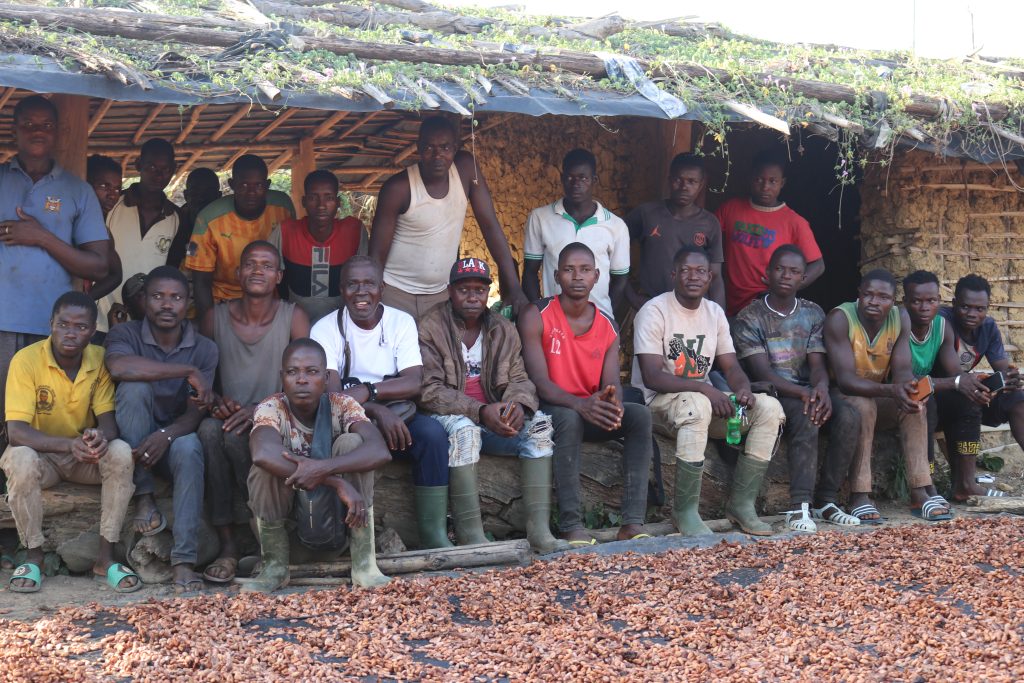
Burkinabé migrants pose for a picture before cocoa beans in B’hai District, Grand Gedeh County. The DayLight/Samuel Jabba
MONROVIA — In barely two years, a trickle of foreign cocoa farmers crossing into Liberia’s southeastern forests has swelled into one of the largest migrant movements the country has seen in recent memory, with the government now putting the number of Burkinabè nationals living in just two counties at more than 140,000.
The Liberia Refugee Repatriation and Resettlement Commission (LRRRC) sounded the alarm Thursday, warning that the scale and pace of the influx into Grand Gedeh and River Gee counties has outstripped the ability of host communities to absorb it and now carries serious humanitarian and national security implications.
The disclosure was made during the presentation of a joint assessment mission report to President Joseph Nyuma Boakai. The report was submitted by LRRRC Executive Director Cllr. Jeror Cole Bangalu and development partners following an extensive field assessment in Grand Gedeh and River Gee.
The findings prompted President Boakai to order that the report be forwarded to the Cabinet for broader discussions on national security, migration management and policy responses.
The 140,000 figure represents a dramatic escalation. Before 2020, arrivals were negligible. By mid-2025, the Liberia Immigration Service had recorded roughly 40,000 Burkinabè, nearly 36,000 of them in Grand Gedeh alone. That number climbed to about 55,000 by August 2025 and has now nearly tripled, according to the latest assessment, suggesting annual growth of well over 50 percent.
LRRRC Warns of Mounting Pressure on Host Communities
Presenting the report, Bangalu described the rising number of Burkinabè migrants as a growing national concern.
He said communities in the affected counties are already facing infrastructure and service delivery challenges that could worsen if the influx continues without a coordinated response.
“Without a coordinated response, this situation could overwhelm communities already facing limited infrastructure and services,” Bangalu warned.
He stressed that while the migrants are contributing to economic activities, particularly in mining and agriculture, the pace of arrivals has raised concerns among authorities and local stakeholders.
The migrants are overwhelmingly Mossi, an ethnic group originally from Burkina Faso, and most enter overland through Côte d’Ivoire rather than directly from their home country. They have been drawn by high cocoa prices and the fertile, lightly regulated forestland of the southeast, even as deepening conflict in Burkina Faso pushes people out. The Sahelian nation has endured jihadist insurgencies, military coups and mass displacement, with nearly 1.9 million people internally displaced by early 2023.
Crucially, most arrivals are not formally recognized refugees but unregistered economic migrants, placing them outside the conventional refugee assistance system and complicating the government’s response.
Boakai Orders Cabinet-Level Discussions
Following the presentation, President Boakai directed that the report be elevated to the Cabinet for comprehensive review and policy deliberations.
The move signals the government’s recognition of the issue as one requiring cross-sectoral attention involving security agencies, humanitarian actors and development institutions.
Officials say the Cabinet discussions will help determine the government’s next steps regarding migration management, community support and resource mobilization.
Strain, Conflict and Forest Loss
The unregulated influx has already begun to test the social fabric of host communities. Most migrants do not live in formal camps but settle on the land of Liberian hosts under informal arrangements to clear forest and cultivate cocoa, a practice that has fueled disputes over land, forests and resources.
Dozens of land-trespassing cases have been filed in Grand Gedeh courts, and violent incidents have been reported, including clashes over cocoa farmland. The environmental toll has been steep: Liberia lost an estimated 390,000 hectares of primary forest between 2002 and 2024, much of it to new cocoa farms cleared through slash-and-burn methods.
While some officials credit the migrants with revitalizing the cocoa sector, local farmers complain of lost land and diminished access, and police have cautioned that the situation could escalate into a security threat if left unmanaged.
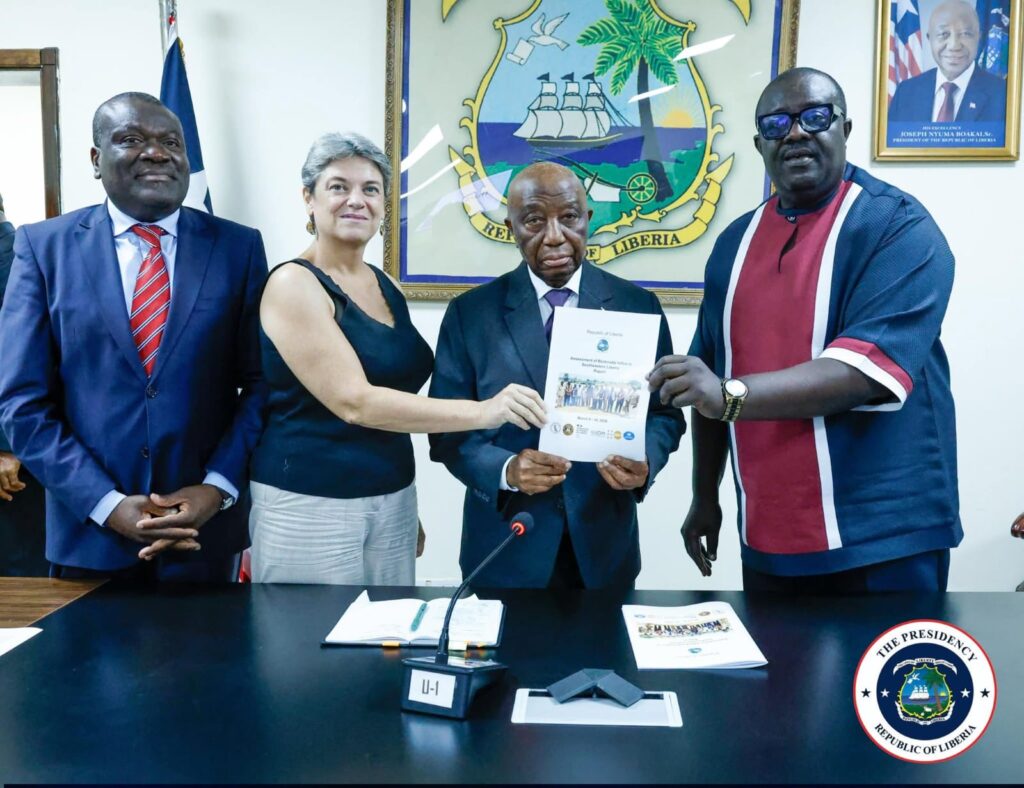
Presenting the report, Bangalu described the rising number of Burkinabè migrants as a growing national concern.
Call for International Support
Bangalu emphasized that implementing the report’s recommendations will require strong cooperation between Liberia and its international partners.
He disclosed that a stakeholders’ meeting involving donor partners is expected to be convened to review the assessment findings and identify potential support mechanisms.
According to him, some recommendations require immediate intervention, while others will demand long-term planning backed by government funding and international assistance.
He cautioned that failure to act promptly could increase pressure on host communities already grappling with limited resources.
“A strategic and coordinated approach supported by national budgetary allocations and international partnerships remains critical,” Bangalu said.
Joint Assessment Conducted by International Partners
The report was produced following a joint field assessment carried out by the LRRRC and several international organizations and diplomatic partners.
Participating institutions included the French Embassy, the United Nations Population Fund (UNFPA), the United Nations Human Rights Office (OHCHR), the International Organization for Migration (IOM) and the Liberia Immigration Service.
The assessment sought to evaluate the scale of the migration trend, its impact on local communities and the support required to address emerging challenges.
Development Partners Join Presentation
The report presentation brought together senior representatives from government and international organizations.
Among those in attendance were French Ambassador Isabelle Le Guellec, Liberia Immigration Service Commissioner General Elijah F. Rufus, UNFPA Country Representative Mady Biaye, Head of the United Nations Human Rights Office Christian Mukosa, and Acting Chief of Mission of the International Organization for Migration Lenaud Serge Desire.
Their participation underscored the growing international interest in Liberia’s response to migration movements in the region.
LRRRC Seeks Long-Term Solutions
Bangalu expressed gratitude to the development partners for their collaboration throughout the assessment process and reaffirmed the commission’s commitment to addressing the situation through coordinated action.
He voiced optimism that with sustained support from both the Liberian government and international partners, the report’s recommendations can be gradually implemented to stabilize affected communities and strengthen support systems in the southeastern region.
The report’s findings now place the issue squarely before the government as Liberia weighs how to balance humanitarian obligations, local development needs and national security considerations amid one of the largest migrant population movements the country has seen in recent years.






Discussion about this post