


Published: April 17, 2026
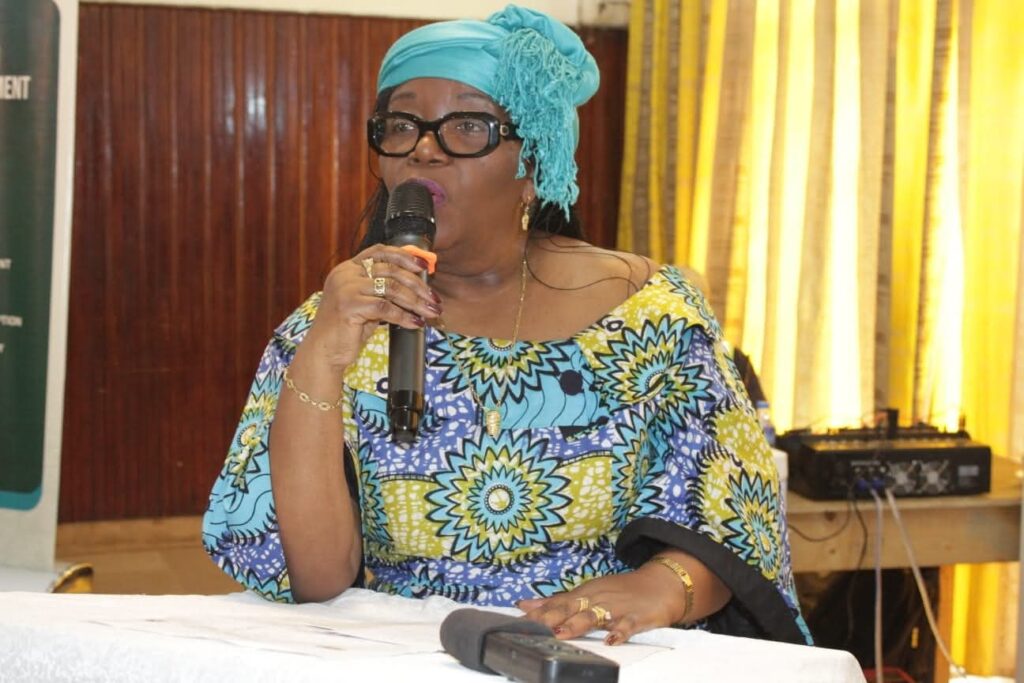
MONROVIA — Deputy Minister of Finance for Budget and Development Planning Tanneh G. Brunson has told Criminal Court ‘C’ that a controversial US$6.2 million transaction at the center of an ongoing economic sabotage case bypassed Liberia’s established public financial management procedures.
Testifying as an expert witness in the case involving former Finance Minister Samuel D. Tweah and others, Brunson outlined the government’s financial processes and raised concerns about how the transaction was executed.
Appearing under subpoena, Brunson explained that a “direct debit” allows the Central Bank of Liberia (CBL) to automatically withdraw funds from the government’s Consolidated Fund, typically to settle obligations owed to the bank. She said such transactions are ordinarily grounded in legal agreements or memoranda of understanding with the Ministry of Finance and Development Planning (MFDP) and are later regularized through formal allotments.
She acknowledged that, in exceptional cases, fiscal authorities may authorize direct debits outside standard procedures to address urgent, time-sensitive payments. However, she emphasized that even in such circumstances, the transactions must be legally grounded and supported by proper documentation, with post-transaction allotments issued promptly to ensure compliance with public financial management laws.
On the US$6.2 million transaction under review, Brunson testified that it did not pass through the MFDP’s standard processing channels.
“I became aware of the transaction during a review of financial reports, including year-end documentation, which showed discrepancies between the Financial Intelligence Agency’s original appropriation and its final expenditure,” she told the court.
“When I saw that direct debit, it raised an alarm because we did not process any such transaction for the FIA, and there was nothing to support the transfer from the CBL without our knowledge,” she added.
Under cross-examination, Brunson maintained that all government transactions must either be budgeted or authorized through approved budgetary transfers and must follow the established chain of approvals. She confirmed that her department neither issued an allotment before the transaction nor afterward, citing the absence of the required documentation and authorizations.
She concluded by drawing a clear distinction between what is technically possible and what is legally permissible.
“While direct debit can be used in exceptional situations, it must be backed by legal authority and proper documentation to meet all public financial management requirements,” Brunson said.





Discussion about this post