


Published: April 17, 2026
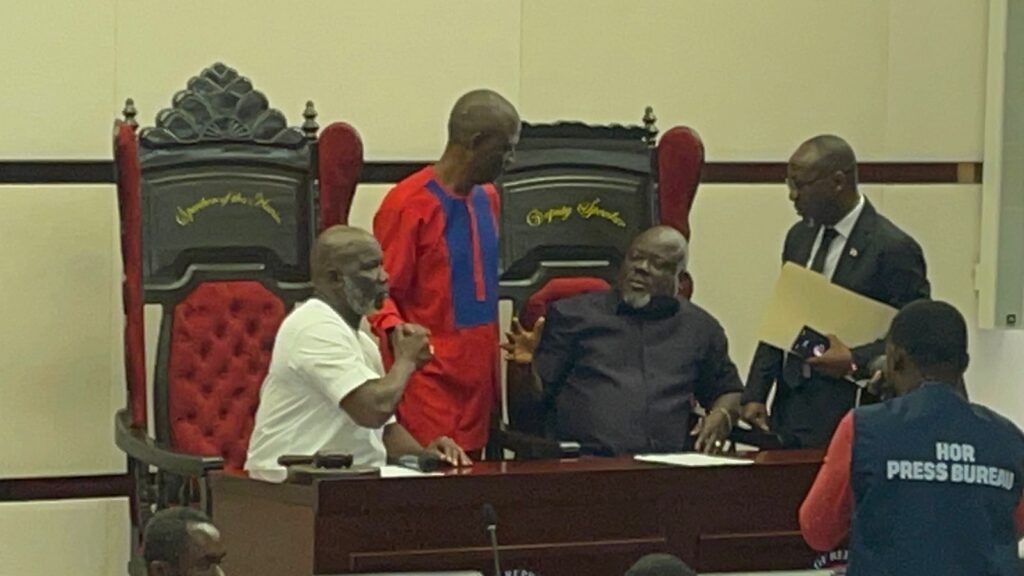
MONROVIA — When Rep. Yekeh Y. Kolubah of Electoral District 10, Montserrado County, walked out of a House committee hearing on April 15, he sealed his own fate. Two days later, the majority of the House of Representatives voted to expel him, making him one of the few Liberian legislators in modern history to be removed from office by his peers.
The road to that vote began April 9, 2026, when Rep. Sumo K. Mulbah of Electoral District 3, Montserrado County, filed a formal complaint before the House during the 2026 First Extraordinary Session, alleging that Kolubah had committed gross misconduct, violated his oath of office, repeatedly broken House rules and procedures, and consistently brought the Legislature into public disrepute. The Inspector General of the Liberia National Police, Gregory O.W. Coleman, separately raised concerns about national security and public safety in connection with Kolubah’s conduct.
The House immediately referred the matter to the Committee on Rules, Order and Administration, chaired by Rep. James M. Kolleh of Bong County, and gave it 10 days to investigate and recommend appropriate legislative action.
The Committee’s Process
The committee moved quickly. On the same day the complaints were filed, it directed the Acting Chief Clerk of the House to formally notify all parties to appear for a hearing on April 13. Kolubah was personally served notice and acknowledged receipt.
At the April 13 hearing, rather than responding to the allegations, Kolubah submitted a written request for a five-day extension to consult with legal counsel. The committee, citing due process and his constitutional right to fair representation, granted him two business days, instead.
Before proceeding further, the committee made two significant housekeeping decisions. It dropped Inspector General Coleman’s complaint on the grounds that, as a member of the Ministry of Justice, he could be involved in any future prosecution of Kolubah, making his simultaneous role as a complainant procedurally problematic. The committee also set aside a separate complaint filed by an individual constituent of District 10, ruling that such a complaint should have been brought as a class action on behalf of the district rather than as a personal submission.
That left Mulbah’s complaint as the sole basis for the proceeding.
The Walkout That Decided Everything
On April 15, Kolubah appeared at the First-floor Conference Room of the House alongside his legal team. His lawyers immediately requested permission to speak on his behalf at the hearing and asked for an additional five business days. They also demanded that the committee provide them with any statement, audio, video, or written, attributed to their client; the official government position on the Guinea border dispute referenced in the committee’s citation; documentation of the alleged celebration and dissemination of Kolubah’s statement by Guinean authorities; and the House rules governing the proceedings.
The committee rejected both the request for more time and the demand that lawyers speak in place of their client. It informed Kolubah that House procedure requires members to speak for themselves, with lawyers present in an advisory capacity only. Because the hearing was quasi-judicial rather than a formal court proceeding, the committee said the strict rules of evidence applicable in judicial forums did not apply.
Kolubah’s lawyers refused to accept that ruling and pressed their demands. The committee chair called a 30-minute recess. When the hearing resumed, the committee voted unanimously to deny all requests and proceed.
What happened next effectively ended Kolubah’s legislative career. As the complainant, Mulbah, was given the floor to present his case, Kolubah’s legal team stood up and walked out of the hearing room. Kolubah himself followed shortly after. In their absence, Mulbah laid out his evidence before the committee. Each piece was testified to, identified, marked and formally admitted into the record. Mulbah was then cross-examined by committee members and other House members present, a process the committee said further established the specific counts of House rules violated by Kolubah.
The Legal Foundation for Expulsion
In building its case for removal, the committee drew on both constitutional authority and legislative precedent. It cited Article 38 of the 1986 Constitution of Liberia, which grants each house of the Legislature the power to expel a member for cause with the concurrence of two-thirds of its entire membership. It also cited Rule 9.2 of the House Rules and Procedures, which mirrors that constitutional standard, and Rule 48.1, which mandates disciplinary action against any member who violates House ethics and procedure.
For historical precedent, the committee pointed to Oct. 23, 1998, when the Liberian Senate expelled Sen. Sampson Bedell Fahn II under the leadership of the late Senate Pro Tempore Charles W. Brumskine. Fahn was removed for gross misconduct and for refusing to appear before a Senate committee after being cited. The committee argued that Kolubah’s conduct was worse, since he had actually appeared and then deliberately walked out while proceedings were underway, and had continued making what the report described as denigrating statements against the House and other public officials.
The committee found that Kolubah’s actions violated Rule 11, which requires every member to take an oath to uphold and defend the Constitution and laws of Liberia and faithfully discharge the duties of the office, and Rule 42.1, which requires members to keep the prestige and dignity of the House at all times and refrain from undesirable acts.
The Recommendation and the Vote
The ROA committee unequivocally recommended Kolubah’s expulsion and further recommended that, following his removal, he be turned over to the Ministry of Justice for prosecution over statements he allegedly made in connection with the border dispute between Guinea and Liberia.
The committee report was signed by Chairman Kolleh, Co-Chairman Alexander Poure, and members Nathaniel N. Bahway Sr., Mustapha Warity and Manah B. Johnson. Two members, Robert F. Womba and Samson Q. Wiah, did not sign.
The full House then passed a resolution to expel Kolubah. The following lawmakers, drawn from across 14 counties, signed onto that resolution:
Bomi County: Jahkpakpa Obediah Varney, District 1; Manah Bishop Johnson, District 2; Sam P. Jallah, District 3.
Bong County: Prince K. Koinah, District 1; James M. Kolleh, District 2; Robert Womba, District 4; Moima Briggs Mensah, District 6; Foday E. Fahnbulleh, District 7.
Gbarpolu County: Mustapha Waritay, District 3.
Grand Bassa County: Isaac G. Bannie, District 1; J. Clarence T. Banks, District 2; Alfred H. Flomo, District 4.
Grand Cape Mount County: Gbessie Sonni Feika, District 3.
Grand Gedeh County: Jeremiah Garwo Sokan Sr., District 1; Marie G. Johnson, District 2; Jacob C. Debee II, District 3.
Grand Kru County: Nathaniel N. Bahway Sr., District 1.
Lofa County: Thomas P. Fallah, District 1; Julie Fatorma Wiah, District 2; Momo Siafa Kpoto, District 3; Gizzie K. Kollince, District 4; Augustine B. Chiewolo, District 5.
Margibi County: Ivar K. Jones, District 2; Ellen A. Attoh-Wreh, District 3; Emmanuel Yarh, District 4.
Maryland County: P. Mike Jurry, District 1; Anthony F. Williams, District 2; Austin Blidi Taylor, District 3.
Montserrado County: Rugie Yatu Barry, District 1; Sekou S. Kanneh, District 2; Sumo Kollie Mulbah, District 3; Michael M. Thomas, District 4; Prescilla A. Cooper, District 5; Emmanuel Dahn, District 7; Prince A. Toles, District 8; Richard Nagbe Koon, District 11; Bernard Blue Benson, District 17.
Nimba County: Samuel N. Brown Sr., District 1; Nyahn Garsaye Flomo, District 2; Nehker E. Gaye, District 3; Ernest M. Manseah Sr., District 4; Kortor Kwagrue, District 5; Dorwohn Twain Gleekia, District 6; Saye S. Mianah, District 8; Taa Wongbe, District 9.
River Gee County: Alexander Poure Isaac B. Choloplay Wuo, District 2; Johnson S.N. Williams Sr., District 3.
Rivercess County: Alex J. Grant, District 1; Steve Tequah, District 2.
Kolubah represented District 10 since 2017 and had been one of the most vocal opposition figures in the House. His legal team had not issued a public statement responding to the expulsion at the time of publication.






Discussion about this post