


Published: June 5, 2026
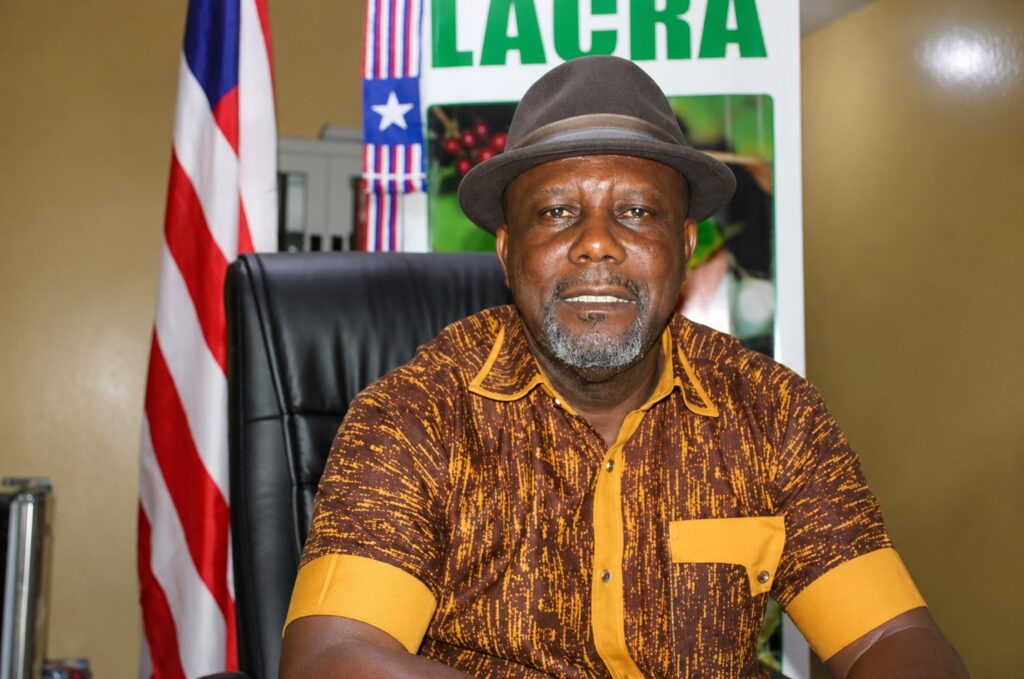
MONROVIA — While Liberia’s Agriculture Ministry was publicly rejecting the European Union’s deforestation regulation as colonial interference, the Liberia Agriculture Commodity Regulatory Authority (LACRA), the entity tasked with preparing the country’s farmers for compliance, was calling that position misinformed, reckless, and a direct threat to Liberia’s access to global markets.
Dan T. Saryee Sr., acting executive director of LACRA, delivered the rebuke at a National Agriculture Traceability Steering Committee engagement in Monrovia, days after Acting Agriculture Minister David K. Akoi told a Senate hearing that the EUDR amounted to “a new colonial rule” and that the ministry would not support it.
Saryee was unsparing.
“This is unfortunate. This is a complete proof of misunderstanding,” he said, warning that Liberia risks being shut out of key international markets if policymakers continue resisting the regulation without offering a viable alternative.
The clash has exposed a deepening, increasingly public divide within the government over a regulation with a Dec. 31 compliance deadline that affects the livelihoods of nearly 70 percent of Liberians who depend on agriculture.
The EUDR requires that commodities entering the EU market be deforestation-free, legally produced, and fully traceable through GPS coordinates linked to the farms of origin. Liberia’s cocoa, coffee, and rubber sectors are among the most directly exposed.
Akoi, who presented the Agriculture Ministry’s formal stance before a Senate Committee of the Whole hearing last Tuesday, argued that the regulation imposes foreign law on a sovereign nation, threatens to disenfranchise hundreds of thousands of smallholder farmers, and conflicts directly with Liberia’s own agricultural expansion goals under the National Agriculture Development Plan. The hearing ended in sudden disorder after senators who had applauded Akoi’s presentation abruptly moved to adjourn.
Saryee dismissed the sovereignty argument Thursday, saying it reflects a fundamental misreading of how international markets operate. Using the analogy of a bar owner setting conditions for entry, he argued that trading blocs have the right to establish market-access requirements and that Liberia must decide whether it wants access to those markets.
He also suggested that opposition within the government may be driven by more than just principle. He contrasted what he called the concerns of “big shots” who might fear scrutiny of their land holdings or financial interests with the survival needs of ordinary farmers whose incomes depend on reaching European buyers.
“Negative opinions about EUDR, especially from those who should drive policy, are a concern as they hinder the building of a sustainable agricultural community,” he said.
The division within the Agriculture Ministry became clear when Austin G. Yeanay, the ministry’s acting director for extension, publicly broke from Akoi’s stance during Thursday’s meeting, supporting compliance and urging Liberia to align its agricultural practices with international environmental standards.
“The Ministry of Agriculture is committed to implementing regulations that protect the environment while supporting the interests of the people,” Yeanay said.
He acknowledged that Liberia currently lacks a national land monitoring system capable of validating data or producing credible due diligence statements, and warned that farmers who fail to meet EUDR standards risk exclusion from supply chains entirely.
The private sector signaled it will not wait for the government to resolve its internal disagreements. Richard Fallah, head of the secretariat of the Liberia Agriculture Companies Association, disclosed that Firestone Liberia and the Liberia Agriculture Company will begin halting purchases from non-compliant farms on Dec. 31, starting with major exporters before expanding to smallholder producers. He called for a centralized digital traceability platform connecting farmers, buyers and government institutions and urged the deployment of GPS technology, drones and satellite mapping to identify farm boundaries.
Mohammed A.M. Sambolah, assistant director for macroeconomic policy at the Ministry of Finance and Development Planning, described the EUDR as an opportunity rather than a threat, disclosing that EU-funded grants are already supporting the creation of a national traceability system that includes farm registration and digital infrastructure. The government aims to train 350,000 farmers on geolocation and EUDR compliance, he said, and the broader objective is to shift Liberia away from exporting raw commodities toward value-added agricultural production.
Antonio Di Clemente, programs officer with the EU Delegation to Liberia, said traceability is rapidly becoming a baseline requirement for participation in global agricultural markets regardless of how individual governments characterize it.
“Liberia is already suffering from the effects of climate change, making the preservation of its forests a global and local necessity,” Di Clemente said. “The European Union is committed to supporting Liberia in implementing these reforms to unlock market access.”
Saryee noted that Nigeria, Uganda and The Gambia are already moving toward compliance, warning that continued resistance risks leaving Liberia isolated. He also framed the stakes in explicitly political terms, suggesting that leaders who allow farmers to lose market access will face consequences at the polls.
“This is political sensitivity and leaders cannot ignore the plight of hungry farmers while expecting political support in the future, mainly 2029,” he said.






Discussion about this post