


Published: January 30, 2026

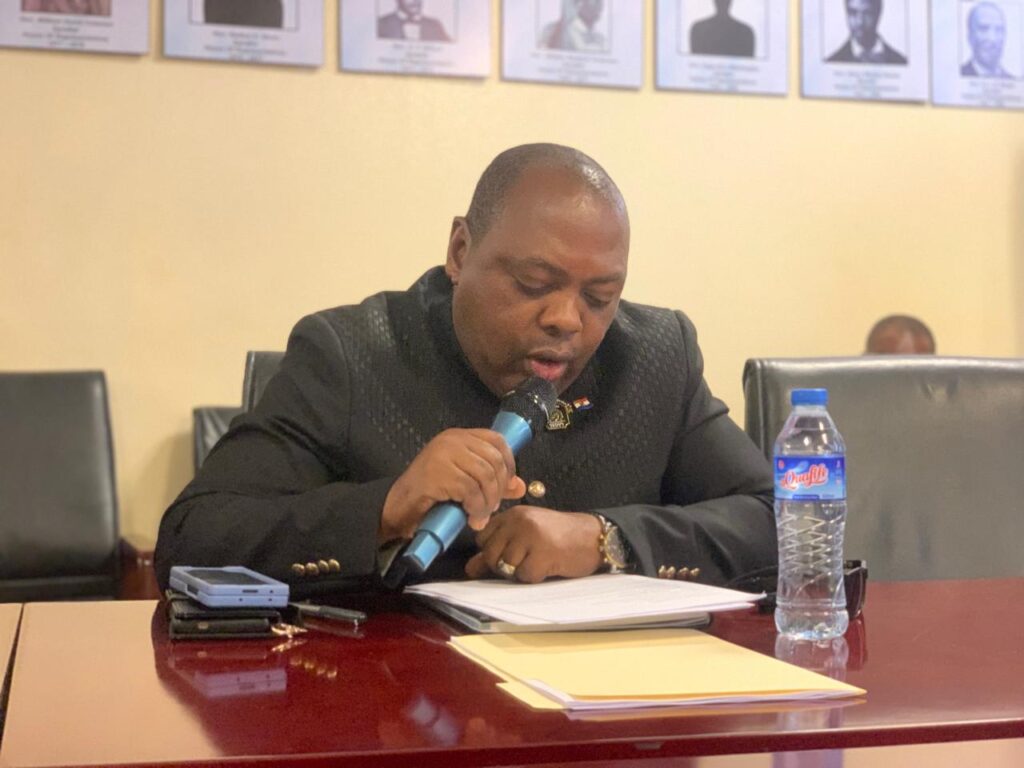
CAPITOL HILL — Liberia’s anti-corruption fight was thrust into a constitutional showdown Friday as the heads of two key legal institutions publicly clashed over whether the president should have sole power to remove anti-graft commissioners.
A House Joint Committee hearing intended to strengthen Liberia’s accountability framework instead exposed a deep legal divide between the leadership of the Liberia Anti-Corruption Commission and the Law Reform Commission over a proposed amendment affecting the tenure and independence of LACC commissioners.
The session reviewed four reform bills aimed at tightening corruption enforcement, but debate quickly centered on a controversial provision that would grant the president unilateral authority to remove commissioners.
Warning of weakened independence
LACC Chairperson Cllr. Alexandra Zoe told lawmakers the amendment would erode the commission’s autonomy and compromise its credibility.
“A proposed amendment granting the President or the Executive the sole authority to remove commissioners directly undermines the independence of the Commission, which is essential to its effectiveness,” Zoe said.
She argued that security of tenure is fundamental to anti-corruption bodies worldwide and is protected under international conventions. Zoe cited Article 6 of the United Nations Convention Against Corruption, as well as obligations under the African Union and ECOWAS anti-corruption frameworks, which require safeguards against political interference.
“Allowing unilateral executive removal compromises the principles of checks and balances enshrined in our Constitution and exposes the Commission to real or perceived political pressure,” she said.
Drawing comparisons with Botswana, Ghana, Sierra Leone, Indonesia and Hong Kong, Zoe noted that removal processes in those jurisdictions involve parliamentary or judicial oversight rather than sole executive discretion. Liberia’s existing LACC Act, she said, intentionally created a multi-institutional removal structure to protect independence.
Despite opposing the tenure amendment, Zoe expressed support for other legislative reforms under review, including provisions criminalizing illicit enrichment and strengthening corruption prosecution procedures. However, she warned lawmakers not to dilute due-process protections.
“Any removal effected without legislative review should be null and void,” Zoe said.
Constitutional supremacy argument
Law Reform Commission Chairperson Cllr. Bornor M. Varmah sharply rejected Zoe’s interpretation, arguing that constitutional authority overrides statutory protections.
“We only have one organic law in this jurisdiction, and that is the Constitution of the Republic of Liberia,” Varmah told the committee.
Citing Article 43 of the 1986 Constitution, he said executive branch officials serve at the will and pleasure of the president.
“If there is a conflict between statute and Constitution, the Constitution prevails,” he said.
Varmah dismissed claims that presidential removal authority would weaken anti-corruption enforcement.
“To suggest that removing a commissioner for malfeasance or nonfeasance undermines the anti-corruption fight is unfounded,” he said.
He cautioned that requiring legislative confirmation for removals could itself trigger constitutional challenges, pointing to past disputes involving the Central Bank of Liberia that reached the Supreme Court.
Broader legislative stakes
Beyond the clash, lawmakers continued reviewing a package of bills that includes criminalizing illicit enrichment under the Penal Law, redefining the burden of proof and statutes of limitation in corruption cases, revising the Act establishing the LACC, and strengthening the National Code of Conduct for public officials.
Committee members described the package as one of the most ambitious attempts in recent years to tighten Liberia’s anti-corruption architecture. But the tenure debate underscores a central tension: how to balance executive authority with the independence required for credible anti-graft enforcement.






Discussion about this post