


Published: October 28, 2026
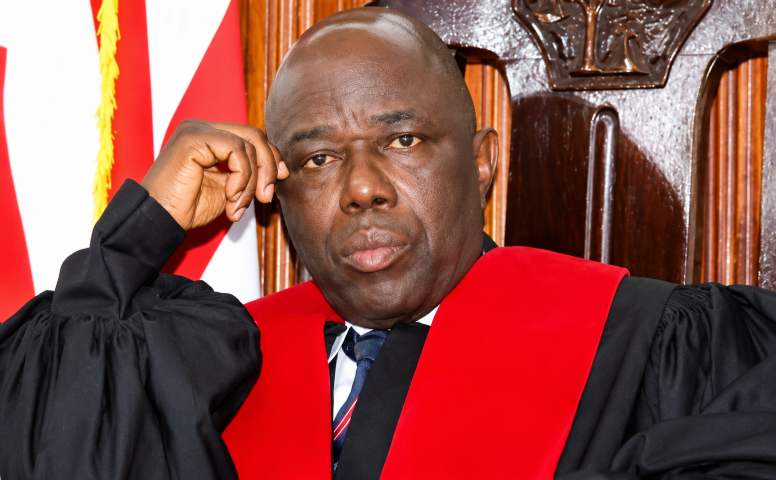
MONROVIA — Liberian commentator Mohamed M. Komara has described Chief Justice Yamie Quiqui Gbeisay as an “icon of justice,” a “Savior-Chief Justice” and a “once in a generation kind of man,” praising him for reportedly upholding a court ruling in a controversial Nimba County land dispute despite ethnic ties to some of those affected.
Komara said the Chief Justice, a native of Nimba County, demonstrated moral courage by supporting a lower court ruling that reportedly resulted in the eviction of occupants from land determined to belong to another party, rather than allowing tribal loyalty to influence his judicial responsibility.
In an opinion article titled “Justice Prevails Against Tribal Loyalty in Nimba,” Komara argued that Gbeisay’s reported position represents an important example of public officials placing constitutional responsibilities above ethnic, political and personal relationships.
He maintained that the Chief Justice’s actions deserve national recognition, particularly in a country where land disputes have frequently generated allegations of political interference, preferential treatment and ethnic favoritism.
“Whatever one’s opinion is about the land dispute; there is something huge that deserves national attention. That is, the fact that the Chief Justice chose to uphold the rule of law, regardless of the criticism his decision may invite from people in his county and tribal community,” Komara wrote.
“That is moral courage, a rare quality in Liberia. It merits recognition, commendation and emulation.”
Komara alleged that victims of land disputes have suffered years of injustice because of political interference, ethnic loyalties and influential individuals who allegedly manipulate legal processes.
“For years we have helplessly witnessed the agony and grief of victims who cry from the injustice, heartache and humiliation they suffer in their land disputes,” he wrote.
He characterized Gbeisay’s leadership as a potential turning point for Liberians who have lost confidence in the judiciary.
According to Komara, the Chief Justice has emerged as a symbol of hope for victims of alleged unlawful dispossession and other property-related injustices.
He described him as a judicial leader whose commitment to impartiality could help restore confidence in Liberia’s courts.
Komara further argued that public officials should demonstrate integrity even when their decisions disappoint relatives, supporters or members of their communities.
“A person’s integrity does not come under the spotlight when his ‘good deed’ makes everyone happy. The test comes when his good action annoys his friends or relatives,” he stated.
He questioned whether Liberians genuinely support impartial justice or merely demand favorable rulings based on their ethnic and religious affiliations.
“Do we want justice that only favors our whims and caprices; our ethnic and religious groups, or do we want justice even if the decision goes against us? For true believers in the rule of law, the answer must be the latter,” Komara wrote.
The commentator cautioned residents of Nimba County against interpreting the land dispute as a confrontation between their county and other communities.
He maintained that the Chief Justice’s Nimba identity should not influence his judicial responsibilities or compel him to support every claim involving people from his county.
“Being a son of Nimba does not mean being required to protect every Nimbaiian’s interest, right or wrong. Likewise, being a citizen of any other county does not mean that one’s tribe or county should get preferential justice,” he wrote.
Komara warned that ethnic favoritism in judicial proceedings could deepen national divisions and undermine Liberia’s efforts to strengthen social cohesion.
He referenced Liberia’s history of civil conflict, political crises and communal tensions, arguing that those experiences should encourage greater respect for impartial institutions.
“The judiciary must remain the hope of all citizens for impartial justice,” he wrote.
Komara also urged lawyers to discourage tribal mobilization and intimidation during legal disputes, particularly cases involving land ownership.
He argued that attorneys have a responsibility to defend their clients while protecting the integrity of judicial proceedings.
“A lawyer’s duty is not only to win a case, but he is also an officer of the court and this is important in land disputes,” he stated.
Beyond the Nimba controversy, Komara called on Gbeisay to promote judicial independence throughout Liberia by appointing and assigning judges, magistrates and other court personnel with strong records of integrity.
He maintained that judicial officers should be prepared to make decisions based on law and evidence, regardless of pressure from influential individuals or communities.
“We have been yearning for judicial independence and now is the time to commend and celebrate it. We have criticized political interference in the courts. We have complained about manipulation of legal outcomes,” Komara wrote.
“Judicial independence means judges, the Chief Justice including, are free to make decisions according to law and evidence — even when those decisions disappoint influential people.”
Komara called for national recognition of the Chief Justice, describing him as an example of the leadership Liberia needs to strengthen public confidence in its justice system.
“Liberia should recognize, celebrate and award him for his rare merits. He maintained his stance despite huge community pressure. This sets a man of principle apart from the rest,” he wrote.
He urged Liberians to reject political interference, ethnic favoritism and attempts to manipulate judicial outcomes, insisting that equality before the law must apply to everyone.
“Liberians must be equal — and remain equal always — before the law, whether as perpetrators or victims,” Komara stated.
“Let’s not celebrate fraudulent land ownership, or the use of political connections and ethnic mobilization to frustrate legitimate claims as cleverness.”
Komara encouraged Liberians to support justice even when doing so attracts criticism or opposition from their communities.
“The law is blind and justice has no tribe or religion,” he wrote.




Discussion about this post