


Published: October 5, 2026
Monrovia – For many Liberians, decisions about saving, budgeting, borrowing, investing and using digital financial services are part of everyday life. But making informed financial decisions often depends on having access to the right information and understanding how to use it.
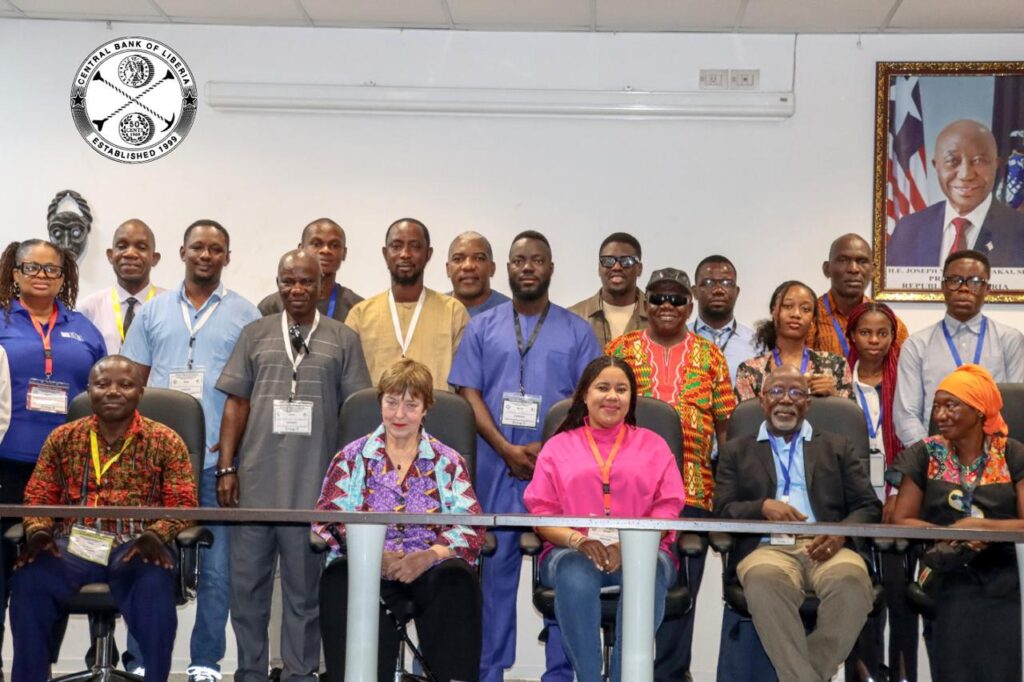
Recognizing the importance of financial knowledge in building financially resilient households and communities, the Central Bank of Liberia (CBL) is continuing its Financial Education Campaign across the country. The Bank has trained and certified 50 participants from various institutions, equipping them with practical knowledge and skills to take financial education beyond the training room and into their communities.
The three-day Training-of-Trainers (TOT) workshop, held September 16–18, 2026, at the CBL Head Office, was conducted under the theme “Equipping Trainers for Effective Financial Education Campaign”, and was facilitated by Betty Wilkinson of the Office of Technical Assistance (OTA), U.S. Treasury. Participants included representatives from commercial banks, financial institutions, universities, youth and business organizations, credit unions, and other institutions.
Building on Phase One
The training comes as the CBL prepares to deepen implementation of Phase Two of the National Financial Education Campaign. The experiences from Phase One provide an important foundation for this next stage.
Phase One combined training, national and county consultations, community engagements, radio awareness, peer learning and partnerships with local leaders. The campaign reached more than 11,000 people, while community engagements alone reached 4,149 participants across 135 communities through 184 sessions, with women accounting for 61 percent of participation.
An endline assessment involving 387 household surveys, 16 focus group discussions and 10 key informant interviews across eight counties found improvements in several key indicators. Saving practices increased from 77 percent at baseline to 88 percent at endline, while investment practices rose from 68 percent to 86 percent. Financial goal-setting increased from 55 percent to 79 percent, while positive perceptions of the CBL rose from 44 percent to 55 percent.
Beyond these figures, the assessment identified greater confidence in managing finances, stronger saving habits, improved budgeting, increased investment planning, greater use of digital financial services, and improved public perception of the CBL and its role. Community engagement, radio awareness, training, peer learning, mobile money awareness and partnerships with local leaders were among the factors supporting these results.
These experiences show that financial education can go beyond providing information. When people have opportunities to discuss, practice, and apply financial concepts within their communities, knowledge can translate into everyday financial behavior.
Creating a Multiplier Effect
CBL Deputy Governor for Operations, Hon. James Wilfred, described the training as an important step in turning the Bank’s commitment to national financial education into concrete action.
“The purpose of this Training of Trainers is not merely a transfer of knowledge to the participants assembled here. Rather, it is designed to create a multiplier effect through a cascade approach that will extend financial education far beyond this training room,” said DGO Wilfred.
The Deputy Governor noted that financially educated citizens are better positioned to manage household finances, build savings, access credit responsibly, prepare for emergencies, use digital financial services safely, and protect themselves from fraud and financial scams.
The approach therefore represents more than another training activity. The 50 participants are being positioned as potential financial education multipliers, capable of transferring their knowledge to institutions, communities and different target groups across Liberia.
From Participants to Financial Education Champions
During the training, participants learned about household budgeting, savings, SMART financial goals, insurance, digital financial services, and countering scams. They also participated in group presentations, drama, discussions, and team-building exercises designed to strengthen their ability to communicate financial education effectively.
For Assata A. Kromah, a student of the United Methodist University, the training will have an impact both at school and in her community.
“I will implement the training on financial education, make informed financial decisions, and apply the lessons learned through group work and presentations in my community and at my school,” she said.
For Daniel Isaac Sie, a representative of the Federation of Liberian Youth, the practical sessions strengthened his understanding of saving and budgeting.
“I have gained a better understanding of the importance of financial education, particularly the importance of saving and budgeting. I intend to share this knowledge with people in my county and community,” Daniel explained.
Korvah L. Dorbor, a staff member of United Bank for Africa (UBA) Liberia, emphasized the importance of reaching rural communities.
“My message to rural communities is to take advantage of the Training of Trainers program that will begin soon, particularly to learn the importance of saving and budgeting for sustainability and improved productivity,” Dorbor said.
Their reflections demonstrate the potential of the TOT model: knowledge gained by one participant can subsequently reach many others through community education and peer learning.
From Training to Community Action
At the conclusion of the training, participants not only received certificates but also presented plans for taking the knowledge to their respective communities, institutions, and target audiences. This transition from training to action will be critical to the success of Phase Two.
The experience of Phase One demonstrates the potential of community-based financial education. The next step is to translate the expanded pool of trained trainers into sustained activities that reach more communities, particularly people with limited access to formal financial information.
Through the cascade model, one training intervention can generate multiple layers of engagement: trainers educate institutions and communities; community members share knowledge with peers and families; and financial education becomes increasingly embedded in everyday financial decisions.
A Partnership-Driven Approach
The diversity of institutions represented in the TOT reflects the understanding that financial education cannot be delivered by one institution alone. Participants came from commercial banks, financial institutions, universities, the Liberia Credit Union National Association, Federation of Liberian Youth, Liberia Business Association, government institutions, microfinance organizations, civil society, and other groups.
Banks and financial institutions interact directly with customers; universities and youth organizations reach young people, while community and civil society organizations have established relationships with local populations. Government institutions can support public awareness, and media platforms can extend financial education messages to wider audiences.
The CBL’s role is therefore one of coordination, leadership, capacity building and partnership, bringing different actors together around the common goal of improving financial knowledge and decision-making.
Financial inclusion is often measured by access to bank accounts, mobile money, credit, savings and other financial services. But access alone does not necessarily mean people can use these services effectively.
Financial education provides an important complementary layer. Understanding budgeting can help people plan household expenditure; knowledge of savings can support more deliberate financial decisions; digital financial literacy can help users navigate financial services; and awareness of scams can strengthen their ability to identify and avoid fraud.
Investing In Financially Informed Communities
The CBL’s Financial Education Campaign is therefore about more than teaching people how to save or prepare a budget. It is part of a broader effort to strengthen people’s ability to participate meaningfully and safely in the financial system.
With 50 newly trained trainers now prepared to take the message further, the CBL is seeking to transform the lessons from Phase One into a broader national effort.
The vision is to equip people with knowledge, strengthen their confidence to make informed financial decisions, and build a network of partners capable of carrying financial education into communities across Liberia.
In this way, Phase Two is not simply a continuation of Phase One. It is an effort to build on what worked, strengthen the delivery network, and bring financial education closer to the people it is intended to serve.
Ultimately, the intervention reflects a simple development principle that financial inclusion is strengthened not only when people can access financial services, but when they have the knowledge and confidence to use those services responsibly and effectively.





Discussion about this post