


Published: November 7, 2025
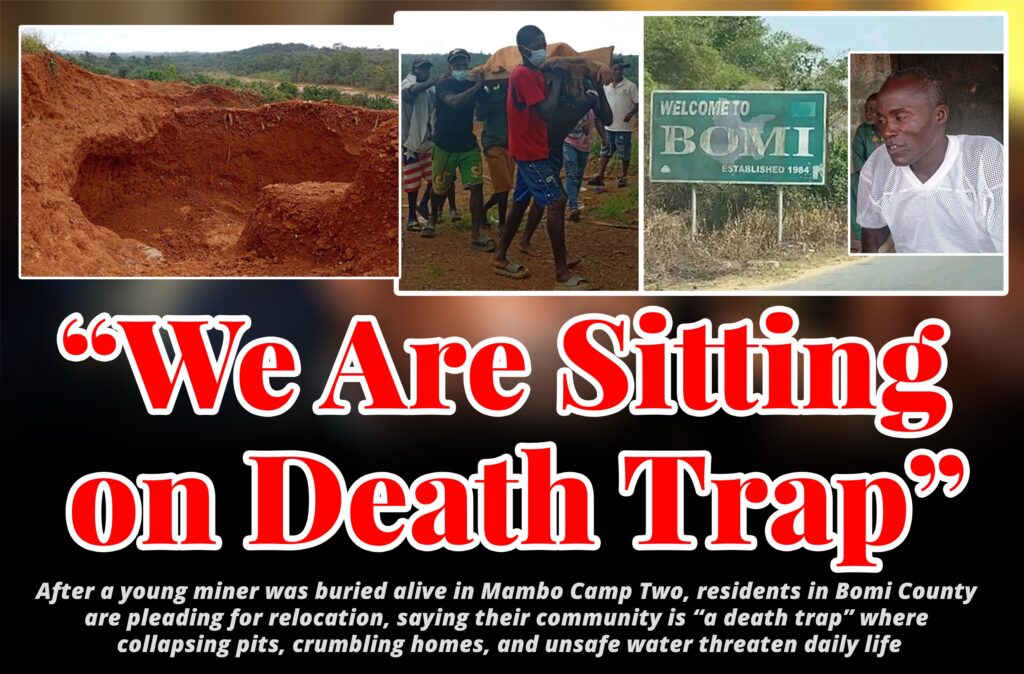
KLAY DISTRICT, Bomi County — A fatal mine collapse that buried a young miner alive has intensified pleas from residents of Mambo Camp Two for urgent relocation, as the hillside settlement grapples with unsafe mining pits, collapsing homes, and a worsening drinking-water crisis.
By Ernest Kpehe Moibah | Bomi County Correspondent
“We are sitting on a death trap,” said Camp Master Julius Kerkula, urging the Liberian government to evacuate the community before more lives are lost. “Our people are dying in these pits. Our houses are cracking. We don’t even have clean water. We need help, now.”
The victim, identified by locals as Soko Smith, was working in an open pit when loose soil gave way and buried him under mounds of gravel. Witnesses said fellow miners fled in fear of another collapse, leaving him trapped beneath the earth.
“We heard him crying from under the dirt,” recalled miner George Anthony, who was working nearby. “We tried to pull him out, but the ground kept shifting. Some men ran. It was terrifying.”
Smith’s death shines light a crisis playing out across Liberia’s artisanal mining zones, where men dig without protective equipment or geological assessments, and where oversight is scarce despite years of warnings from local leaders and civil society groups.
Mining on the Edge — and Under the Influence
Anthony told The Liberian Investigator that many miners work under the influence of alcohol or drugs to suppress fear and exhaustion, a practice that increases risk in already unstable pits.
“Sometimes we take something before we go down there,” he said. “It makes us strong. But it also makes us careless.”
Homes Cracking, Ground Shifting
Residents say the ground beneath the town is becoming unstable due to years of digging. Houses have begun to shift, crack and lose their roofs during storms, raising fears that not only the mines, but entire sections of the town could collapse.
“Every time the breeze comes, it takes our zinc away,” Kerkula said. “We fix it, and the next time, it happens again. Our houses are breaking; our land is shaking. It’s like the whole place is falling apart.”
The camp master believes that the constant mining activity beneath the town may be weakening the ground, increasing the risk of more deadly collapses, not just in the mines, but in people’s homes.
“We are living on unstable soil,” he warned. “If nothing is done, one day this whole town could go down.”
“It feels like the earth is shaking from below,” Kerkula said. “One day this whole camp may go down.”
Unsafe Water and No Funds to Fix It
The community’s only hand pump broke five months ago. Families now fetch drinking water from a creek also used by livestock, a major risk for waterborne disease. Repairing the pump would cost roughly US$150, which residents say they cannot raise.
“People barely get money for food,” Kerkula said. “So we drink the creek water. We are dying slowly.”
A Call for Government Intervention
Mambo Camp Two, home to about 200 people, has petitioned local authorities for relocation and humanitarian support. Residents say they have already identified land they could move to if help is provided.
“We are willing to relocate for our safety,” Kerkula said. “We cannot continue burying people and calling it normal life.”
A Familiar Story in Liberia’s Mining Interior
The tragedy exposes an ongoing gap in Liberia’s resource governance: while artisanal mining sustains hundreds of rural households, it is largely unregulated, leaving miners vulnerable to lethal accidents, environmental damage and chronic poverty.
Local officials and the Ministries of Mines, Health, and Internal Affairs did not immediately respond to requests for comment.
Residents say time is running out.
“We are tired of crying,” Kerkula said. “We need help — not tomorrow, but today.”






Discussion about this post