


Published: June 3, 2026

GBARNGA, Bong County — Along the busy Gbarnga–Lofa highway in Brooklyn Community Quarter C sits a large concrete structure that was once envisioned as a modern transportation hub for central Liberia. Today, however, the National Transit Authority (NTA) terminal in Bong County stands largely abandoned, overgrown by bushes, surrounded by deteriorating roads, and increasingly viewed by residents as a growing public safety threat.
What was originally promoted as a strategic government investment meant to improve transportation services between Monrovia, Bong, Lofa, Nimba, and other parts of Liberia has instead become the center of mounting frustration among residents, transport operators, and local authorities who now question why such a major public project was left idle for years.
Community leaders say the neglected terminal has gradually transformed into a dangerous space where criminals allegedly hide at night, snakes roam through surrounding homes, and residents live with growing fear and uncertainty.
At the center of the concern is Brooklyn Community Quarter C Chairman Wendell S. Dunbar, a longtime resident who says he personally participated in surveying the land for the NTA project during the administration of former President Ellen Johnson Sirleaf.
In an exclusive interview with The Liberian Investigator recently, Dunbar described the abandoned facility as both a symbol of failed development planning and a direct threat to residents living nearby.
“The place has been left there for years, and the community people are suffering because of it,” Dunbar said.
According to him, the NTA acquired approximately two acres of land in the area during the tenure of former Transport Minister Jeremiah Sulunteh. Construction reportedly began around 2011 or 2012 and was substantially completed by 2013 before the Ebola outbreak disrupted activities across Liberia.
“The facility covers about two acres of land,” Dunbar explained. “We believed it was going to help transportation and improve the community.”
Instead, he says, residents were left disappointed as the project gradually lost activity and maintenance.
“Criminals Hide There at Night”
Dunbar warned that the abandoned structure is now creating serious security concerns within the community.
According to him, unknown individuals frequently gather around the area during nighttime hours, while stolen materials are sometimes allegedly hidden inside the unused facility.
“People jump on others there during the night, and criminals can hide inside the place,” he stated.
He added that community members have occasionally organized local patrols to monitor the area because of increasing fears among residents.
“I am a leader, not a ruler,” Dunbar emphasized. “The people put me there to protect the community.”
Residents also say overgrown bushes around the abandoned terminal have become home to dangerous animals, including snakes that reportedly enter nearby homes and attack domestic animals.
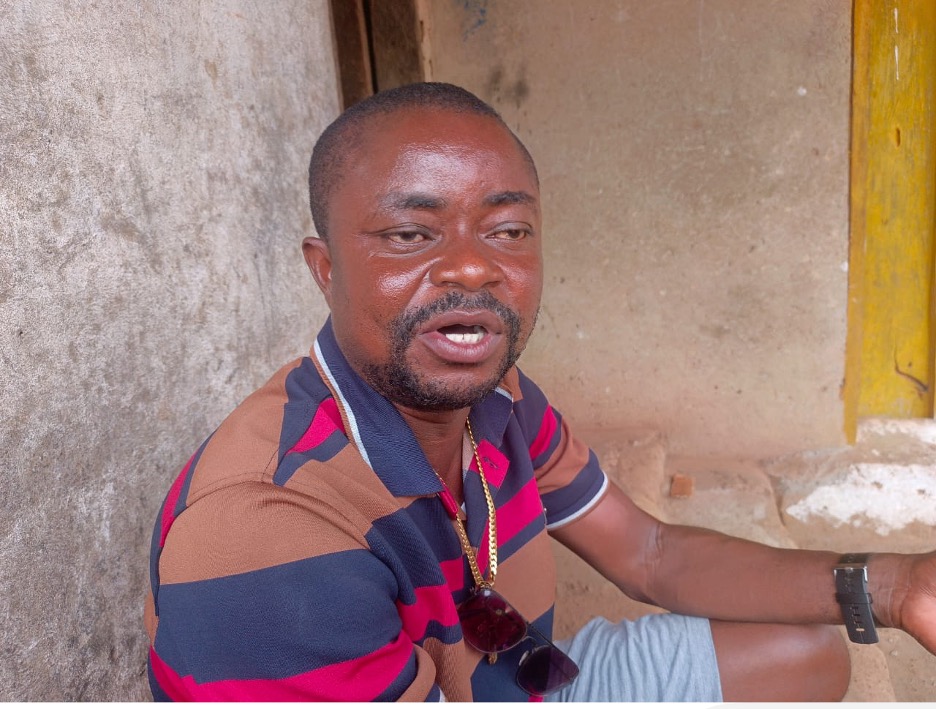
Brooklyn Community Quarter-C Chairman Wendell S. Dunbar speaking with a reporter in Gbarnga /Credit: Nukanah Kollie
Dunbar claims repeated complaints have been submitted to successive city administrations in Gbarnga as well as NTA officials, but little action has followed.
“I have called on them many times, but nobody answers,” he said.
He recalled meeting an NTA deputy director in 2025 who reportedly informed him that authorities still intended to develop the facility, though no visible progress has occurred since then.
Now, residents are urging the NTA, the Gbarnga City Corporation, and the national government to either rehabilitate the facility or assign security personnel and caretakers to the property.
“They need to come and clean the place and put people there to manage it,” Dunbar urged. “The community is crying.”
City Authorities Say Original Plan Changed
Officials at the Gbarnga City Corporation say the terminal project originally had a very different direction.
According to longtime-serving senior city official Alex Mulbah, interviewed for this investigation, the NTA initially planned to establish the terminal within central Gbarnga during former President Sirleaf’s second administration.
The city government and Bong County administration reportedly held several meetings with NTA authorities and local stakeholders regarding land allocation.
Mulbah said residents occupying the proposed downtown site were prepared to relocate after reportedly being promised compensation for their structures.
“We had several meetings and eventually agreed that the people occupying the area would each receive four thousand United States dollars for their structures so the project could proceed,” Mulbah noted.
However, local authorities say communication from the NTA later stopped unexpectedly.
“The place became very quiet. We could not hear anything from them again,” the official recalled.
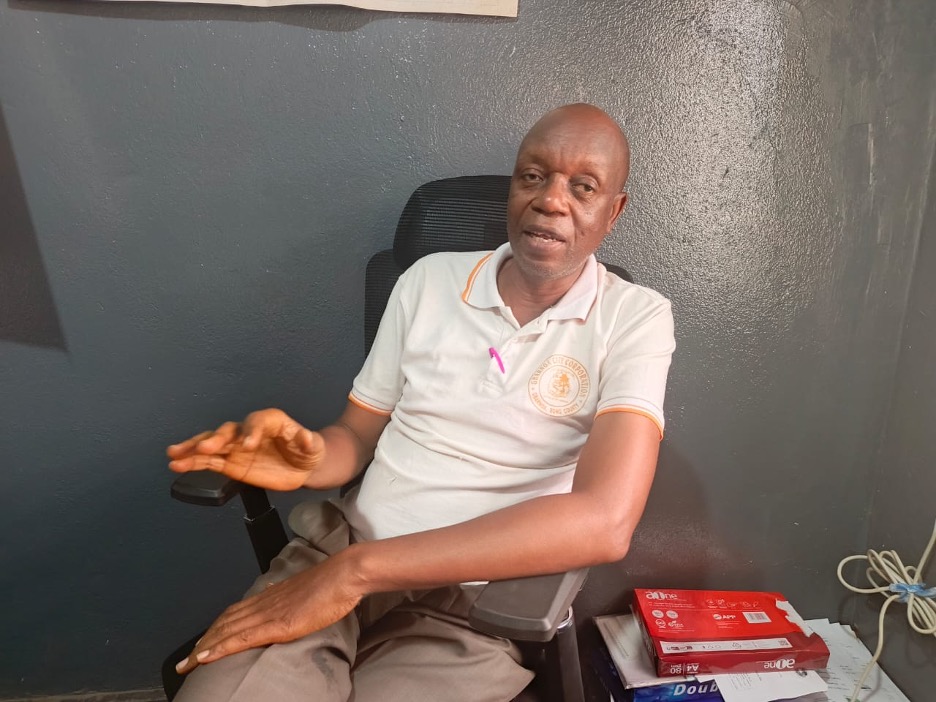
Senior Gbarnga City official Alex Mulbah/ Credit: Nukanah Kollie
The city government later learned that the NTA had instead shifted construction efforts to the Brooklyn Community area outside the city center.
According to the GCC official, local authorities were never formally informed why the original downtown location was abandoned.
“We were giving them the land as one government entity to another government entity to help our people, but they chose to move far into Brooklyn,” he said.
The official described the decision as unfortunate, arguing that transportation terminals function more effectively in active commercial zones where passengers can easily access buses and commercial vehicles.
Local Government Threatens Legal Action
City officials also acknowledged residents’ concerns that the abandoned facility is becoming unsafe and environmentally problematic during the rainy season.
“It is our responsibility to keep the city safe and clean. We will send inspectors there to verify exactly what is happening,” the official stated.
Authorities warned that if the NTA fails to maintain the property, the city government could pursue legal action.
“If they continue to allow the area to become a criminal hideout or a dirty environment that threatens community dwellers, we will take appropriate legal action,” the official stressed.
The city government further indicated that if the NTA formally abandons the facility or transfers custody to local authorities, the city could deploy personnel to maintain and secure the area.
Transport Union Leaders Describe Growing Tensions
The controversy surrounding the NTA terminal has also exposed deeper tensions within Liberia’s transport sector.
Officials of the Federation of Road Transport Union of Liberia (FRTUL) Bong County Branch say disputes between transport unions and the NTA intensified after city authorities ordered commercial transport operators off the streets to reduce congestion in Gbarnga.
According to Foefee A. Bility, Deputy Secretary General of the FRTUL Bong County Branch, transport unions initially complied with the directive and relocated operations into designated parking areas.
FRTUL officials argued that the absence of a unified transportation management system created confusion and unhealthy competition among operators.
“We are not against the NTA,” Bility clarified. “But they should operate under proper control and coordination like everybody else.”
Police: “Abandoned transport facilities weaken safety and accountability”
The Liberia National Police Bong County Traffic Division says the stalled NTA terminal reflects a broader challenge affecting transport regulation and road safety.
Inspector Mamady M. Kanneh, Chief of Traffic for the Bong County Detachment, said the absence of a functional terminal undermines efforts to maintain order within the transport system.
He added that abandoned or non-functional facilities weaken enforcement capacity and contribute to regulatory gaps in the sector.
Kanneh called for stronger coordination between transport authorities and law enforcement agencies to restore order.
“The system works best when there is structure and cooperation,” he said. “We need proper stations, proper identification of vehicles, and compliance from all operators.”
Traffic Police Warn of Safety Risks
The Liberia National Police Traffic Division in Bong County has also expressed concern over the roadside loading practices associated with commercial vehicles and some NTA buses.
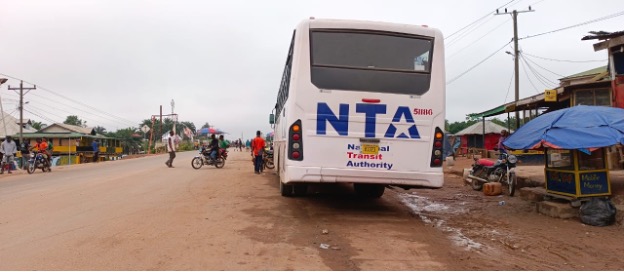
NTA bus captured at the old iron gate in Gbarnga
Inspector Kanneh warned that large buses loading passengers along busy streets create growing risks for commuters and pedestrians.
“The NTA has a parking station already, but now people are leaving that area and coming on the roadside to load passengers,” Kanneh said.
According to him, roadside loading reduces driver visibility and contributes to accidents, especially in crowded commercial areas.
“When long buses stop on the roadside and passengers rush to enter them, accidents can happen very easily,” he warned.
“My message to the NTA authorities is to allocate and fully utilize a proper parking station for their buses in Bong County,” he stated.
Questions Over Public Spending and Project Sustainability
The apparent abandonment of the National Transit Authority terminal projects in Bong County, along with reported similar situations in Margibi and Grand Bassa Counties, is raising broader concerns about the management of public resources and long-term infrastructure planning in Liberia.
Residents and local stakeholders say the situation reflects what they describe as weak development appraisal and poor sustainability planning, where major public projects are constructed without clear operational frameworks, maintenance strategies, or continuous government support.
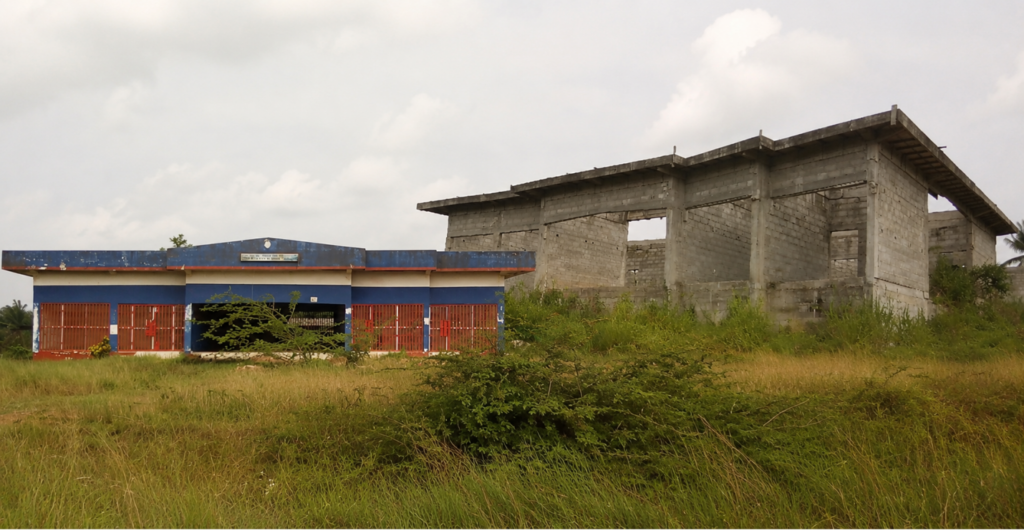
Bassa and Margibi NTA terminals in similar condition /Credit: Yawah and Sampson David
Although the Grand Bassa NTA terminal cost of US$97,219 is publicly documented, the cost of the Bong County (Gbarnga) terminal constructed under a similar early 2010s NTA infrastructure allocation is not publicly disclosed, though reliable reporting and project comparisons estimate it at about US$100,000 (approximately US$90,000–US$120,000 range).
The growing neglect of these facilities has not only left public infrastructure deteriorating but has also created security concerns for surrounding communities, while raising questions about accountability and the effective use of taxpayers’ money intended for national transportation development.
Meanwhile, the National Transit Authority has not yet issued an official statement regarding the concerns raised in this report, and many efforts by this reporter to contact the NTA focal person assigned in Bong County for clarification and response proved unsuccessful as of press time.






Discussion about this post