

Published: September 23, 2026
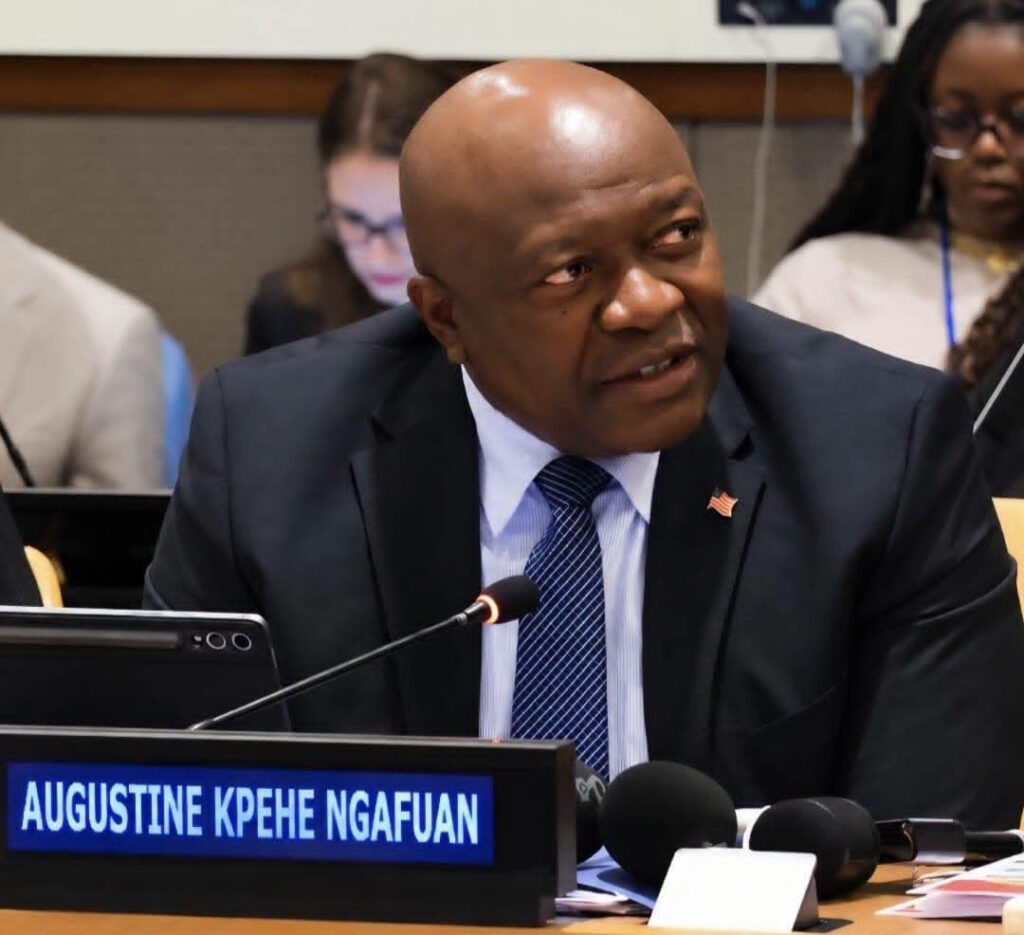
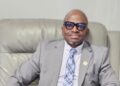
MONROVIA, Liberia — Finance and Development Planning Minister Augustine Kpehe Ngafuan has called on international investors to take a closer look at Liberia, arguing that the country’s improving economic fundamentals, political stability and major infrastructure gaps present opportunities for serious and potentially profitable investment.
By Masefane Konneh
Speaking at a high-level Liberia investment roundtable in New York on Monday, September 21, Ngafuan described Liberia as a country that is “stable,” “growing,” “reforming” and “open for serious business,” while acknowledging that the government has not solved all of the country’s development challenges.
“We do not come before investors pretending that Liberia has solved every development challenge,” he said.
“Our proposition is different. We have achieved sufficient stability to make investment increasingly attractive, while still having sufficient infrastructure and development gaps to make investment potentially transformative and profitable.”
The Finance Minister pointed to recent macroeconomic indicators as evidence of what he described as Liberia’s improving economic fundamentals.
According to the minister, the International Monetary Fund’s most recent assessment projects real GDP growth of approximately 5.5 percent in 2026, driven particularly by mining, manufacturing and construction. He said inflation averaged about 4.5 percent during the first half of 2026, while the Liberian dollar has remained broadly stable despite turbulence in the global economy.
Ngafuan also highlighted what he described as a major milestone in domestic revenue mobilization, saying Liberia has, for the first time, raised more than US$1 billion in domestic revenue.
“For the first time in our country’s history, we’ve raised in domestic revenue more than a billion dollars,” he said.
He linked the increase to Liberia’s efforts to become less dependent on donor support, saying that as external assistance declines, the country must increasingly rely on its own domestic resources.
“Liberia is on a path of doing more for itself. As donor support is coming down, Liberia is stepping up with domestic resource mobilization,” Ngafuan said.
The minister, however, stressed that the government’s ambition is not simply to achieve higher GDP figures, but to ensure economic growth translates into tangible improvements for Liberians.
“But our ambition goes beyond producing impressive GDP numbers,” he said. “We want growth that create jobs. We want growth that expands agriculture and agro-processing. We want growth that increases manufacturing.”
Ngafuan said the government also wants economic growth to address Liberia’s longstanding infrastructure deficits, particularly electricity, roads, logistics and digital infrastructure.
He described Liberia’s electricity challenge as “quite huge,” noting that electricity access stood at around 31 percent as of late December 2024.
According to him, access has since increased to nearly 40 percent, with the government targeting electricity access of at least 75 percent. “We want growth that produces more reliable and affordable electricity,” he said.
Liberia has also joined Mission 300, an initiative supported by the African Development Bank and World Bank aimed at expanding electricity access across Africa.
On infrastructure financing, Ngafuan said the government is increasingly turning to public-private partnerships to attract private capital into major projects.
He cited the recent conclusion of reforms involving the country’s Public Procurement Act and public-private partnership framework as part of efforts to create more opportunities for private investors.
“One of our biggest investments now is a PPP project, more than 360 million for a few corridors of road in our country,” Ngafuan said, adding that the project involves a Sierra Leonean company. “If they can do that, many other companies can take advantage through PPP investment partnership,” he said.
Beyond infrastructure, Ngafuan sought to address concerns international investors may have about moving their profits and capital out of Liberia.
“One of the concerns is, can I take my legitimate returns out of the country? The answer in Liberia is yes,” he said.
Ngafuan said Liberia’s investment framework allows for the repatriation of capital and profits, subject to applicable laws and tax obligations. “We want investors to reinvest in Liberia because the opportunities are compelling, not because their money is trapped,” he said.
The minister also highlighted Liberia’s dual-currency system, under which both the Liberian dollar and United States dollar are legal tender.
He said the widespread use of the U.S. dollar in commercial transactions could provide familiarity for international investors, particularly those from the United States, while the Liberian dollar remains the country’s national currency.
Ngafuan further presented Liberia’s political stability as an economic advantage, arguing that predictable political conditions can help create a more attractive investment environment.
“Political stability is an economic asset because it brings predictability,” he said.
He pointed to Liberia’s post-war democratic experience, including the country’s successive democratic elections and peaceful transfers of power, as part of the foundation for that stability. Since the end of Liberia’s civil war in 2003, the country has held multiple elections and experienced changes in political leadership through electoral processes.
For Ngafuan, the combination of economic reforms, growing domestic revenue, political stability and substantial infrastructure needs gives Liberia an opportunity to attract investors while simultaneously addressing some of its most pressing development challenges.
His message to international investors was direct: Liberia’s remaining gaps should not only be viewed as development problems, but also as areas where private investment can create economic opportunities.
“Liberia is stable, Liberia is growing and Liberia is reforming and Liberia is open for serious business,” Ngafuan said.å



Discussion about this post