


Published: October 23, 2026
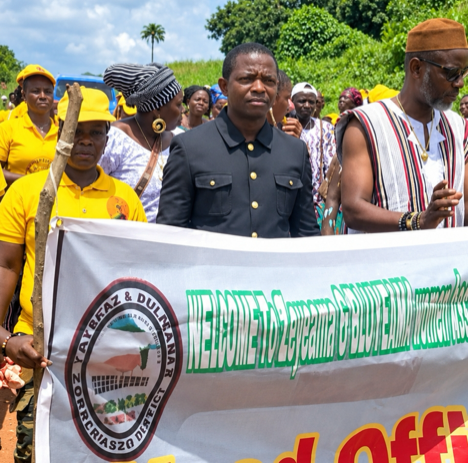
In rural Lofa County, where women remain central to household survival and local commerce, community-based women’s associations are increasingly filling the gap left by limited government and development support.
That reality became clear in Konia Town, Zeyeama Clan, Zorzor District, where members of the Zeyeama and Bluyeama Women Association, known as the Successful Women Association, mobilized to raise funds to sustain their economic and community activities.
The group, like many rural women’s organizations across Liberia, represents a growing model of self-help development where women pool resources to support farming, small businesses, family welfare and community initiatives.
Responding to the association’s call, Assistant Minister for Research and Statistics at the Ministry of Labour, Hon. Jackson F. Wolobah, donated L$100,000 to support the women’s activities, describing it as encouragement for women working to strengthen their communities.
Women’s associations in Zorzor District continue to play a critical role in promoting cooperation, economic opportunity, and local progress, particularly where formal financial services are limited.
Speaking during the engagement, Hon. Wolobah stressed that supporting women’s groups is not charity but an investment in community stability. “Leadership is not only about holding a position. It is also about maintaining relationships with the people and supporting meaningful initiatives,” he said.
Beyond the women’s gathering, Hon. Wolobah engagement extended to Zorzor City and Fessibu Town, including stops at Balema Community, Pewu Howard Hall Community, the Baptist Orphan Home and an appearance on Radio Life Zorzor to discuss community service.
At the Baptist Orphan Home, the focus shifted to a less-discussed crisis in rural Liberia: child vulnerability. During the visit, Hon. Wolobah interacted with children and donated footwear, a gesture that brought visible joy.
For child welfare advocates, such interventions underscore a larger issue. In many parts of Lofa, orphaned and vulnerable children depend heavily on community goodwill, with limited state social protection systems reaching them.
Residents say the visits reflect a growing expectation among rural citizens that public officials remain connected to their roots and return to listen, not just during elections.
As development debates continue in Lofa, Konia Town’s case raises a broader question: how to sustain and scale initiatives rural women and communities are already leading on their own, with timely support like that provided by Minister Wolobah.




Discussion about this post