


Published: August 12, 2026
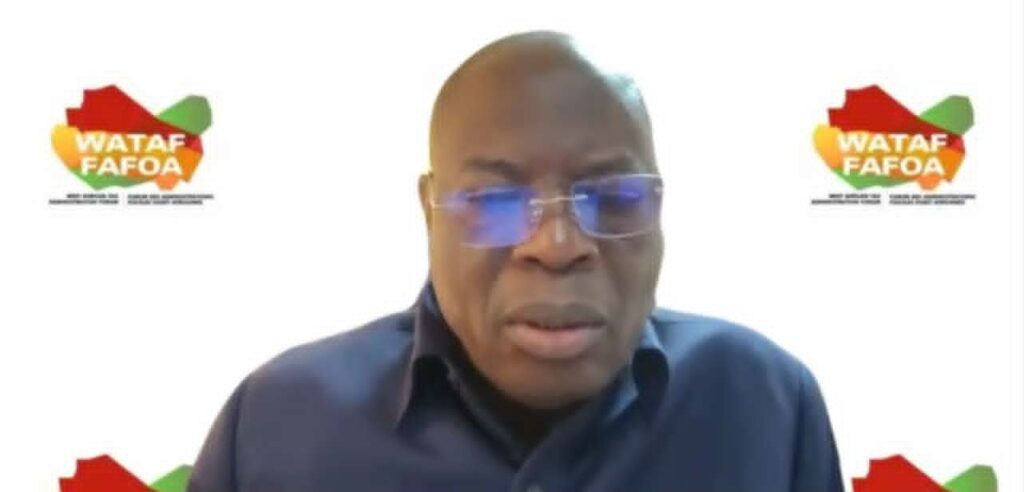
CONAKRY, Guinea — The West African Tax Administration Forum (WATAF) is calling for stronger regional cooperation, harmonized excise duty policies and more effective tax administration as West African countries move to overhaul the way tobacco products are taxed across the region.
The call came Monday as tax policy officials from Economic Community of West African States member countries and regional and international institutions gathered in Conakry for a three-day meeting to review the ECOWAS Directive on excise duties applicable to tobacco products.
The August 10-12 meeting brings together representatives of ECOWAS member states, the ECOWAS Commission, the West African Economic and Monetary Union Commission, the World Health Organization, the World Bank, the African Tax Administration Forum, WATAF and other development partners.
The meeting is assessing the implementation of the existing regional framework and considering recommendations for a revised directive designed to strengthen tobacco taxation, improve tax compliance, curb illicit trade, increase domestic revenue and contribute to better public health outcomes.
WATAF Executive Secretary Jules Tapsoba said tobacco taxation should be viewed not only as a revenue instrument but also as an important public policy mechanism for discouraging consumption of products that pose significant health risks.
“For WATAF, the issue of tobacco is therefore of particular importance because of the role that tax and customs administrations can play in implementing anti-tobacco policies,” Tapsoba said.
He said taxation can influence the price and affordability of tobacco products and, when appropriately designed, can help reduce consumption while generating additional government revenue. “A relevant tax policy can help reduce the consumption of products harmful to health while enabling states to mobilize additional revenue to finance public policies, particularly in the health sector,” he said.
Regional Tax Framework Under Review
The review is being driven in part by concerns over the limited implementation of the existing ECOWAS tobacco excise framework.
According to a presentation by Darlingston Y. Talery, acting director of the Directorate of Customs Union and Taxation at the ECOWAS Commission, the proposed 2026 directive would replace the 2017 framework, which had not been fully implemented by any ECOWAS member state as of 2024.
The ECOWAS Commission’s assessment indicates that tobacco products remain significantly undertaxed across the region, limiting the ability of governments to capture potential revenue while weakening the use of taxation as a tool for reducing tobacco consumption.
The proposed directive seeks to establish a more coordinated approach to tobacco taxation among ECOWAS countries, an issue officials say is particularly important in a region characterized by extensive cross-border trade.
Under the proposed reforms, the minimum specific excise duty would increase progressively, rising from 80 cents per pack of tobacco in the first phase to $1.40 per pack by the third phase.
The proposed framework would also require countries to apply a specific or mixed excise duty structure. After the third phase, the tax would be adjusted annually by whichever is higher — 5% or the rate of inflation measured by the Consumer Price Index.
The reforms would expand the scope of tobacco taxation to include emerging products such as heated tobacco products and electronic nicotine delivery systems.
The proposed directive also places greater emphasis on administrative controls intended to combat illicit tobacco trade and strengthen the ability of tax and customs authorities to monitor the movement and taxation of tobacco products.
Revenue and Public Health Objectives
The ECOWAS Commission projects that the proposed reforms could significantly increase tobacco tax revenue across the region. According to the presentation, implementation of the proposed measures could result in a 300% increase in regional tobacco tax revenues compared with the 2024 baseline.
The proposed reforms also establish public health targets, including a reduction of more than 30% in smoking prevalence and a 20% reduction in cigarette sales volumes.
The framework aims for excise taxes to account for 70% of the retail selling price of cigarettes and seeks to reduce smoking among people younger than 25 by 50%. The projections underscore the dual purpose of tobacco taxation: raising government revenue while making tobacco products less affordable and, consequently, reducing consumption.
Tapsoba said the objectives should be pursued together rather than treated as competing priorities.
For WATAF, stronger tobacco taxation represents an opportunity for governments to improve domestic revenue mobilization while reducing the economic and social costs associated with tobacco-related illness.
The approach also reflects a broader regional effort to strengthen domestic resource mobilization at a time when West African governments are under pressure to finance public services with greater reliance on internally generated resources.
Tackling Illicit Tobacco Trade
A major issue confronting the proposed reforms is the risk that higher tobacco taxes could encourage illicit trade if countries implement substantially different tax regimes.
Officials at the Conakry meeting are therefore examining ways to harmonize tax structures and strengthen enforcement across borders. Discussions are expected to cover tracking and tracing systems, customs controls, tax administration technologies, data management, auditing capabilities and measures to detect and prevent illicit tobacco transactions.
Participants will also examine the barriers that have prevented full implementation of the existing directive and consider how regional institutions can provide technical assistance to countries that face capacity constraints.
The emphasis on illicit trade reflects the interconnected nature of West African economies, where tobacco products can move across multiple jurisdictions before reaching consumers.
Differences in tax rates and enforcement mechanisms can create incentives for smuggling and tax evasion, potentially undermining legitimate businesses and depriving governments of revenue. A harmonized regional framework is therefore expected to give tax and customs administrations a stronger basis for cooperation and enforcement.
WATAF’s Continued Engagement
WATAF’s involvement in the Conakry meeting builds on several years of engagement in regional efforts to strengthen tobacco taxation.
In July 2023, WATAF participated in a regional meeting of national experts on tobacco taxation and illicit trade in ECOWAS member states in Accra, Ghana. The meeting was organized with the participation of ECOWAS and the World Health Organization.
WATAF also contributed in 2025 to the validation of a Tobacco Excise Tax Simulation study in Abuja, Nigeria. During that engagement, the organization emphasized the importance of ensuring that tobacco tax policies reflect the realities of cross-border trade in West Africa.
The organization has consistently advocated for stronger cooperation among tax administrations, recognizing that the effectiveness of national tax measures can be limited when neighboring countries operate under significantly different systems.
Regional Cooperation
The Conakry meeting opened with welcome and appreciation for representatives of ECOWAS member states and participating institutions, including the WHO, World Bank Group, ECOWAS Resident Representative, UEMOA Commission and ECOWAS Commission.
Guinea’s minister of economy and finance also addressed participants, highlighting excise duties as both a public health policy instrument and a means of strengthening domestic revenue mobilization. The opening interventions reflected broad agreement on the need for greater regional unity in addressing tobacco-related challenges.
Participants emphasized reducing the harmful effects of tobacco consumption, strengthening tax compliance, combating illicit trade and ensuring that excise systems generate sustainable revenue for governments.
The discussions also come as governments across West Africa seek to improve the efficiency of their tax administrations and reduce revenue leakages.
For countries facing significant development financing needs, officials say improving taxation of products such as tobacco could provide an additional source of domestic revenue while supporting public health objectives.
Toward a New ECOWAS Framework
The three-day meeting is expected to examine the status of implementation of the current directive, assess national excise duty structures and revenue performance, identify barriers to regional harmonization and consider international experiences in tobacco taxation.
Participants will also review technical requirements for tracking and tracing tobacco products, strengthen controls against illicit trade and identify gaps in tax administration, data systems and audit capacity. The meeting will consider the technical assistance required by member states to implement the proposed reforms effectively.
The outcome is expected to include priority recommendations and a communiqué that will guide ECOWAS member states and regional institutions as they work to modernize the regional framework governing excise duties on tobacco products.
For WATAF, the discussions represent another step toward building a more coordinated West African tax administration system in which tobacco taxation serves two interconnected purposes — generating much-needed domestic revenue and reducing the consumption of products harmful to public health.
The challenge, however, will be translating regional commitments into national action. The failure of member states to fully implement the 2017 directive underscores the gap between adopting regional tax policies and putting them into practice.
The proposed 2026 framework therefore places renewed emphasis on harmonization, enforcement, administrative capacity and cross-border cooperation.
If adopted and effectively implemented, the revised framework could significantly alter the taxation of tobacco products across West Africa, increase government revenues and strengthen the region’s ability to use taxation as part of a broader public health strategy.





Discussion about this post