
Published: December 10, 2024
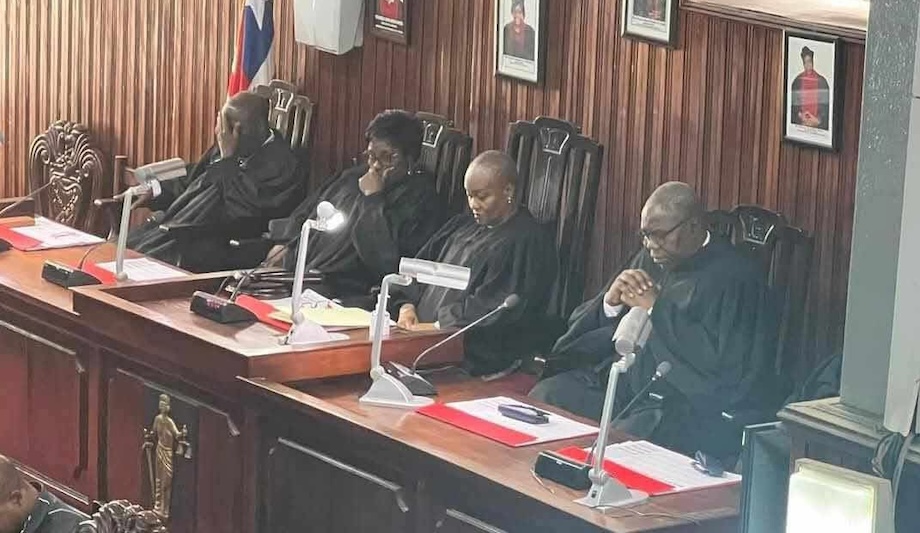
On December 5, 2024, the Supreme Court of Liberia (SCOL) rendered a pivotal legal opinion regarding the ongoing impasse within the House of Representatives.
This decision, while primarily a legal document, carries profound implications for the functioning of the government and the welfare of the Liberian people.
As a swirl of interpretations and opinions dominates the political landscape, it becomes paramount that we engage legal minds, specifically Councillors, and Attorneys, to accurately relay the essence and implications of the Supreme Court’s ruling.
The Supreme Court’s role is to interpret the law and clarify matters that could lead to division and confusion.
In this case, the legal doctrine of Ultra Vires emerged as a critical point within SCOL’s opinion.
To grasp the government’s response to the House of Representatives challenges, we must first comprehensively understand this term and its implications within the legal framework of Liberia.
The Concept of Ultra Vires:
The Latin term Ultra Vires, meaning “beyond the powers,” is a legal doctrine that curtails how much an individual or body can act.
When actions that exceed the authority granted by law or the governing documents are taken, such actions are rendered invalid.
In the context of government, particularly the legislative process, Ultra Vires implies that any resolution or decision made by the House of Representatives, group, or groups without proper authority may lack legal force.
In the opinion delivered by SCOL, it was determined that such specific undertakings by some House of Representatives members (groups)during the ongoing crisis were deemed Ultra Vires.
Understanding this concept is vital, and it is not just a legal term confined to academic law books but rather a foundational principle that safeguards the integrity of legislative processes and, by extension, the health of democracy in Liberia.
The House of Representatives quandary:
The impasse within the House of Representatives is deeply intertwined with political maneuvering, contentious relationships among representatives, and divergent interpretations of their governing rules.
This environment has led to fracturing within the legislature, effectively stalling legislative processes vital to the country’s governance.
As bills and the 2025 National Budget languish in limbos and crucial votes remain unheld, the repercussions increasingly undermine the functionality of the government, creating a frustrating reality for citizens reliant on their representatives to enact policies that meet their needs.
In this tumultuous landscape, the Supreme Court’s opinion aims to navigate the waters of governmental authority and responsibility.
The SCOL’s interpretation serves as a critical boundary-setter, emphasizing that the House of Representatives must conduct itself within the parameters of its lawful powers to maintain order and effectiveness.
Educational Imperative:
As legal opinions often become ensconced in complex jargon, there lies an urgent need to translate this legal discourse into comprehensible terms for the average citizen.
Political pundits may provide commentary, but without a solid grasp of legal fundamentals, their interpretations may skew the reality of what the court has stated.
For a meaningful dialogue to occur, we must focus on educating the public regarding the core principles outlined by the SCOL.
Clarifying the implications of SCOL’s opinion on the current governmental framework can help bridge a crucial gap between legal interpretation and public understanding.
By simplifying legal language and providing context, individuals of sound and astute minds within the legal community can foster a more informed citizenry capable of meaningfully engaging with their government’s processes.
Sound and Astute Legal Minds at Work:
Instead of relying on untrained commentators, we must draw on the expertise of well-knowledgeable and astute legal professionals with a nuanced understanding of the law.
Astute and well-abreast councilors and attorneys involved in the legal process can elucidate the specific instances in which actions taken by the legislature have strayed into Ultra Vires territory.
For instance, councilors and attorneys may elucidate that voting processes not aligning with established rules and procedures could render results invalid, leaving the legislative body compromised.
This understanding can help representatives acknowledge the gravity of adhering to procedural integrity.
It would also establish a shared acknowledgment of the importance of legal frameworks that support transparent governance.
The Broader Implications:
For the Liberian populace, the implications of the SCOL’s opinion reach far beyond the walls of the House of Representatives.
The ability of the legislature to function effectively embodies the heart of democracy.
When this power is embroiled in internal conflict, it hampers progress on various fronts, such as economic development, educational policies, public health initiatives, and beyond.
Citizens are vested in these matters, and clarity on how their representatives conduct business is paramount.
Moreover, as the SCOL’s opinion diminishes the potential for arbitrary decision-making within the legislature, it helps restore public trust in institutional processes.
When laws are scrutinized, citizens might feel more assured that their interests are protected against capricious or self-serving political maneuvers.
An informed citizenry engages more with the legislative process, creating a more participatory democracy.
Let me conclude that the Supreme Court of Liberia’s (SCOL) December 5, 2024, opinion is not simply a document stripped of political significance.
Still, it is a legal lifeline aimed at navigating a complex political landscape.
It highlights the need for adherence to legal standards, underscores the principles of accountability, and reiterates that any actions taken beyond lawful authority could jeopardize the fabric of governance.
The legal minds of Liberia have a pivotal role in ensuring the public is educated about these fundamental points.
The concept of Ultra Vires is essential in understanding the distinction between lawful and unlawful actions of the House of Representatives.
Engaging with this discourse allows citizens to hold their leaders accountable better, paving the way for a more functional and transparent government.
Ultimately, clarity, education, and expert interpretation of the law are essential for resolving current conflicts and cultivating the trust and participation necessary for a vibrant democracy.
Within this framework, Liberia can navigate its political challenges and emerge more decisive, united, and better equipped to serve its citizens.





Discussion about this post