


Published: July 8, 2026
On June 22nd, UL experienced a terrible tragedy when one of our students was killed from a hit-and-run motorcycle accident adjacent to Fendall Campus. The student, Eliel Kitson, had just finished one of his final exams and was, according to eyewitness accounts, crossing the road when a motorcycle sped past stopped traffic and hit him. Those who shared details about the incident noted the congestion of kehkehs and motorbikes near the Fendall Campus gate nearest the dormitories and the demonstration school and the difficulty of moving about in the area where the accident took place. The incident catapult our whole campus community into mourning and we were able to honor Eliel’s life with a reflective Book of Condolence ceremony on Wednesday, July 1st.
By Layli Maparyan, Ph.D., President, University of Liberia
This unspeakably painful incident highlighted the importance of elevating traffic safety to a much higher priority at UL. In the absence of organized traffic control, which includes signage, various kinds of barriers to slow traffic and regulate its flow, and safety officers trained to manage traffic and keep people safe, chaos will reign around the campus and the risk of traffic accidents will remain too high. We must take immediate action to increase traffic safety in and around UL.
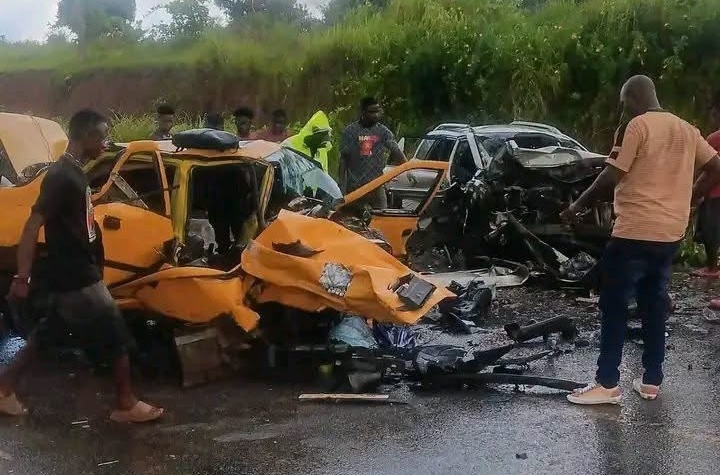
In fact, we had to stare tragedy in the face again when another traffic accident occurred on July 2nd, this time on the big bend just before the College of Agriculture section of Fendall Campus. According to bystanders, two motorcycles and a car collided. In this incident, one person died instantly and another was badly injured. Although neither was seemingly affiliated with the University, the fact that this accident occurred within view of our campus means that it affects us and we must be concerned. Fendall Campus sits next to Kakata-Monrovia Highway, a major traffic artery in Liberia, meaning that UL must collaborate with national, county, and local government as well as community actors to solve this problem.
Yesterday, as an American citizen, I celebrated the Fourth of July, America’s Independence Day, which gave me many reasons to reflect on Americanness in all its aspects. One area where I can say America has been very successful and is worthy of emulation is the area of traffic safety. In the 1960s, with the massive increase in drivers and vehicles due to post-WWII economic boom, the U.S. passed landmark traffic safety legislation. Both the Highway Safety Act and the National Traffic and Motor Vehicle Safety Act were passed in 1966. This created the National Highway Traffic Safety Administration (NHTSA) whose job it was to drastically improve road and vehicle improvements. With the relatively new Interstate Highway System established in the late 1950s under President Dwight D. Eisenhower, America’s big, fast roadways connected all of the States in the Union and invited more cars and trucks to the road. This new road system boosted commerce and made vacations possible for more Americans, contributing to what many people worldwide think of as the American Dream of the prosperous 1960s and 70s. However, to keep deaths and injuries to a minimum with all of this expansion, massive safety measures were required. This included improvements to roads, such as a consistent system of road markings, expansion in signage and a nationwide system of symbols and colors for road signs, and, over time, the introduction of technological features, such as traffic calming infrastructure, speed detection monitors, surveillance cameras, and solar-powered road lighting. This also included improvements to cars themselves, including seat belts, headrests, airbags, anti-locking brakes, and now self-braking cars and mechanisms that prevent unwarranted lane departures. The result has been an orderly traffic system, consistent reduction in fatalities and injuries, and a traffic safety system that is one of the best in the world. Liberia could learn from this.
The ARREST Agenda of His Excellency President Joseph Nyuma Boakai prominently features road improvements, and daily we hear welcome news of new roads opened or old roads improved. During this period of highway expansion, similar to that which the USA experienced under Dwight D. Eisenhower, a corresponding advance in traffic safety measures could and should be an added lasting legacy of the Boakai administration.
Liberia already has the administrative infrastructure for traffic safety in the form of the Ministry of Transport, which handles policy and regulatory frameworks for traffic safety as well as traffic strategy and, under the Road Safety Secretariat, public awareness and the coordination of traffic safety efforts. Under the Ministry of Justice, the Liberia National Police (LNP) handles traffic enforcement, traffic violations, and safety patrols. A national collaborator is Liberia Traffic Management Incorporated, a concession that handles day-to-day traffic system administration, driver testing, vehicle registration, and traffic ticketing in coordination with the LNP. The Ministry of Public Works builds and maintains Liberia’s increasingly vast system of roads and their physical infrastructure and collaborates with transport and police officials to install traffic lights, cameras, and road signage. When accidents happen, the Ministry of Health and its Emergency Medical Services work with the Road Safety Secretariat to provide post-crash medical response and emergency care on Liberian roadways. Even the Ministry of Education contributes something by developing road safety education programs and driver training education. Last, but certainly not least, the National Road Fund of Liberia finances road safety initiatives and contributes capacity-building programs. Thank you to all of you!
In 2024, the Liberian National Legislature updated the National Traffic and Vehicle Law of 1972 with the new and greatly expanded Revised and Amended Vehicle and Traffic Law of 2024. With thanks to the far-sighted legislators who passed it, this law is the most comprehensive update to transport legislation in Liberia’s history. Given that this law is still new, many Liberians may not yet know all its provisions. Yet the knowledge of traffic law is the power to save lives, so we owe it to ourselves to learn and share the information.
What must be added now to all of this is public will to strengthen traffic safety through the self-regulation of behavior and true dedication to traffic safety in Liberia. This is a bigger issue than any one of us individually. Drivers of cars, trucks, kekes, motorbikes, and even yellow machines must commit to traffic safety every moment of every day and not just focus on getting where they are going or making money. Pedestrians, whether walking or pushing wheelbarrows or riding foot-pedaled bicycles, must likewise become aware of and practice the safest approaches to getting from Point A to Point B. All of this is a matter of coordination – each of us working with each other to make sure everyone gets where they are going safely. We need awareness campaigns, we need intensified traffic safety education, we need more consistent enforcement of traffic safety violations, and we need stronger penalties for violators. Every life we save will thank us.
As UL is a learning institution, one thing we can do is be a better partner on the transmission of this important information. Our students, faculty, and staff can become ambassadors and exemplars of road safety. On Friday, when I met with the President’s Student Advisory Council, traffic safety at UL was our main topic of discussion. We were joined by the Interim Vice President for Administration, under whose responsibility UL’s roads and public safety fall. We discussed all the things that UL is doing to improve traffic safety on and around our campus since the untimely fall of Eliel Kitson. We brainstormed ideas to improve traffic safety as it pertains to our campus and the surrounding community. We all agreed that our next step is to engage the experts in national government and come up with a concrete plan to improving traffic safety at UL. We want a clearly demarcated School Zone around our campus, and we are willing to serve as a demonstration project for improved traffic safety measures in Liberia. Our own faculty, staff, and students, particularly in areas like engineering and public health, are prepared to join other experts in this effort, and the members of PSAC announced their willingness to serve as ambassadors of traffic safety within the student body and in the surrounding community.
Let’s get going. Expect to hear from me, traffic safety experts and officers. The future of young Liberians, and, indeed, all of us, is on the line.



Discussion about this post