


Published: July 8, 2026
The First Saturday cleanup campaign was introduced between 2009 and 2010 with an ambitious vision: to restore cleanliness, improve public health and cultivate a culture of civic responsibility across Monrovia and surrounding communities. When former Liberian President Ellen Johnson Sirleaf backed the initiative and appointed Mary Broh to lead the Monrovia City Corporation, the campaign quickly became one of the Liberia’s most visible sanitation programs.
During those early years, the exercise carried both symbolism and substance. Streets were swept, clogged drains were cleared, illegal structures were removed, and public officials joined ordinary citizens in community cleanups. While the methods employed by Mary Broh often generated controversy, few questioned her determination to make Monrovia cleaner.
Residents across Monrovia, Paynesville and other communities knew that sanitation regulations would be enforced, and many adjusted their behavior accordingly. More than a decade later, however, the First Saturday cleanup campaign appears to have lost much of its original purpose. What was intended to become a national culture of cleanliness has increasingly become a monthly ritual focused more on restricting commercial activity than achieving measurable improvements in sanitation.
The Paynesville City Corporation (PCC) has become overwhelmed and garbage in the streets of the City has become a normal way of life, with Red Light alone accounting for more than half of its dirt management crisis.
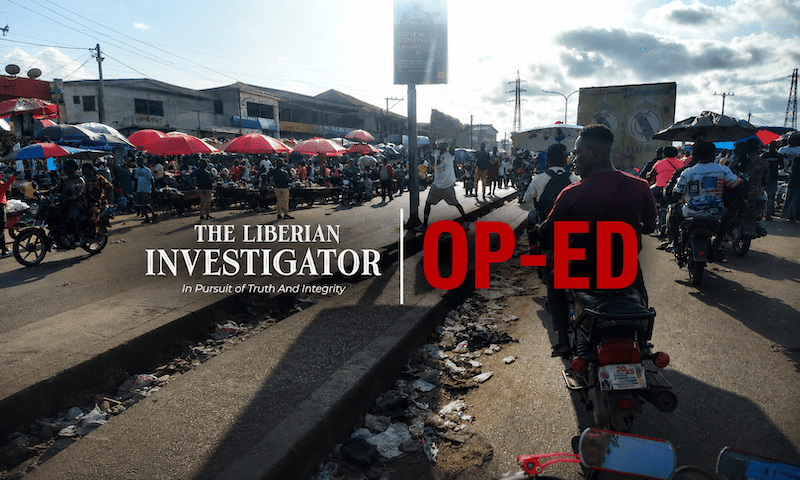
Today, a drive through Monrovia, Sinkor, Duala, Bushrod Island, Clara Town, New Kru Town and Paynesville, especially Red Light where commercial activities accept no holiday presents a troubling picture. Piles of garbage line major roads. Blocked drainage systems remain filled with plastic waste. Markets spill into already congested streets. Sidewalks intended for pedestrians have become dumping grounds and sales spots.
During the rainy season, the consequences become even more severe as blocked waterways contribute to flooding that damages homes and businesses. Perhaps nowhere is this reality more visible than Red Light Market in Paynesville. The commercial hub, one of the busiest in Liberia, has become synonymous with overflowing garbage. Mountains of waste greet commuters daily, creating unpleasant odors and raising serious concerns about public health.
Yet this situation persists despite monthly cleanup exercises that temporarily halt commercial activity. This contradiction raises an uncomfortable but necessary question: if businesses are closed every first Saturday to promote sanitation, why do some of the country’s busiest commercial centers remain overwhelmed by trash?
Monrovia City Mayor John-Charuk Siafa has launched several campaigns, including the joint cleaning taskforce involving the Ministry of Public Works, and the Liberia National Police as well as maintaining the Fisrt Saturday Morning Clean-up campaign carried out for years by Madam Broh, his initiatives are failing to answer the questions of why Monrovia and its suburb cities remain dirty and certain streets continue to be congested with hawkers.
To a greater extent, the answer lies in the difference between enforcement and effectiveness. Each first Saturday of the month, city police and other enforcement officers are deployed to ensure that businesses remain closed until 10 a.m. Shop owners who open their stores earlier often face penalties or are forced to shut down. For many small entrepreneurs, especially those who rely on daily income to feed their families, losing even a few hours of business represents a significant economic sacrifice.
Unfortunately, the visible outcome of that sacrifice is becoming increasingly difficult to justify. Closing shops does not automatically remove garbage. Preventing businesses from operating for a few hours does not guarantee cleaner streets. True sanitation requires sustained waste collection, efficient garbage disposal systems, adequate public bins, regular drainage maintenance and continuous public education. Without these elements, monthly restrictions become little more than symbolic exercises.
The reality is that sanitation cannot succeed through enforcement alone. It must be supported by functioning institutions, reliable waste management systems and consistent government investment. Citizens should certainly play their part by disposing of waste responsibly, but local authorities also have a duty to ensure that garbage collected from communities is promptly transported to designated disposal sites.
Another challenge is the apparent inconsistency in enforcement. Small business owners are often the easiest targets because they are visible and accessible. Yet illegal dumping, indiscriminate waste disposal and environmental violations committed by larger actors frequently receive far less attention. This uneven application of the rules weakens public confidence and creates the perception that the campaign has become more punitive than transformative.
Accra, Abijan and Lagos were among the hardest hit recently when floods took their streets and homes-leaving several people dead and millions of properties damaged or lost. The lives of those Ghanaians, Ivorians and Nigerians, among others, could have been saved had there been safe environments free from flood disasters. Of course Liberia has experienced troubling life wrecking floods, displacing many people but, lessons seem not to have been learned enough so far. The drains, gutters and streets continue to be homes to immense piles of trash, preventing the free flow of stormwater.
There is also the issue of accountability. Every public policy should be evaluated against measurable outcomes. Has the First Saturday cleanup campaign reduced waste accumulation? Have drainage systems improved? Has flooding decreased? Have sanitation-related diseases significantly declined? If the answers remain uncertain after years of implementation, then policymakers must honestly assess whether the strategy requires fundamental reform.
Liberia’s rapidly growing urban population presents new sanitation challenges that did not exist when the campaign was first introduced. Monrovia and Paynesville have expanded considerably, producing far more household and commercial waste than before. Waste management infrastructure, however, has struggled to keep pace with this growth. Collection schedules remain inconsistent in many communities, while illegal dumping continues because proper disposal options are either insufficient or inaccessible.
These structural problems cannot be solved by monthly cleanup exercises alone. The government, through the relevant municipal authorities and environmental agencies, should consider modernizing the campaign. Instead of concentrating primarily on temporary business closures, authorities could invest in year-round community sanitation programs, strengthen partnerships with waste management companies, expand recycling initiatives and establish neighborhood sanitation committees that monitor cleanliness throughout the month.
Public participation should also extend beyond symbolic sweeping exercises. Schools, community organizations, religious institutions and market associations can all become partners in promoting responsible waste disposal and environmental stewardship.
Lasting behavioral change occurs through continuous engagement rather than occasional enforcement.
Technology can also improve accountability. Municipal authorities should publish sanitation performance reports, identify communities with the greatest waste management challenges and communicate how public resources allocated for sanitation are being utilized. Citizens deserve transparency, especially when they are expected to comply with mandatory cleanup regulations.
Equally important is the need to restore public trust in the campaign. Many Liberians willingly support initiatives that produce visible results. However, when people continue to see overflowing garbage in Red Light, congested streets littered with refuse (waste material) and blocked drains after every monthly cleanup, skepticism naturally grows. Citizens begin to question whether the inconvenience imposed on businesses is producing meaningful improvements.
This should not be interpreted as an argument against community cleaning. On the contrary, organized sanitation campaigns remain essential in every developing city. Clean cities attract investment, reduce disease, improve tourism and enhance the overall quality of life.
The issue is not whether the First Saturday cleanup should continue; it is whether it should continue in its current form. Policies should evolve as circumstances change. What may have worked under the energetic leadership of Mary Broh during the early years may no longer be sufficient to address today’s urban sanitation challenges.
Liberia deserves a sanitation strategy built on measurable outcomes rather than routine compliance. The First Saturday cleanup campaign should become more than a day of closed shops and temporary restrictions. It should represent a coordinated national commitment to cleaner streets, efficient waste collection, environmental responsibility and accountable municipal governance.
Until that transformation occurs, many Liberians will continue to witness the same troubling contradiction every month: businesses remain closed in the name of sanitation, yet the streets of Monrovia, Red Light and surrounding communities remain buried beneath growing piles of garbage.
A cleaner Liberia will not be achieved by the clock striking 10 a.m. on the first Saturday of each month. It will be achieved when public policy moves beyond symbolism and delivers the lasting, visible cleanliness that citizens were promised.






Discussion about this post