


Published: April 20, 2026
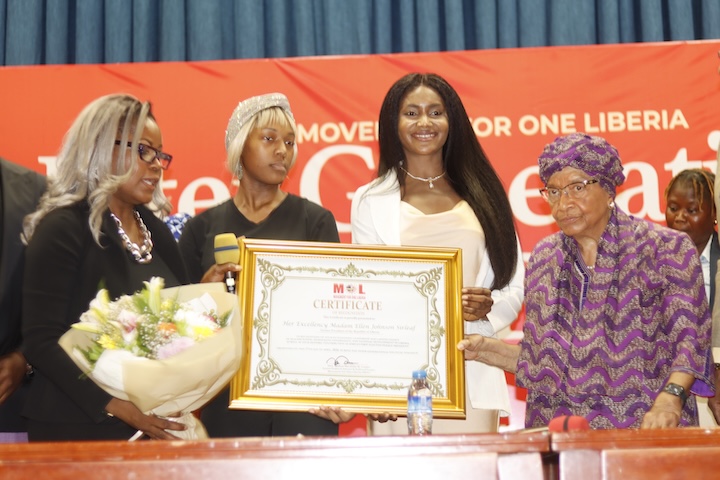
MONROVIA — Former President Ellen Johnson Sirleaf told young Liberians at a weekend dialogue to stop complaining and start preparing for leadership. The young Liberians told the established political class that patience had run out and the time for symbolic inclusion was over.
That tension, honest, unscripted, and necessary, was the defining feature of an intergenerational dialogue hosted Saturday at the Ellen Johnson Sirleaf Ministerial Complex by the Movement for One Liberia, a political party led by MacDella Cooper, senior political adviser to President Joseph Boakai.
Sirleaf, whose presence drew the most attention, used a fireside chat to challenge youth participants directly. Drawing on her tenure leading Liberia through post-war recovery, she stressed that governance demands discipline, sacrifice and preparedness, and urged young people to move beyond criticism and position themselves to lead.
The message landed in a room that was not entirely willing to simply receive it.
Youth participants pushed back throughout the day, raising concerns about unemployment, limited political participation and what they described as a persistent disconnect between policymakers and the citizens they govern. Their interventions were pointed. They challenged senior figures to move beyond rhetorical inclusion and create real pathways to power for younger Liberians.
The exchange exposed a fault line that runs through much of Liberia’s political discourse. Established leaders called for patience, institutional respect and gradual reform. Young participants argued that the scale of Liberia’s problems, corruption, economic stagnation, and governance failures make gradualism a luxury the country cannot afford.
The dialogue featured a heavyweight lineup that included former Chief Justice Gloria Musu Scott, former Foreign Affairs Minister Olubanke King Akerele, former Commerce Minister Prof. Wilson Tarpeh, Governance Commission Chairman Prof. Alaric Tokpa, former presidential candidate Dr. Clarence Moniba, former River Gee Sen. Conmany B. Wesseh and Dr. Augustine Konneh, senior adviser to President Boakai. House Speaker Richard Nagbe Koon joined as a special guest.
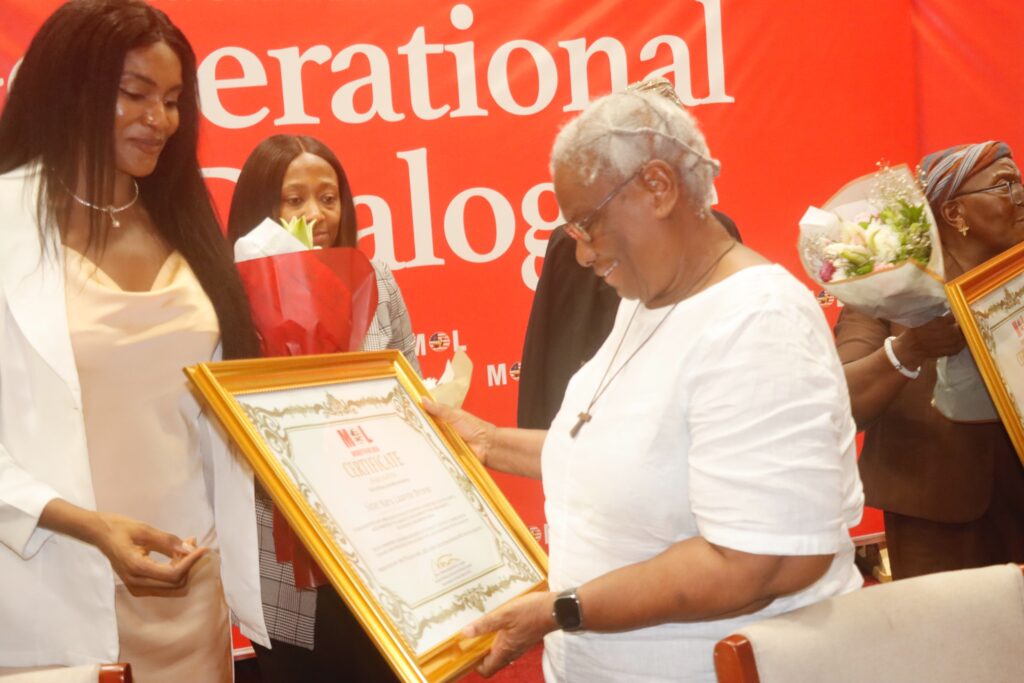
Cooper, whose party organized the event, framed the dialogue as something more purposeful than a forum. She described it as an intentional space where participants from different generations and political persuasions could engage on equal footing on questions of governance, rights and public policy.
“Liberia cannot move forward divided by age, experience, or opportunity,” she said.
The harder question the event left unanswered is whether any of it will matter beyond the room. Liberia has held similar dialogues before. The conversations have often been frank. The follow-through has often been absent. Participants and observers acknowledged that tension openly, and it placed pressure on organizers and policymakers to demonstrate that this engagement will produce something more than a well-attended moment in the country’s civil discourse.
For several hours on Saturday, Liberia’s past and its impatient future occupied the same space. Whether that proximity produces change will depend entirely on what comes next.





Discussion about this post