


Published: September 30, 2026
MONROVIA — The Movement for Progressive Change (MPC) political leader Simeon Freeman has reiterated his disappointment with Liberian legislators earning high salaries and benefits. Freeman emphasized that no lawmaker in the country deserves the salaries and benefits they receive, citing the high cost of living for ordinary citizens and poor infrastructure
By Roseline Gbessagee
He based his argument on the size of the country’s national budget, which he says is too small to provide the comfort they cannot afford while working fairly with their skills and qualifications.
He also returned to his earlier argument that the Executive Mansion is fit only to be a hotel for revenue generation rather than a place of work and comfort for a president.
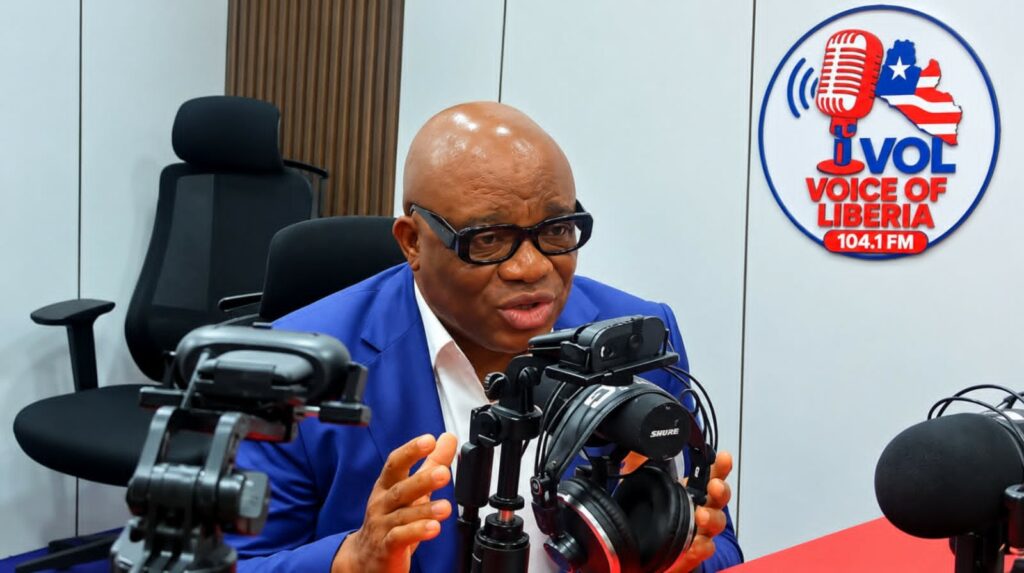
Freeman spoke Monday, Sept. 28, on Voice of Liberia, where he urged that Liberia must rethink government spending and longstanding practices as well as new ways to increase revenue and accelerate development.
“Our budget just hit about 1.2 billion. It has not even been better,” Freeman said.
He questioned comparisons between Liberian lawmakers and legislators in larger economies, arguing that Liberia’s relatively smaller budget should be considered when determining compensation.
“The same Liberian legislators will tell you, ‘Oh, they are legislators …’ But he makes more than the legislator in America, whose budget is multi-trillion dollars,” Freeman said.
As part of his broader argument for new approaches to managing public resources, Freeman proposed converting the Executive Mansion into a hotel, saying its oceanfront location could become a revenue-generating asset.
“I think you should have the Executive Mansion of the Republic of Liberia, where it is situated right by the ocean, very beautiful scenery, and they can begin to generate income for the people of Liberia,” he said.
“You see, these kinds of very creative ideas sound funny.”
Freeman said unconventional ideas are often dismissed when first introduced, drawing comparisons with technological developments that were once considered unrealistic.
“In the ’90s, if you said to anybody, ‘Look, it’s possible to have a telephone in your pocket,’ they would say you’re crazy, right?” he said.
“Those of us who are much older, I remember the early years of the video deck. I remember when I bought my first video deck; it was Betamax, right? Then we transitioned to VHS. Then we transitioned to CDs. Today, it’s Internet-based,” he added.
Freeman argued that Liberia should apply similar openness to changing traditional approaches to governance and the use of public assets.
“Because your whole life, for 170-something years, you’ve been used to a president working at the Executive Mansion and riding in 200 cars,” he said.
He also referenced Rwanda and Botswana during the interview, arguing that Liberia should examine different governance approaches instead of rejecting proposals merely because they depart from established practices.
“It’s not about the Executive Mansion. You see, these are the arguments that are weak,” Freeman said.






Discussion about this post