


Published: June 10, 2026
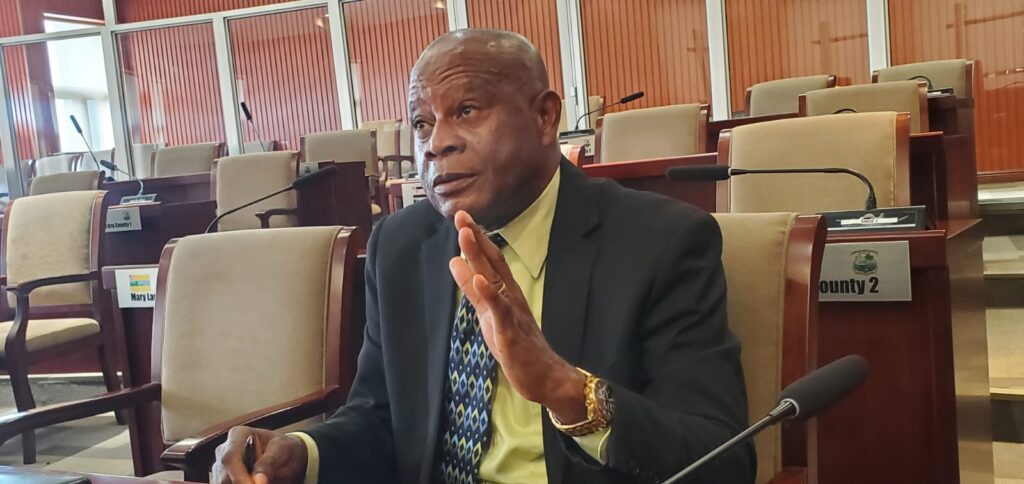
CAPITOL HILL, Monrovia — No Liberian would be turned away from emergency or childbirth care for failing to pay upfront, under a bill introduced in the Senate after two women reportedly died outside a Monrovia hospital that allegedly refused to admit them.
Sinoe County Senator Augustine S. Chea’s bill would require public health facilities to provide emergency and labor services free of charge and bar private hospitals from demanding advance payment before treating, admitting or stabilizing a patient in an emergency. Titled “An Act to Establish Free Emergency and Labor Medical Services in Public Health Facilities and to Prohibit Requirement of Advance Payment for Emergency and Labor Care Treatment and Admission at Private Health Facilities,” the measure seeks to ensure no one is denied urgent care because of financial hardship. It comes amid mounting public anger over patients turned away for inability to pay, a problem that has long dogged the health sector.
The proposal follows the reported deaths of two women outside the gate of Redemption Hospital in New Kru Town after they were allegedly denied emergency treatment. One, Tenneh Nagbe, a woman in her 30s who had given birth only a week earlier, reportedly died while waiting for care. Her sister-in-law, Manssia Wass, said hospital staff took the patients’ details at the gate but never returned to admit them despite repeated pleas from relatives. Nagbe died in a relative’s arms, and a second woman in similar distress also died outside the compound, the family said.
Redemption Hospital, allocated US$420,000 in the 2026 national budget, has drawn criticism before, including a 2025 report of a woman giving birth at its gate and the 2023 death of a young mother after alleged treatment delays.
Presenting the bill, Chea said pregnant women, accident victims and other patients needing urgent care are routinely placed at grave risk when treatment is conditioned on deposits. Public hospitals, funded by taxpayers, should never withhold care in life-threatening situations, he argued. “Since public facilities are financed by the people, it is unjust to deny those same people services during life-threatening situations,” he said.
He said requiring payment before emergency care runs counter to international medical standards and to the ethical duty of doctors to preserve life. “The first priority of any health facility should be to stabilize a patient and save their life, regardless of their financial status,” Chea said, adding that while private hospitals carry legitimate operating costs, payment cannot be used as a barrier to emergency admission or stabilization.
On a motion by Maryland County Senator J. Gbleh-bo Brown, the bill received its first reading and was circulated to senators ahead of a second reading. Under Rule 38 of the Senate Standing Rules, it must undergo committee review before returning to plenary for debate and possible amendment.
If passed, the measure would rank among Liberia’s most significant health reforms in years, potentially ending the practice of demanding advance payment before emergency and maternity care.





Discussion about this post