


Published: June 10, 2026
By Blamo N. Toe
MONROVIA — West Africa is losing an estimated $50 billion a year to illicit financial flows, and criminal networks are increasingly turning public procurement, the systems meant to build the region’s schools, roads and hospitals, into the channel they use to launder the money, the region’s anti-money-laundering body has warned.
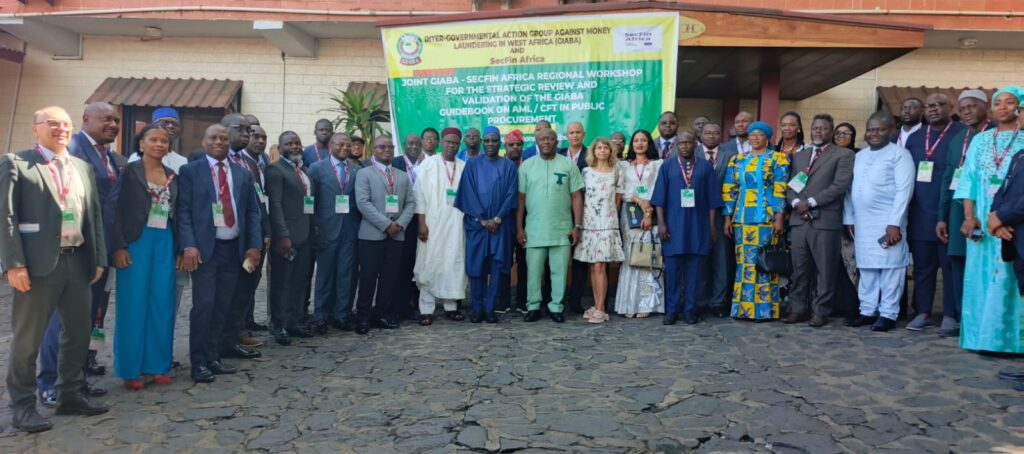
The warning came Monday from Edwin W. Harris Jr., director general of the Inter-Governmental Action Group Against Money Laundering in West Africa, known as GIABA, at the opening of a four-day regional workshop in Monrovia to review and validate a new guidebook on anti-money laundering and counter-terrorism-financing safeguards in public procurement.
Harris called procurement one of the most vulnerable corridors for illicit flows. Citing African Public Procurement Network estimates that it accounts for about 12 percent of GDP across West African countries, he said its sheer scale makes it a target. “That is a significant volume of taxpayers’ money that must be protected,” he said.
He said criminals exploit opaque procedures, weak oversight and entrenched corruption, creating shell companies and front entities, concealing beneficial ownership, manipulating tenders, splitting contracts, inflating invoices and laundering proceeds through payment streams that look legitimate. “The very systems designed to build our schools, roads, and hospitals are being weaponised to illicitly enrich a few,” Harris said. “This is not acceptable.”
The annual loss, he said, exceeds the development assistance many countries in the region receive, with a large share routed through procurement.
GIABA developed the guidebook to help member states identify, prevent and respond to laundering risks across the procurement cycle, from planning and tendering to contract execution and payment. Over the four days, participants are to validate common laundering typologies, agree on a shared red-flag glossary, strengthen referral pathways between procurement and oversight bodies, and build monitoring frameworks and country-specific action plans.
Harris pressed delegates to go beyond detection. Procurement red flags, he said, must become intelligence reports that lead to investigations, prosecutions, asset freezing and confiscation. “Audit without follow-up is meaningless and oversight without enforcement lacks impact,” he said, urging the region to leave Monrovia with “a binding roadmap for action.”
Anna Brzozowska, first counselor and team leader for political and economic governance at the European Union delegation to Liberia, said procurement integrity underpins development and public trust. When systems are manipulated for private gain, she said, the damage runs past financial loss to distorted competition, discouraged investment and eroded confidence in institutions, and she called for a whole-of-government response.
Liberia’s finance and development planning minister, Augustine K. Nguafuan, called the guidebook a timely intervention covering risk assessment, beneficial ownership transparency, vendor due diligence, red-flag detection, asset recovery and inter-agency cooperation. “Strengthening integrity in public procurement requires a collective effort to fight procurement fraud,” he said.
The workshop has drawn representatives of public accounts committees, supreme audit institutions, procurement authorities and financial intelligence units from across West Africa, who are expected to formally validate the guidebook and craft national strategies against money laundering, terrorism financing and procurement fraud.






Discussion about this post