


Published: November 17, 2026
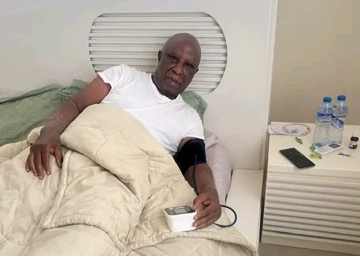
MONROVIA — Economist Samuel P. Jackson, charged with manslaughter and negligent homicide in the death of his South African wife, can leave Liberia for up to 90 days to seek treatment for high-risk prostate cancer in the United States after Criminal Court “B” granted his request Tuesday without objection from prosecutors.
Judge Serena F. Garlawolu attached strict conditions. Jackson must produce two qualified human sureties under Chapter 13, Sections 13.3 and 13.4 of the Criminal Procedure Law, and execute a bond and a written undertaking to return. The court directed its clerk to ensure the sureties are investigated and approved, and the bond and undertaking are executed before Jackson leaves the country.
The travel window runs from Nov. 17 to Feb. 17. Any extension must be formally requested and approved, supported by credible medical justification. If Jackson fails to return on time without an approved extension, his sureties must appear before the court to show why legal action should not be taken against them.
In her ruling, Garlawolu said the preservation of human life and the right to health are fundamental considerations the court cannot ignore, and that while the administration of justice must be protected, Jackson’s serious medical condition warranted judicial discretion in his favor.
She made clear that the permission is limited to medical treatment abroad and does not end, suspend or discharge the prosecution, and must not be read as an acquittal or a waiver of the charges.
Jackson filed a six-count motion on Oct. 26, supported by a urologist’s report diagnosing him with high-risk prostate adenocarcinoma. The court found that the medical evidence established the seriousness of his condition and the need for specialized care that may not be readily available in Liberia.
When the motion was heard on Nov. 11, prosecutor Cllr. Isaac Williams did not oppose it but asked that Jackson’s departure be secured by two sureties and that his affidavit be amended to make the sureties accountable if he failed to return within 90 days.
Jackson’s wife, Ntombikayise Innocentia “Toni” Khumalo Jackson, died in March. Police charged him in April after alleging that injuries on her body, including a laceration to the head, raised concerns about the circumstances of her death. Jackson denies the charges and has said she was injured in a fall. His family has said she had a documented history of health complications, including falls and seizures.
Jackson, a television commentator who served as economic strategist for the Citizens Movement for Change, suspended his role with the party in April, citing the case. In June, he called on the government to release the autopsy and toxicology reports, saying the delay had kept her family from repatriating and burying her.
Media reports said Jackson was seen at the Temple of Justice in October being helped along by two men because he was struggling to walk, and he has since publicly appealed for permission to travel abroad for treatment.
The case, Republic of Liberia v. Samuel Jackson, remains pending before Criminal Court “B.”



Discussion about this post