


Published: June 15, 2026
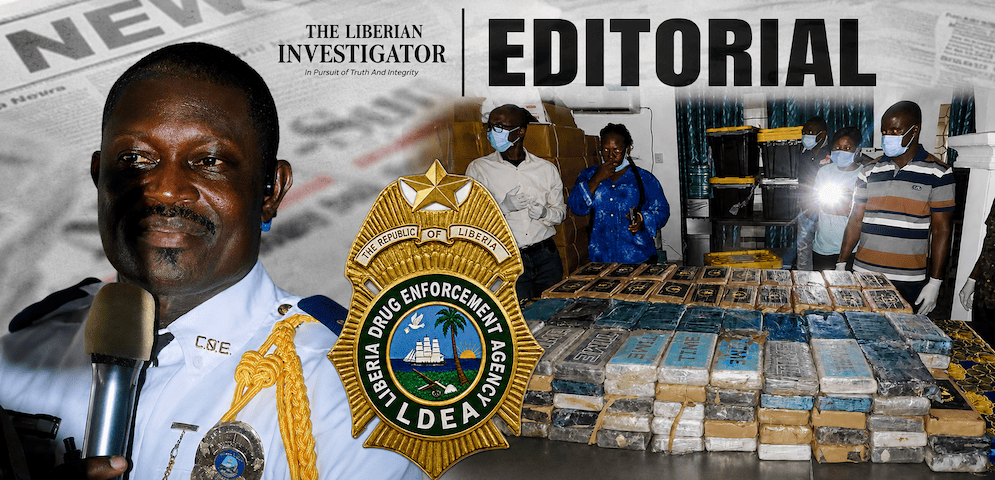
The Liberia Drug Enforcement Agency has a credibility problem of its own making.
In the largest cocaine seizure of the Boakai administration, authorities insist they cannot disclose the identities of those connected to the US$19 million cocaine shipment because doing so could compromise an ongoing investigation. Under ordinary circumstances, that explanation would deserve consideration. Serious transnational drug investigations often require discretion, patience, and careful evidence gathering.
But the LDEA has already undermined its own argument.
The agency publicly identified Emmanuel Zeon, the man it describes as the courier who allegedly delivered the cocaine shipment to Roberts International Airport before fleeing. If naming individuals in an active investigation is truly dangerous to the integrity of the case, then naming Zeon should have been equally problematic. The moment the agency released that name, it established that disclosure is not impossible. It is selective.
That distinction matters.
The public is not questioning the need for a thorough investigation. The public is questioning why the only person whose identity has been revealed is the alleged courier, the individual furthest down the chain and perhaps the easiest to replace. The names that remain hidden are those who may possess the answers Liberians actually seek. Who financed the operation? Who facilitated it? Who protected it? Who stood to benefit from it?
The concern is about transparency and accountability.
Liberia has seen too many major criminal cases stall at the level of the messenger while the architects remain untouched. In such circumstances, public suspicion becomes inevitable. Every day that passes without meaningful updates creates a vacuum that speculation quickly fills. Citizens begin to wonder whether the investigation is moving upward toward powerful interests or downward toward a convenient scapegoat.
The House of Representatives is therefore correct to demand answers. However, lawmakers should avoid asking the wrong question. The issue is not whether the LDEA can legally withhold names. The agency has already demonstrated that it can choose when to release names. The real question is why one individual was exposed while six others remain anonymous. What specific operational considerations justify that distinction? Who made that determination? And how long should the public be expected to wait before receiving greater clarity?
Perhaps the most troubling aspect of this case is what it suggests about Liberia’s role in international narcotics trafficking. By all indications, the cocaine was not intercepted while entering the country. It was allegedly being prepared for export through Liberia’s principal international airport. That possibility points to a network far larger than any single courier. Such an operation would likely require access, coordination, and assistance from individuals positioned within transportation, logistics, security, or other critical systems.
That is the network Liberians want dismantled.
The government has promised that no individual will be protected regardless of status, position, influence, or affiliation. Those are powerful words. But promises do not build public confidence. Results do.
For now, Liberians know the name of the man who allegedly ran. They do not know the names of those who stayed behind.
Whether this investigation ultimately reaches the financiers, facilitators, and enablers, or stops at the courier, will determine whether the US$19 million cocaine seizure becomes a landmark victory against organized crime or simply another headline that faded before the full truth emerged.






Discussion about this post