


Published: May 20, 2026
MONROVIA – The National Public Health Institute of Liberia says Liberia has recorded significant progress in disease surveillance, outbreak response, and Ebola preparedness, but warns that limited resources, porous borders, and ongoing infectious disease threats continue to pose serious risks to national public health security.
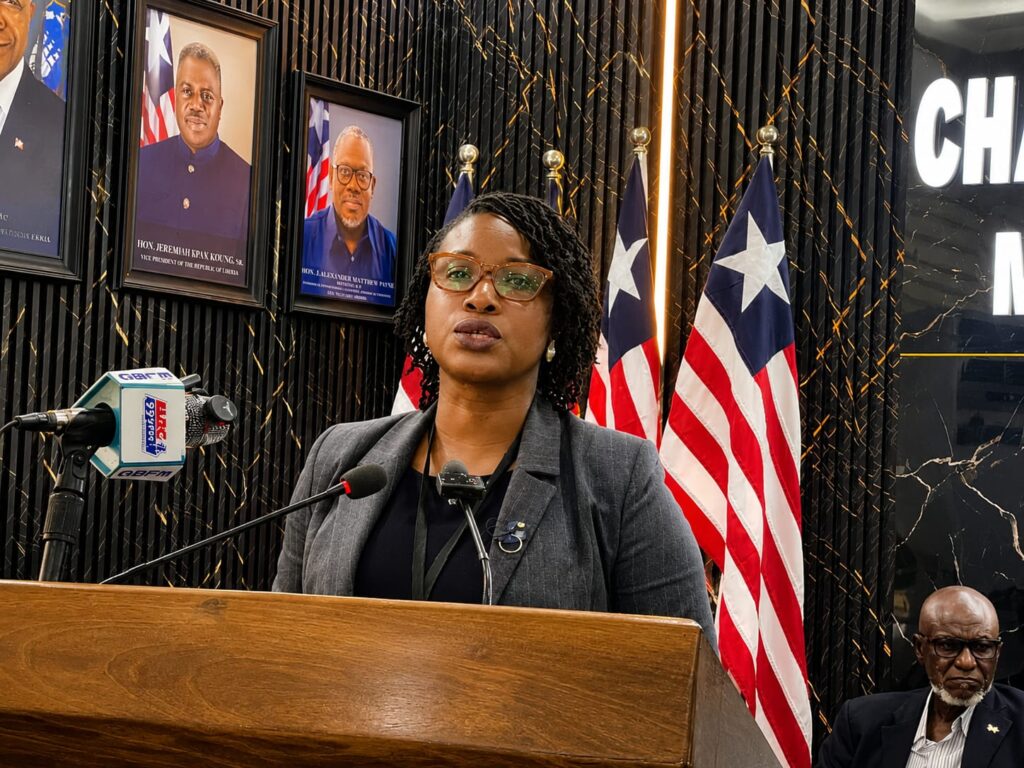
Speaking Tuesday during the Ministry of Information’s regular press briefing, NPHIL Interim Director General Sia Wata Camanor highlighted improvements in governance, workforce development, laboratory systems, and emergency preparedness over the past six months.
NPHIL Reports Governance, Accountability Gains
Camanor said the institution has strengthened internal controls and accountability systems as part of broader reforms aimed at improving operational efficiency and public trust.
“We have reinforced internal controls and improved accountability systems. Notably, compliance with General Auditing Commission recommendations has increased from 61% to 81%, reflecting our commitment to sound public sector governance, transparency, and responsible management of public resources,” she stated.
She noted that NPHIL has also prioritized workforce sustainability, revealing that 29 technical personnel previously supported through internally generated funds have now been transitioned onto the government payroll through collaboration with the Civil Service Agency.
“This represents a major step toward sustainability and institutional stability. Importantly, we continue to advocate for the enrollment of 42 Point of Entry volunteer staff onto the Government payroll,” Camanor said.
According to her, the personnel remain critical to surveillance and monitoring activities at Liberia’s borders.
Surveillance System Remains Strong
Camanor disclosed that Liberia’s disease surveillance system continues to perform at a high level, recording 99% reporting completeness and 98% timeliness nationwide.
“These indicators reflect a highly functional system capable of early detection and rapid response,” she noted.
She added that Liberia’s public health system has become significantly stronger following years of responding to Ebola, COVID-19, Mpox, Lassa fever, and measles outbreaks.
According to Camanor, Liberia now maintains functional Emergency Operations Centers, improved laboratory systems, active rapid response mechanisms, and a more experienced public health workforce.
Mpox Cases Drop Sharply
On the current outbreak situation, Camanor said Liberia has recorded 1,676 confirmed Mpox cases since 2024, with 1,663 recoveries and eight deaths, representing a case fatality rate of 0.5%.
She noted that while the disease spread across all counties, only five active cases currently remain nationwide.
The sharp decline, she said, reflects the effectiveness of surveillance, laboratory testing, vaccination campaigns, case management, and community engagement efforts.
Lassa Fever, Measles Still Under Monitoring
Regarding Lassa fever, Liberia has recorded 236 confirmed cases and 72 deaths since 2022, representing a case fatality rate of 31%, according to NPHIL.
The disease had previously affected Bong, Nimba, and Grand Bassa counties, though there are currently no active cases.
Camanor said contact tracing and monitoring activities remain ongoing.
On measles, she disclosed that Liberia has recorded more than 20,000 confirmed cases and 112 deaths since 2021, with 185 active cases currently spread across 11 counties.
“Response efforts remain ongoing, particularly vaccination campaigns and case management,” she said.
Ebola Threat Still Looms
Although Liberia currently has no confirmed Ebola cases, Camanor warned that outbreaks in the Democratic Republic of Congo and Uganda continue to place the country at risk because of regional movement and cross-border travel.
She emphasized that NPHIL remains actively monitoring the regional Ebola situation and maintaining preparedness systems.
Challenges Persist
Despite the progress, Camanor acknowledged major operational challenges, including limited funding, inadequate logistics, shortages of laboratory supplies, and insufficient infection prevention and control materials.
She stressed that addressing those gaps remains essential to sustaining Liberia’s public health gains.
Public Urged to Remain Vigilant
Camanor urged citizens to continue practicing regular handwashing, avoid contact with bodily fluids of sick persons, seek early medical care, and report suspected cases promptly.
“Early detection saves lives and prevents outbreaks,” she emphasized.
She also thanked the Government of Liberia, the Ministry of Health, County Health Teams, laboratory personnel, community health workers, development partners, and the media for supporting Liberia’s public health response efforts.
“While challenges remain, progress is evident, and systems are in place to detect and respond to health threats. Liberia remains vigilant. Our systems are active. Our workforce is prepared,” Camanor concluded.
“We call on all citizens to remain informed, cooperative, and proactive. Public health security is a shared responsibility.”






Discussion about this post