


Published: April 24, 2026
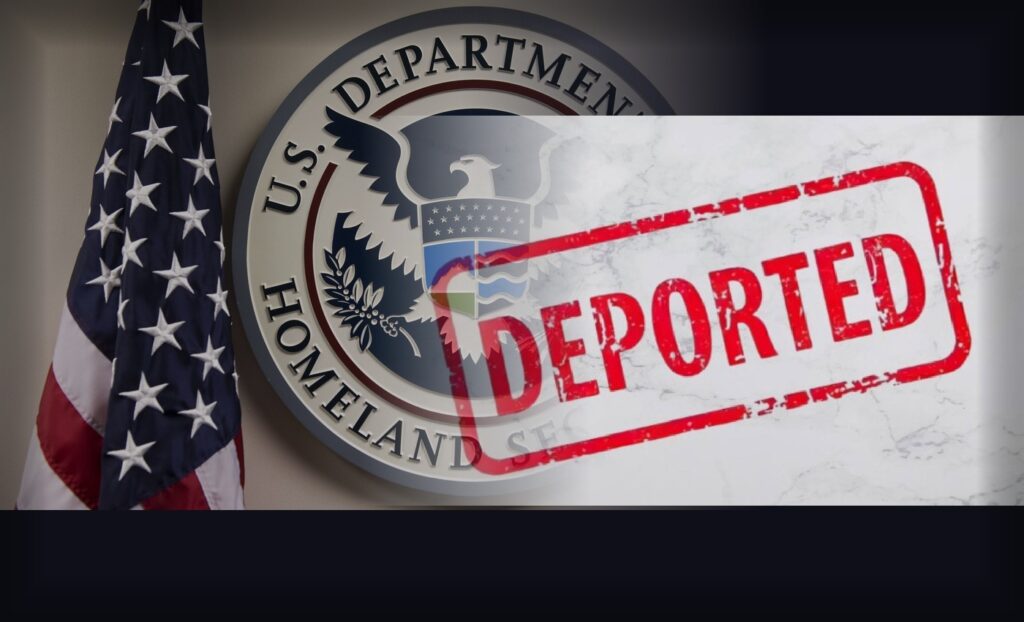
MONROVIA — Nine Liberian nationals deported from the United States after serving prison sentences for crimes ranging from robbery and sexual assault to kidnapping and drug trafficking arrived at Roberts International Airport on Thursday, April 23, in the latest repatriation under a sweeping U.S. immigration enforcement campaign that has placed Liberia in an uncomfortable spotlight.
The Liberia Immigration Service confirmed the arrival, saying the nine were received by LIS officers and immediately transferred to the Liberia National Police for biometric processing, including fingerprint identification, documentation, and background verification. Immigration authorities said the deportees had fully served their sentences before being repatriated on a chartered flight under U.S. security supervision, in line with standard repatriation procedures.
Their return comes three months after the U.S. Department of Homeland Security listed 43 Liberians among what it publicly described as the “worst of the worst” alien criminals arrested by Immigration and Customs Enforcement, a designation that drew sharp concern from Liberian communities in the United States and raised questions about the broader consequences for thousands of law-abiding Liberians whose residency and family reunification pathways now face tightening restrictions.
According to the LIS, the nine deportees were convicted of a range of offenses, including robbery, weapons violations, sexual assault, aggravated assault, kidnapping, burglary, driving under the influence, fraud, resisting arrest, and larceny. Authorities disclosed that some individuals were also linked to domestic violence, drug trafficking, identity theft and making false statements to law enforcement.
Following processing, the individuals are expected to be released to their families while remaining under the monitoring framework of the LIS. Officials described the procedure as designed to balance accountability with reintegration, ensuring returnees with criminal histories are properly documented and tracked.
The deportations arrive against a backdrop of rapidly deteriorating immigration conditions for Liberians in the United States. On January 21, 2026, Washington suspended immigrant visa processing for Liberia and 74 other countries pending a State Department review tied to concerns about applicants deemed likely to become dependent on government assistance. The suspension applies to immigrant visas that lead to permanent residency, directly threatening family reunification cases involving spouses, children and parents who in many instances have waited years for decisions.
The DHS listing of 43 Liberians as among the most dangerous offenders, issued as part of President Donald Trump’s renewed mass deportation campaign and attributed to operations under DHS Secretary Kristi Noem, framed the arrests as a targeted push against the most serious criminal offenders. The agency said agents were fulfilling what it described as the president’s promise to prioritize deportation of criminal aliens.
The framing drew concern among Liberian advocacy groups, who warned the “worst of the worst” label risked reinforcing stigma against a diaspora community that has lived and contributed to American society for decades, particularly in healthcare, education, small business and public service. Liberian communities in the United States number in the tens of thousands, with significant concentrations in Minnesota, Pennsylvania, New York, Rhode Island, Maryland and Georgia. Advocacy organizations have placed the broader Liberian-American community in the hundreds of thousands, making remittances and family support one of Liberia’s most important economic lifelines.
Liberia and the United States share a bilateral relationship stretching back to the 19th century, anchored in history, diplomacy and decades of security and development cooperation. Thousands of Liberians fled civil conflict in the 1990s and early 2000s and built established communities across American cities. How those communities navigate the current political environment in Washington — one defined by aggressive enforcement, visa restrictions and public naming of Liberian nationals in criminal databases — will be closely watched by families and officials on both sides of the Atlantic.






Discussion about this post