


Published: July 2, 2026
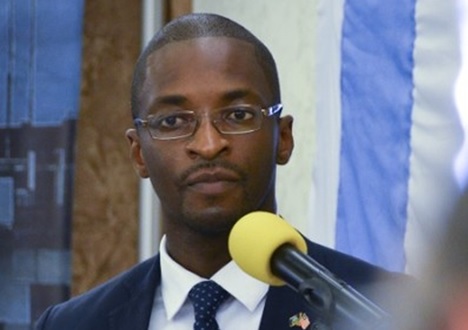
MONROVIA — Dr. Clarence K. Moniba has called on President Joseph Boakai to translate his recent acknowledgment that low wages undermine worker productivity into concrete action by increasing the salaries of public servants in the 2027 national budget.
In a statement released Thursday, Moniba said the president’s remarks during the JFK Family Breakfast on July 1 validated concerns he has repeatedly raised about inadequate compensation for Liberian civil servants. According to Moniba, he had earlier criticized the government’s 2026 National Budget, arguing that the compensation allocated to public sector workers failed to reflect the country’s current economic realities.
He said he had urged President Boakai to withdraw and resubmit the budget to guarantee a minimum monthly take-home salary of US$500 for every civil servant. “When President Joseph Boakai submitted the 2026 National Budget, I made it clear that the compensation allotment for public sector workers did not reflect the economic realities of the day,” Moniba said.
He argued that government workers cannot be expected to deliver quality services while earning salaries that barely cover transportation, rent, food and other basic household expenses. Moniba’s latest comments follow President Boakai’s statement at the JFK Family Breakfast, where the Liberian leader acknowledged the relationship between wages and employee performance. “When you pretend to pay, people pretend to work. If you pay somebody something that can’t even cover their transportation or take care of their children,” the president said during the event.
The former President candidate and political leader of Liberia National Union (LINU), welcomed the president’s remarks, saying they echoed the position he has consistently maintained regarding the challenges facing Liberia’s public workforce. “I could not agree more with the President, as this is precisely the point I made when I challenged his administration to rethink its budget priorities from being elite-focused to people-centered,” he said.
Moniba said the president’s admission confirms what thousands of teachers, nurses, police officers, health workers and other civil servants have experienced for years. He argued that inadequate salaries affect more than household incomes, saying they contribute to declining morale, reduced productivity, absenteeism and weaker public service delivery across government institutions. “The issue before us is no longer whether public servants are underpaid. Even the President has now acknowledged that reality,” Moniba said.
He added that the critical question is whether the administration will convert that acknowledgment into meaningful policy changes during the next budget cycle. Moniba urged the government to ensure that the 2027 National Budget reflects the president’s stated understanding by prioritizing spending that directly benefits public workers. He called for a shift in budget priorities away from what he described as bureaucracy and toward investments in the people responsible for delivering government services. “When I proposed a US$500 minimum salary, it was never about politics,” Moniba said. “It was about restoring dignity to public service and building a government that rewards hard work instead of asking workers to survive on wages that cannot sustain a family.”
He also appealed to the National Legislature to support reforms aimed at improving the welfare of civil servants during deliberations on the next national budget. According to Moniba, Liberia’s long-term development depends on adequately compensating public employees who provide essential government services. “Liberia cannot achieve meaningful development while expecting committed public service from workers who remain trapped in poverty,” he said.
Moniba concluded by urging the Boakai administration to move beyond acknowledging the problem and implement policies that improve the livelihoods of civil servants. “Our civil servants deserve more than sympathy. They deserve fair compensation. Now is the time to move from recognition to reform,” he said.






Discussion about this post