


Published: June 17, 2026
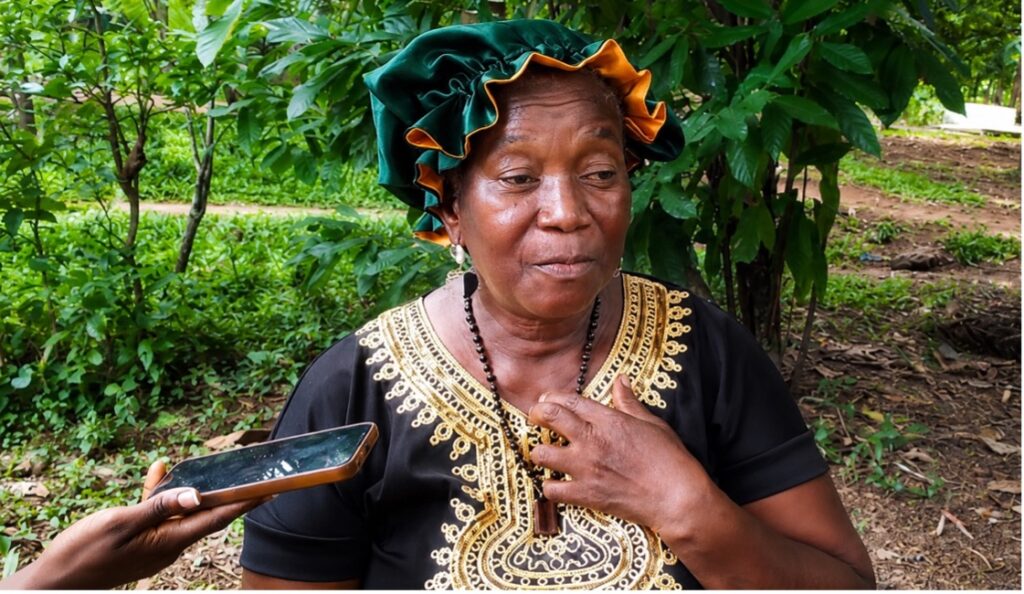
BONG COUNTY — A survivor of the Samay Town massacre says she is ready to testify against the man she accuses of nearly killing her during Liberia’s civil war, adding her voice to a growing demand that the government establish a War and Economic Crimes Court while the alleged perpetrators are still alive.
For Sarah Gatala, the war’s scars are not only memories but physical reminders that have haunted her for decades. She is among several victims urging the government to create the court and prosecute those responsible for atrocities committed during the country’s brutal conflicts.
Speaking during a recent hearing with war victims, Gatala recounted the horrors she endured as a young mother fleeing violence in Bong County.
“I want the court to be built,” she said. “Other people will be scared to commit crimes. I’m a victim of the war and I know what happened to us here and what we passed through. The people who committed these crimes are still alive, and they still have the same ugly hearts. When there is no court, they will want to do bad things again.”
Gatala said the violence reached her community after a wounded fighter returned from battle and blamed civilians for his injuries.
“We were there one morning when a soldier came from the bush wounded and said he could kill any civilian because civilians were responsible for him being shot,” she recalled. “He fired two bullets and killed a woman, leaving her children behind.”
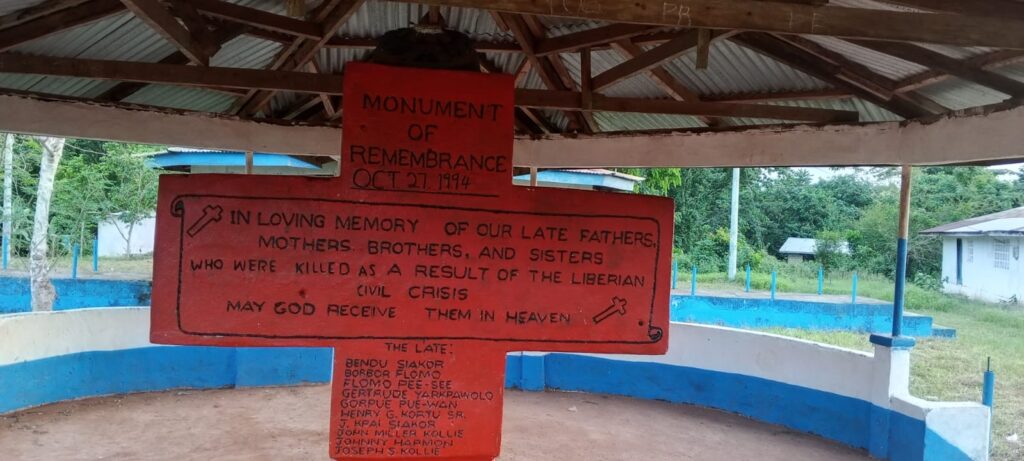
Samay Town still carries visible reminders of the killings. Residents have built a monument over a mass grave where many victims were buried, a memorial meant to preserve the memory of the dead and to remind future generations of the cost of war.
The terror escalated as residents fled, Gatala said. Passing through Gboe Town, she encountered an armed fighter whose actions nearly cost her life.
“He grabbed me by my hair and said he wanted to eat the heart of a bright person,” she said. “He ordered me to hand over my two children so he could kill me. I refused and told him that if he wanted to kill me, he should kill all of us together.”
Her resistance angered the fighter, who she said struck her in the chest with a cutlass, leaving a deep wound.
“The mark is still on my chest today,” she said. “That man is still alive. I know him and I know his family. Sometimes I am afraid he can do something to me or my family because there is no court.”
The man later relocated to Grand Bassa County, Gatala said. After the war, she said, he and members of his family sought her forgiveness.
“They came and begged me, but there was nothing I could do. I left him to God,” she said.
Her appeal comes as the government advances efforts to set up the court to address wartime atrocities. President Joseph Boakai has repeatedly backed the tribunal and recently renewed the mandate of the Office for the Establishment of the War and Economic Crimes Court, reaffirming a commitment to accountability, justice and national reconciliation.
The Office has also submitted a roadmap outlining steps toward operationalizing the court. The document is meant to guide consultations with stakeholders, legislative action and engagement with international partners as Liberia works to implement the recommendations of the Truth and Reconciliation Commission.
Pressure continues to build from civil society. A coalition of Liberian and international groups has urged the government and lawmakers to take concrete steps toward the tribunal, arguing that justice has been delayed for thousands of victims who suffered killings, rape, torture and other serious human rights violations during the conflicts.
For Gatala, the developments offer renewed hope that survivors will finally tell their stories before a court of law. Yet she voiced frustration over how help for victims has been handled.
“Many people have come here and interviewed us. They promised help, but nothing has happened,” she said.
Her concern is echoed by victims’ advocates pressing for reparations alongside the justice process. Arthur Bondo, a representative of war victims, has publicly urged the government and its partners to ensure survivors are compensated for the physical, psychological and economic hardships they still endure.
Gatala welcomed talk of reparations but warned that any program must be handled transparently.
“Reparations are good, but if benefits are given to war victims, the process must be transparent. Otherwise, people will exploit us,” she warned.
Accountability, she said, remains her primary concern. Decades after the attack that left a permanent scar on her chest, she says she is still prepared to confront the man she accuses in open court.
“I am willing to testify against the man who injured me,” she said. “The truth must be told so that future generations will know what happened and so these crimes are never repeated.”






Discussion about this post