


Published: May 18, 2026
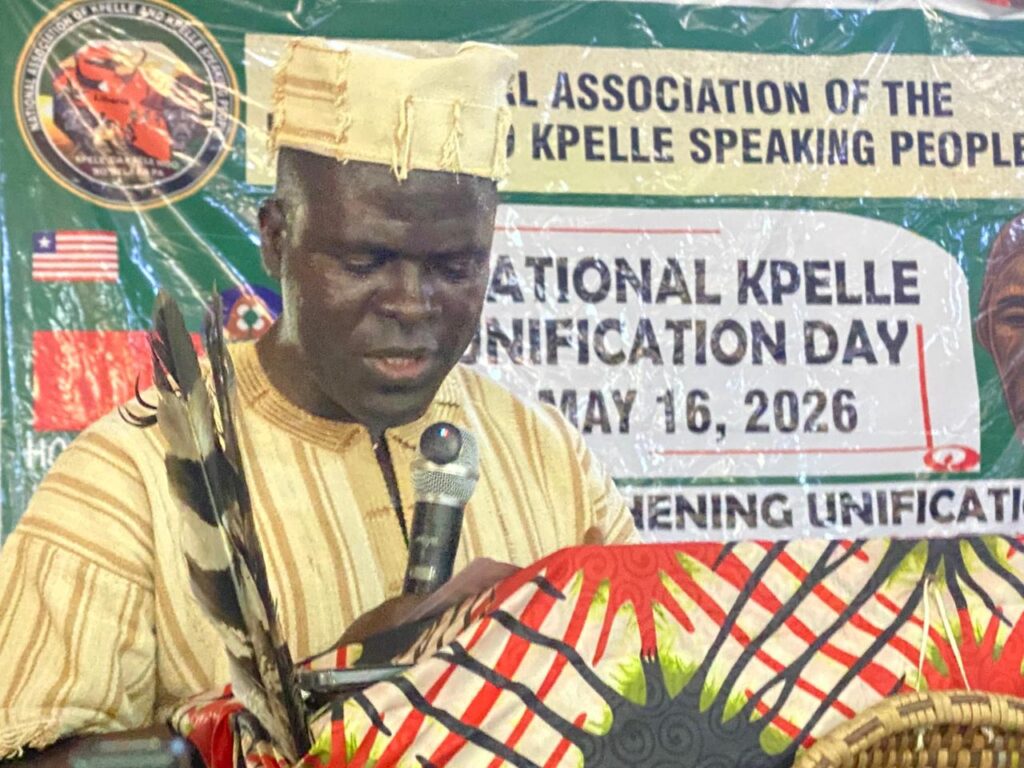
KAKATA, Margibi County — The executive director of Liberia’s Environmental Protection Agency called on the Kpelle people Friday to transform ethnic pride into structured national service, proposing a six-point unification compact and a dedicated education scholarship initiative as the country’s largest ethnic group marked its annual Unification Day.
Dr. Emmanuel K. Urey Yarkpawolo, delivering the keynote address at the National Kpelle Unification Day celebration here, told traditional leaders, government officials, women leaders and youth representatives that unity without measurable outcomes amounted to flowers without fruit.
“Celebration alone is not development,” he told the gathering, invoking a Kpelle proverb: “Trees which bear flowers do not always bear fruit.”
The Kpelle people represent more than 20 percent of Liberia’s population, making them the country’s largest ethnic group, with communities spread across Bong, Margibi, Gbarpolu, Lofa and Bomi counties and extending into Guinea. Yarkpawolo said that demographic weight carried an obligation rather than a privilege.
“To be the largest is a burden of responsibility,” he said. “The largest must also be peaceful, organized, generous, disciplined, and committed to the common good. If the Kpelle people are divided, Liberia feels it. If we are united, Liberia benefits.”
A Compact With Six Pillars
The centerpiece of his address was a proposed Kpelle Unification Compact structured around six commitments: rejecting county and clan division; preserving and modernizing the Kpelle language; committing to leadership and national service; educating youth and empowering women; protecting forests, rivers and farmland; and ensuring that Kpelle unity strengthens, rather than fractures, Liberian national identity.
He also called on Kpelle leaders, professionals and members of the diaspora to establish a Kpelle Education and Scholarship Initiative targeting rural students, girls, vocational training, teachers and young people pursuing agriculture, medicine, environmental science and public administration.
“No unification is complete if children remain uneducated and parents remain economically poor,” he said.
Language as Archive, Not Accessory
Yarkpawolo devoted a significant portion of his address to language preservation, warning that cultural erosion was accelerating as younger generations abandoned the Kpelle tongue in favor of English at home and in schools.
“When a people lose their language, they lose a library of memory,” he said. “Language carries wisdom, prayer, history, place names, family names, and the soul of a people.”
He noted that ongoing English-Kpelle machine translation work demonstrated the language’s potential in the digital age, but argued that technology alone would not save it. Parents, he said, must speak Kpelle to their children; radio stations must broadcast in it; and churches and mosques must use it in worship.
He quoted Marcus Garvey: “A people without the knowledge of their past history, origin, and culture is like a tree without roots.”
Women and Youth at the Center
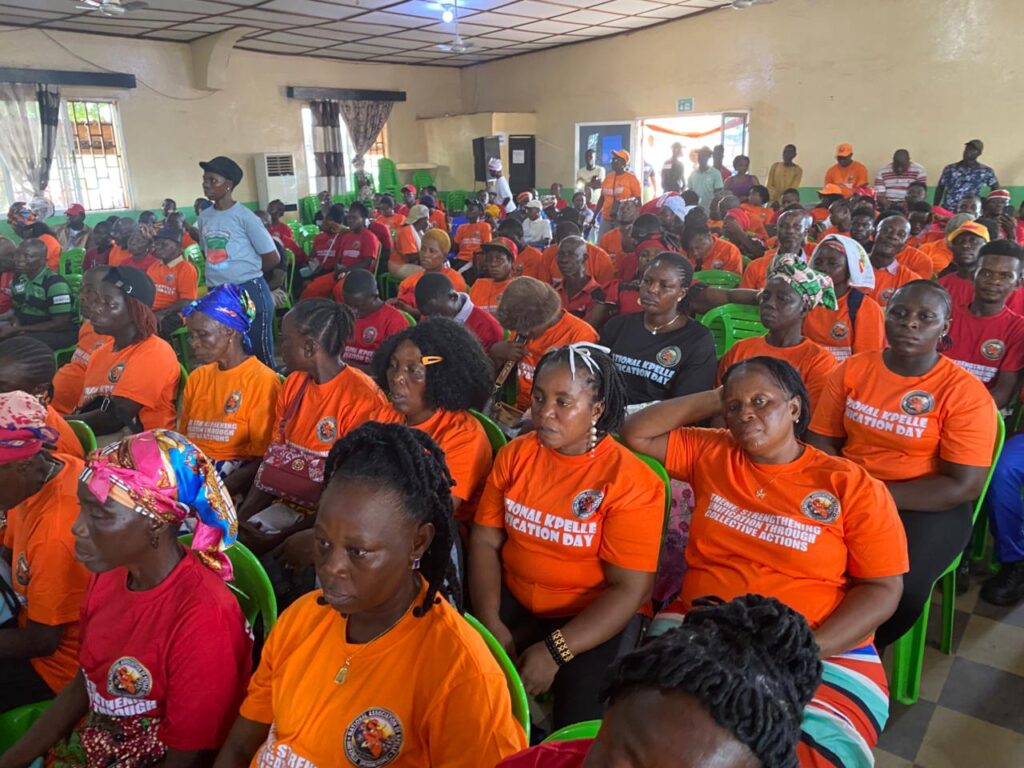
Yarkpawolo was pointed in his call for women’s inclusion, arguing that any unity that organized men while leaving women behind had only organized half of the house. He cited the historical authority of Chief Suah Koko as evidence that Kpelle tradition had already legitimized women’s leadership in difficult periods of Liberian history.
“Kpelle unification must include women’s leadership, girls’ education, protection from violence, access to land and finance, and respect for women’s dignity,” he said.
To youth in the audience, he said pride without education was dangerous and energy without direction could destroy. He invoked a line in Kpelle, translating it as a challenge: “Do not only say, I am Kpelle. Ask yourself: Am I honest, hardworking, respectful, learning, serving, building?”
Land as Covenant
Speaking as someone born in Gomue Village, Kpaquellie Clan, Zota District, Bong County, who said he began school at age 14 before eventually rising to lead the country’s top environmental regulatory body, Yarkpawolo warned that the Kpelle homeland faced threats from illegal mining, river pollution, deforestation and unsustainable land use.
“A people cannot claim love for their ancestors while destroying the land those ancestors protected for them,” he said, adding that development through roads, mining and agriculture was necessary but must respect communities, protect water sources, follow the law and benefit local people.
Naming the Divisions
In an unusually candid passage for a unification address, Yarkpawolo named the specific fault lines he said were weakening the Kpelle: political bitterness, clan disputes, jealousy, economic inequality, the distance between Monrovia and rural communities, and disrespect for elders and youth alike.
He referenced a Kpelle proverb — “If you are not inside a house, you do not know where it leaks” — and told the audience they were inside the Kpelle house and could see the damage.
“Because this is our house,” he said, “we must repair it together.”
The celebration was held in Kakata under the theme “Kpelle Unity for Cultural Renewal, Peace, Development, and National Progress.”





Discussion about this post