


Published: August 11, 2025
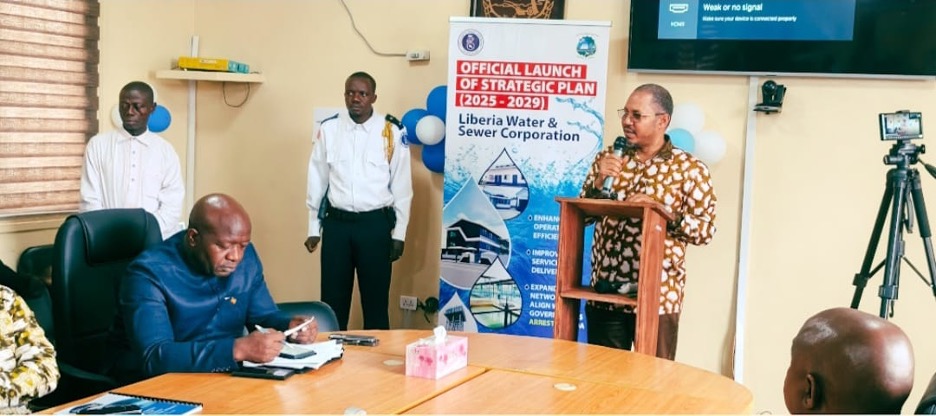
MONROVIA — The Liberia Water and Sewer Corporation has launched a $156.6 million, five-year strategic plan aimed at doubling pipe-borne water access, expanding sanitation services and improving customer care nationwide by 2029.
The plan, unveiled over the weekend at the Ministry of Public Works, outlines major infrastructure and service delivery reforms in line with the government’s ARREST Agenda.
“When we assumed leadership at LWSC, the system was not entirely broken, but it was far from functioning properly,” Managing Director Mohammed Ali said. “A previous strategic plan drafted in 2018 was never finalized and expired without implementation.”
Developed in partnership with USAID and Liberian consultants Isaac Vah-Tukpah and Dr. Joe Baysah of Wutuve Consultancy, the strategy focuses on local expertise over foreign consultants. “No U.S. friend understands our problems like we do,” Ali said.
Deputy Managing Director for Technical Services Patrick Sandiki led the costing process, putting the five-year budget at $156.6 million.
Ambitious Targets
Finance and Development Planning Minister Augustine Kpehe Ngafuan outlined goals including:
- Doubling water connections from 15,000 in 2024 to 30,000 by 2029
- Increasing sewer connections from 1,560 to 3,000
- Raising revenue collection efficiency from 57% to 95%
- Reducing government subsidy reliance from 50% to 20%
“Great achievements start with great plans,” Ngafuan said. “If this plan fails, it will be a national failure affecting real lives. Water is life and health — a child could die from our collective inaction.”
Speaking for the Boakai administration, Ngafuan pledged full government support to move the plan from “the zone of planning to the zone of action and outcomes.”
Customer-Focused Service
LWSC Deputy Managing Director for Sales and Marketing Janice Love Bropleh announced a new Service Delivery Charter and Five-Bill Action Plan to improve public engagement.
Commitments include supplying clean water 12 hours daily, resolving complaints within seven days, maintaining professional and transparent service, and conducting quarterly customer satisfaction surveys. Bropleh said 90% of complaints will be addressed within one week, with staff training aimed at achieving 80% customer satisfaction.
Challenges and Coordination
Ali cited damage to water infrastructure caused by roadworks and politically motivated construction as ongoing challenges. “There are communities currently without water because pipes were broken by machinery,” he said, urging better coordination among government agencies.
Local Expertise and National Vision
Ngafuan praised the use of Liberian consultants, including those from the diaspora, and urged other institutions to adopt the model. He called the plan “a book that captures the hopes and dreams of Liberians for a better, cleaner, and healthier future.”
Aligned with Program Policy 9 of the ARREST Agenda, the LWSC strategy is presented as more than a utility plan — it is a national blueprint for addressing Liberia’s water and sanitation deficits.





Discussion about this post