


Published: May 20, 2026
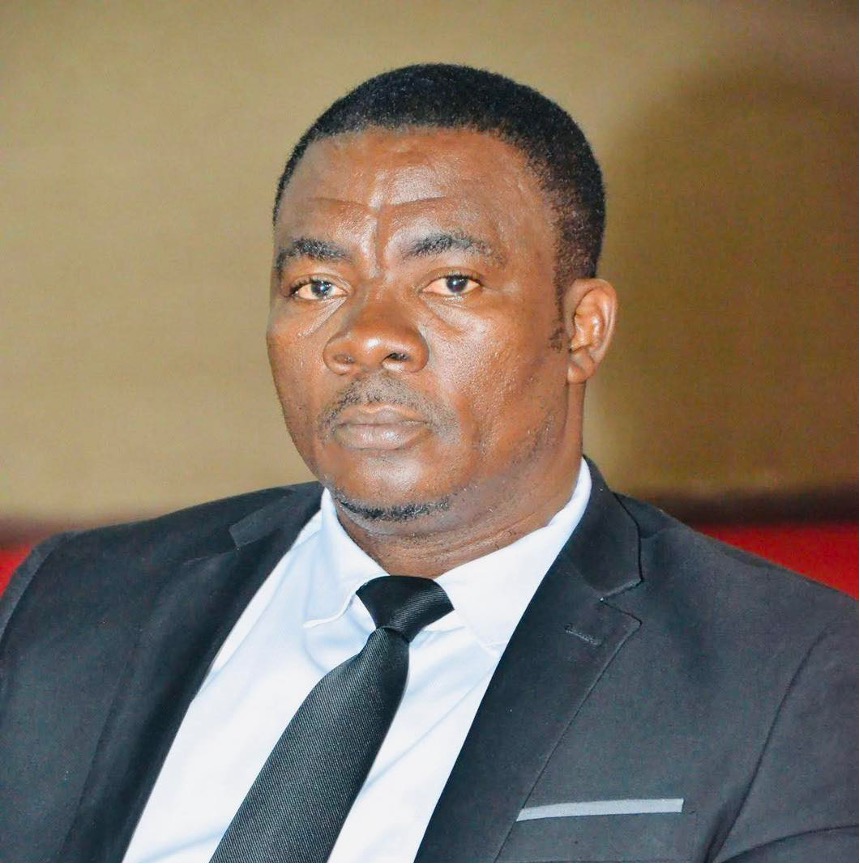
MONROVIA — Despite decades of human rights work in Liberia and growing international recognition for that work, Adama Dempster says the country has still not enacted a single law or binding policy to protect the men and women who put their lives on the line daily to defend the rights of ordinary Liberians, and that until it does, no one in that community can claim to be truly safe.
“Until we have laws that define protection for human rights defenders, I cannot say that human rights defenders are protected totally protected,” Dempster said in an interview with Africa Things host Peter Clottey. “Liberia has not had any policy or law to protect human rights defenders for decades.”
Dempster, the national secretary general and co-founder of the Civil Society Human Rights Advocacy Platform of Liberia, said a draft national policy on the protection of human rights defenders has been crafted, discussed and reportedly submitted to the government for approval. But as of the time of the interview, no formal approval had been granted, leaving the country’s activist community in a legal gray zone that he said creates particular danger for those working farthest from Monrovia.
“There are some level of threats for grassroots defenders who work in concession areas,” he said. “In those concession areas where mining is taking place, there can be so much abuse and violations.” Dempster said he and his organization are pushing for a national level policy that explicitly covers defenders operating in communities where resource extraction concessions are active — areas where corporate and political interests frequently collide with the rights of local populations.
His warning came even as he acknowledged some measurable improvement in the overall environment for rights defenders under the current administration. He said threats have decreased compared to prior years and that the Ministry of Justice has engaged in direct dialogue with civil society on the protection question. The Independent National Commission on Human Rights, the United Nations High Commissioner for Human Rights, the European Union and several bilateral partners are also involved in efforts to advance the policy framework, he said.
But Dempster made clear that dialogue and goodwill, while welcome, are not substitutes for enforceable legal protection. The absence of such a framework, he argued, leaves defenders exposed not only to physical threats but to institutional indifference when those threats materialize.
The interview was occasioned by a separate but related development: the California State Assembly’s formal recognition of Dempster for his contributions to global human rights, peace building and justice. Dempster, who has served as the first chief human rights investigator at the Independent National Commission on Human Rights and has addressed the United Nations Human Rights Council and its treaty committees in Geneva on multiple occasions, said the recognition from one of the most influential legislative bodies in the United States carries meaning beyond personal honor.
“This recognition is for all Liberians, all of my colleagues in the human rights community and those who continue to support us in the diaspora,” he said. He argued that the California State Assembly’s legislative Black caucus, which he said drew interest in his work, shares a common thread with the communities he advocates for in Liberia — confronting inequality, wrongful detention, restrictions on free expression and the long shadow of unaddressed historical injustice.
Dempster also used the platform to call for accelerated progress on transitional justice in Liberia, pointing to The Gambia’s ongoing accountability proceedings against officials of the Yahya Jammeh administration and Sierra Leone’s post-conflict closure efforts as regional models Liberia should be studying and emulating. “Sierra Leone, Gambia, Liberia — we are not different,” he said. “We shared the blend of conflict, those things that broke our society apart.”
A veteran of more than 18 years in the human rights field, Dempster began his work as a student volunteer in the years between Liberia’s two civil wars, finding his voice initially around student welfare issues before expanding his advocacy to national and eventually international platforms. He has testified before the U.S. Congress on Liberian accountability issues and engaged with the Economic Community of West African States and the African Union on regional human rights matters.
He said his focus now includes building the next generation of defenders, training young Liberians to take up the work and sustain it beyond his own tenure. “Gradually as we step out, there should be young people that will come after us,” he said.






Discussion about this post