



Published: July 7, 2025
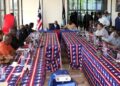
MONROVIA – Liberia has taken a major step forward in the fight against cancer. Over the weekend, President Joseph Nyuma Boakai, joined by International Atomic Energy Agency (IAEA) Director General Rafael Mariano Grossi, led a groundbreaking ceremony for Liberia’s first radiotherapy center at the John F. Kennedy Medical Center in Monrovia.
The new facility is expected to transform cancer care in Liberia and end decades of reliance on expensive treatment abroad.
“Today marks a transformative moment in our efforts to improve healthcare for our people and strengthen global partnerships,” President Boakai said. “This center will make cancer treatment more accessible and affordable. It will also open new doors for research, training, and capacity building.”
The center is part of the IAEA’s “Rays of Hope” initiative, launched in 2022 to help close cancer care gaps in low- and middle-income countries. The program brings modern radiotherapy services to nations that previously lacked them.
Liberia, a member of the IAEA since 1962, has seen its cooperation with the agency grow in recent years. Under the Boakai administration’s ARREST Agenda for inclusive development, the partnership now extends beyond nuclear safety into broader health, agriculture, and energy applications.
Cancer’s Growing Toll
Cancer is fast becoming one of Liberia’s leading public health challenges. The Ministry of Health reports that cervical, breast, liver, and prostate cancers account for nearly 70 percent of new cases nationwide.
Yet until now, Liberia lacked even a basic radiotherapy unit, leaving only the wealthiest citizens able to seek care abroad.
“This center will bring relief to everyone,” said Health Minister Dr. Louise Kpoto. “It’s a milestone for Liberia and the region. It offers not only critical treatment but also serves as a training and research hub.”
Dr. Kpoto praised Liberian and foreign health professionals for keeping cancer care alive under difficult conditions. “This facility means no more lives defined by whether you can afford to fly out for treatment,” she said. “We can save lives right here at home.”
A Lifesaving Treatment
Radiotherapy—also known as radiation therapy—uses high-energy rays or particles to destroy cancer cells or shrink tumors. According to the World Health Organization, over half of all cancer patients will require radiotherapy at some stage of treatment.
Without access to it, survival rates for many cancers, including breast and cervical, drop significantly.
The JFK facility will feature advanced linear accelerators for external beam therapy and brachytherapy equipment for internal radiation.
Government and Global Partners Aligned
The project brings together several Liberian ministries: Health, Mines and Energy, Foreign Affairs, Agriculture, and the Environmental Protection Agency (EPA).
While the Ministry of Health oversees clinical operations, the Ministry of Mines and Energy ensures radiation safety and technical standards. The EPA handles environmental safety and waste disposal. Meanwhile, the Ministry of Agriculture will collaborate with the IAEA to apply nuclear science in food security and nutrition.
Deputy Foreign Minister Deweh Gray called the project “a clear sign that Liberia is reestablishing itself as a reliable partner in the peaceful application of nuclear technologies.”
IAEA Support on the Ground
Director General Grossi emphasized that the IAEA’s role extends beyond symbolic gestures.
“We’re not here for declarations,” he said. “We’re here to deliver real tools, real technology, and real results.”
Grossi announced that Liberia will receive its first-ever mammography unit as part of the program. This equipment is critical for early breast cancer detection and will allow up to 100 women per day to be screened.
“We are starting with diagnostics, then moving into treatment—brachytherapy, linacs, and beyond,” he said. “This is how we save lives.”
Liberia is now one of more than a dozen countries benefiting from the “Rays of Hope” initiative, which has already provided life-saving cancer care infrastructure across Africa, Asia, and Latin America.
President Boakai said he hopes the JFK Radiotherapy Center will become a model of excellence, not just for Liberia but for the wider region.
“This is only the beginning,” he said. “We envision a future where this facility not only treats disease but also helps train the next generation of Liberian health professionals.”
Health advocates described the moment as a breakthrough for a health system still recovering from years of setbacks.
“Today is not just about breaking ground,” said one cancer survivor who traveled from Paynesville to witness the event. “It’s about building hope. Soon, no woman will have to leave her children behind just to stay alive.”
For now, the dream of world-class cancer care in Liberia is no longer just a vision—it’s becoming reality.
What Is Radiotherapy?
Radiotherapy uses targeted radiation to kill or damage cancer cells. It may be delivered externally through machines like linear accelerators or internally using radioactive implants (brachytherapy). The treatment is often paired with surgery or chemotherapy.
About the IAEA
Founded in 1957, the International Atomic Energy Agency promotes the safe, secure, and peaceful use of nuclear science and technology. Its areas of work include cancer care, nuclear safety, agriculture, and environmental protection. Liberia became a member in 1962.




Discussion about this post