


Published: June 26, 2026
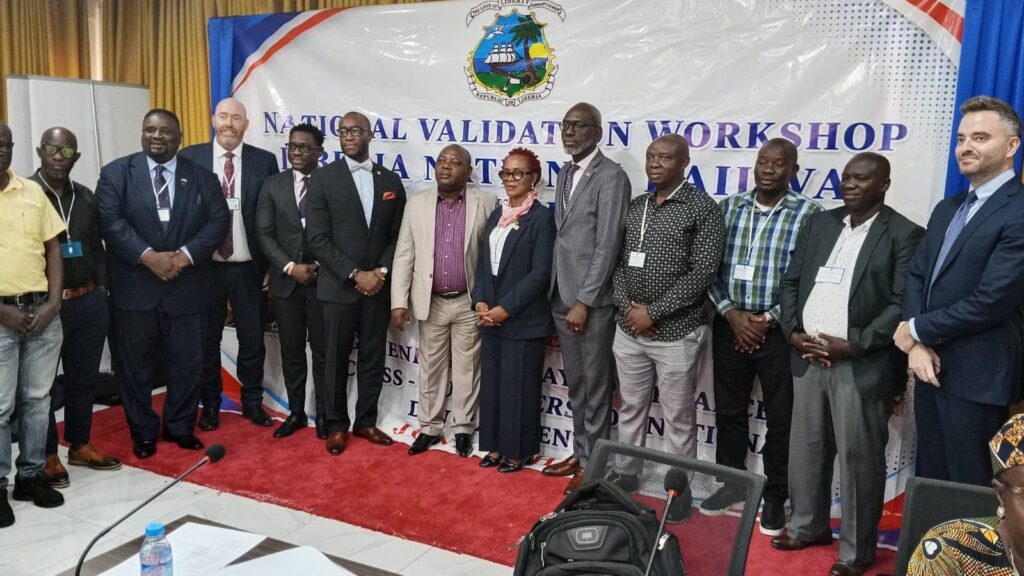
MONROVIA — Liberia’s railways, used for nearly a century to haul iron ore for a handful of mining companies, would carry farm goods, factory cargo and general freight for the first time under a draft law now moving through stakeholder review.
The proposed Liberia National Railways Authority Act would scrap the concession-based model and put the country’s tracks under a single regulated, multi-user system serving agriculture, industry, trade and mining alike. Backers call it a shift that could lower transport costs, create jobs and tie resource regions to markets.
Government ministries, technical experts and development partners met Thursday at the Ministry of Mines and Energy on Capitol Hill to validate the draft. The Law Reform Commission is leading the process with input from the ministries of Justice, Transport, Finance, and Mines and Energy, along with the Governance Commission, the National Investment Commission, the Environmental Protection Agency, the LNRA Liaison Office, railway and mining specialists, and international partners.
The legislation is built on transparency, competitive access and planned infrastructure expansion. Officials say that framework is critical to linking production zones to markets and cutting the high transport costs that squeeze businesses.
Law Reform Commission Chairman Cllr. Bornor M. Varmah told the workshop the law could deliver five immediate dividends. A predictable legal framework would give investors more confidence to fund rail operations and new lines. Mines would move product faster as logistics bottlenecks ease. Farmers and agribusinesses would gain reliable routes to move crops from farms to cities and ports. Industries would expand as lower transport costs connect production hubs to economic corridors. And construction, maintenance and daily operations would open new employment across the value chain.
“This shift has the potential to unlock significant economic opportunities,” Varmah said.
Liberia’s railways have historically served specific mining companies, locking out public and commercial users. The draft Act is being positioned as the permanent legal foundation to correct that. President Joseph Nyuma Boakai’s executive orders already created an interim Railway Authority, but lawmakers say only legislation can guarantee long-term safety, fairness and accountability.
“We are helping to shape a transformative legal instrument that will influence Liberia’s economic future for generations to come,” Varmah added.
LNRA Liaison Officer Ignatius Saymel Neepaye welcomed the inclusive validation process, saying it brings Liberia closer to a fully operational National Railways Authority capable of supporting national development goals.






Discussion about this post